Origin, cultivation, recipes, and more—the most important questions and answers about tomatoes
The tomato is Germans’ favorite vegetable: But is the tomato even a vegetable, or is it perhaps a fruit? And where does it actually come from? What’s the story behind yellow and black tomatoes—and why are they so popular in Italian cuisine anyway?
Would you like to learn these and other interesting facts about tomatoes? Then be sure to keep reading.
WHAT INTERESTS YOU THE MOST?
Tomatoes are essential to authentic Italian cuisine
Popular Italian Dishes with Tomatoes
Is the tomato a fruit or a vegetable?
Planting Tomatoes: How to Grow Tomatoes Successfully
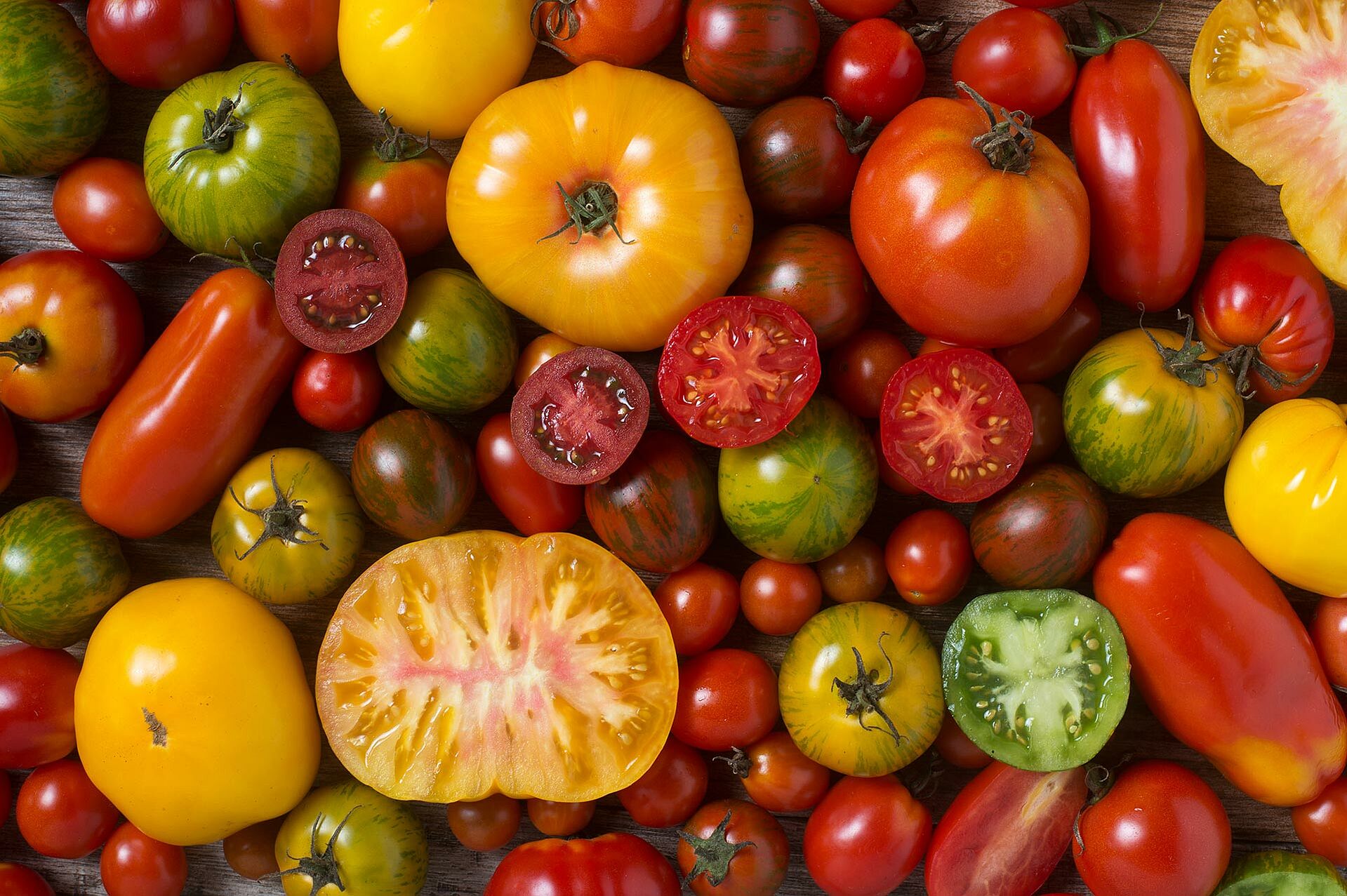
Black tomatoes or yellow tomatoes—what’s behind the color?
"Unfaithful tomato" or "having tomatoes in your eyes"—where do these idioms come from?
The History of the Tomato
The tomato is native to Central and South America. Central America boasts the greatest cultural diversity of this red vitamin-packed fruit. The Aztec name for it was “Xitomatl,” which is derived from “tomatl” and means “peeled tomatillo.” Tomatillo is a plant species belonging to the genus Physalis, which is part of the nightshade family.

How the Tomato Came to Italy
In Europe, the tomato first became known in Italy during the first half of the 16th century. This was because Christopher Columbus brought the red fruit back from his voyage to South America. In 1544, the Italian botanist and physician Pietro Andrea Mattioli (1501–1577) described tomatoes as “Pomi d’oro,” which means “golden apple.”
Tomatoes are essential to authentic Italian cuisine
Tomatoes are essential for many authentic Italian recipes. Without those juicy red tomatoes, an Insalata Caprese would be nothing more than mozzarella with spices and olive oil. Or think about pasta or pizza sauces—tomatoes are undoubtedly a staple of Italian cuisine. There’s even a long-standing legend that the red stripe on the Italian flag represents the color of the tomato.
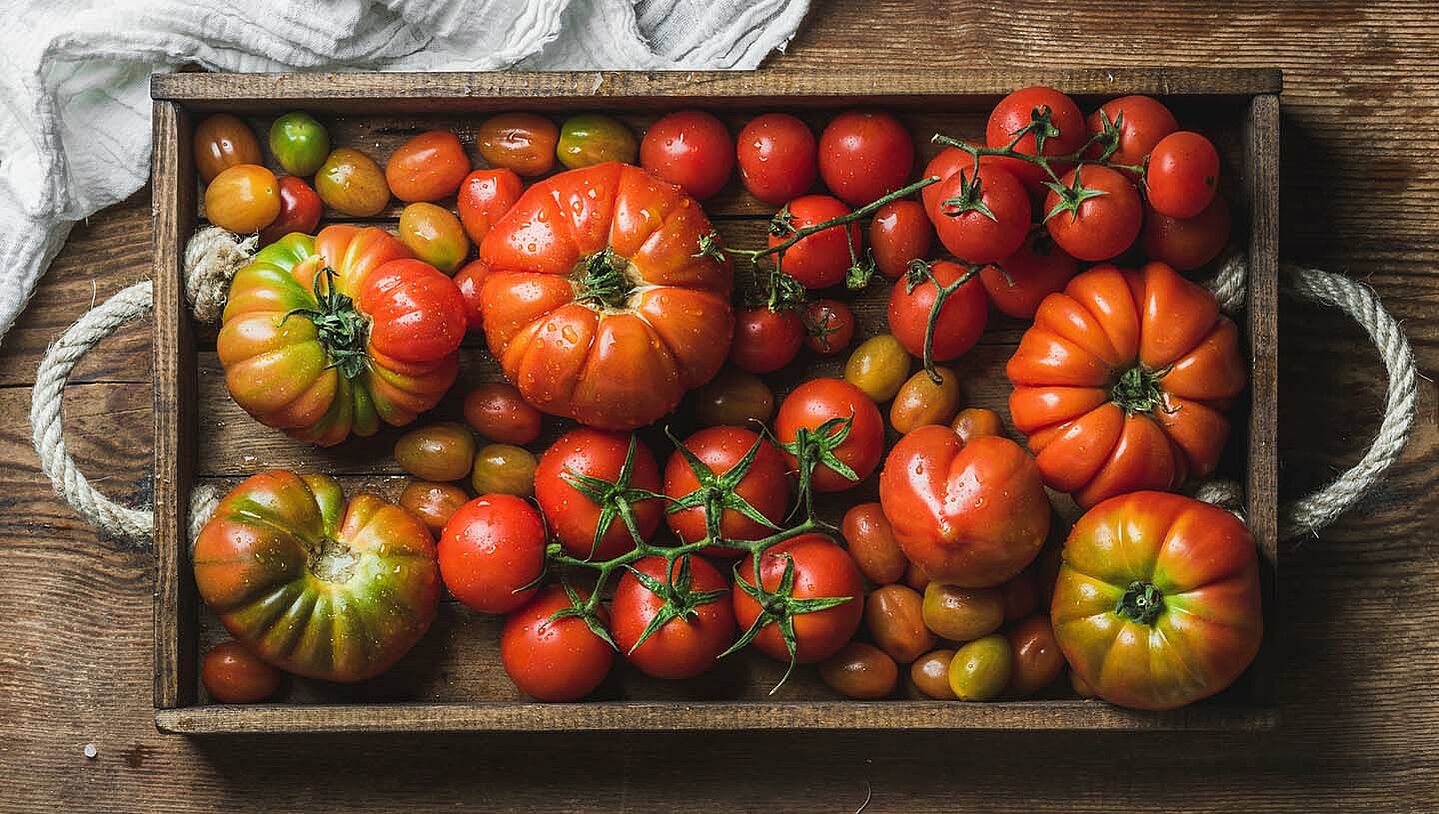
By the way: There are about 23,000 varieties of tomatoes. That makes it hard to always find the right one for a particular authentic Italian dish. We’ve taken a closer look at five popular tomato varieties for you.
Traditional Italian cuisine
Italian cuisine is very diverse and popular around the world. It is known for olive oil and various types of cheese, such as Parmesan, mozzarella, and Gorgonzola. Sausages and other meat products, such as mortadella, salami, and Parma ham, are also part of authentic Italian cuisine. Pasta and pizza are quintessentially Italian, as are wine and antipasti.
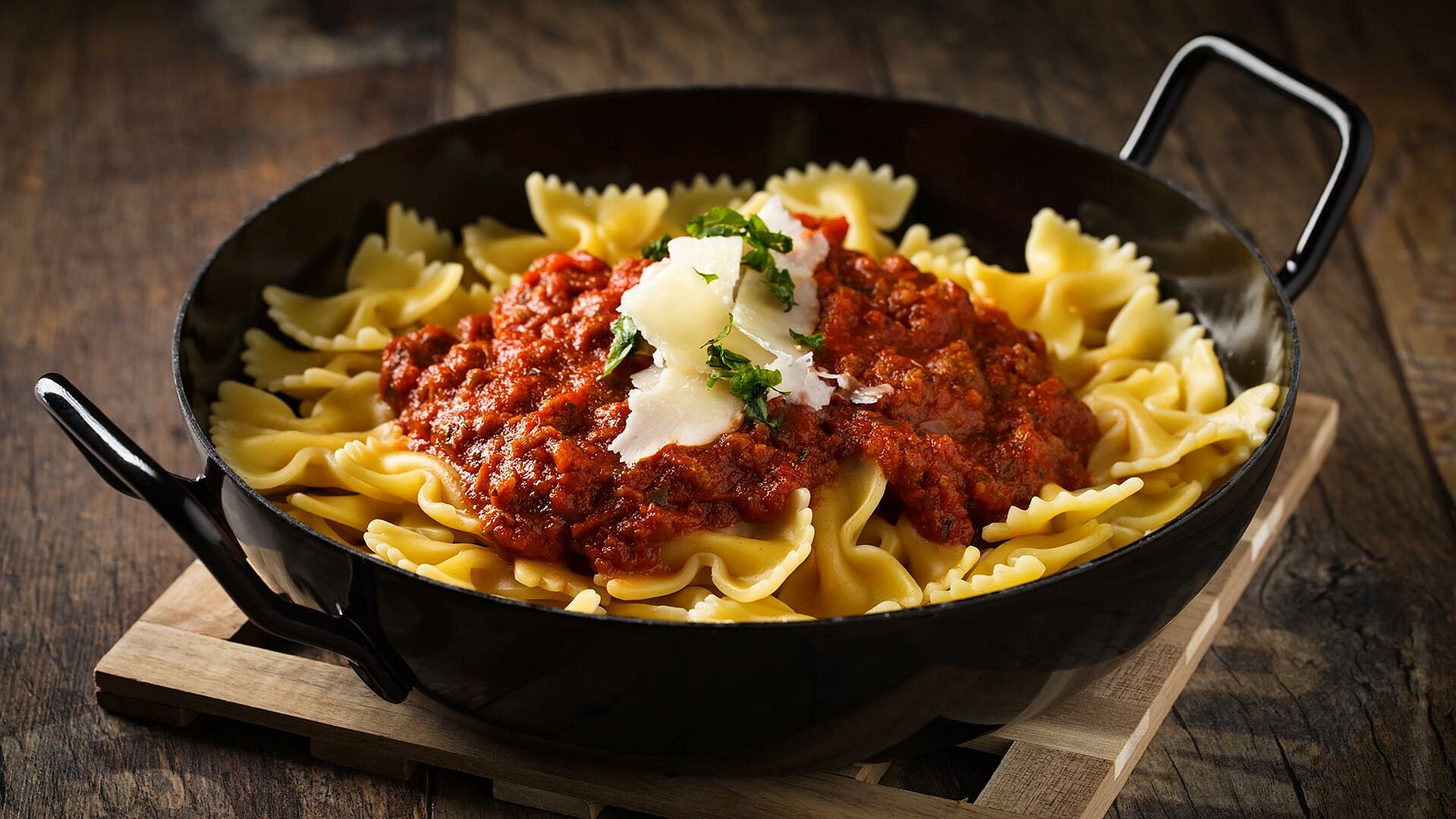
Popular Italian Dishes with Tomatoes
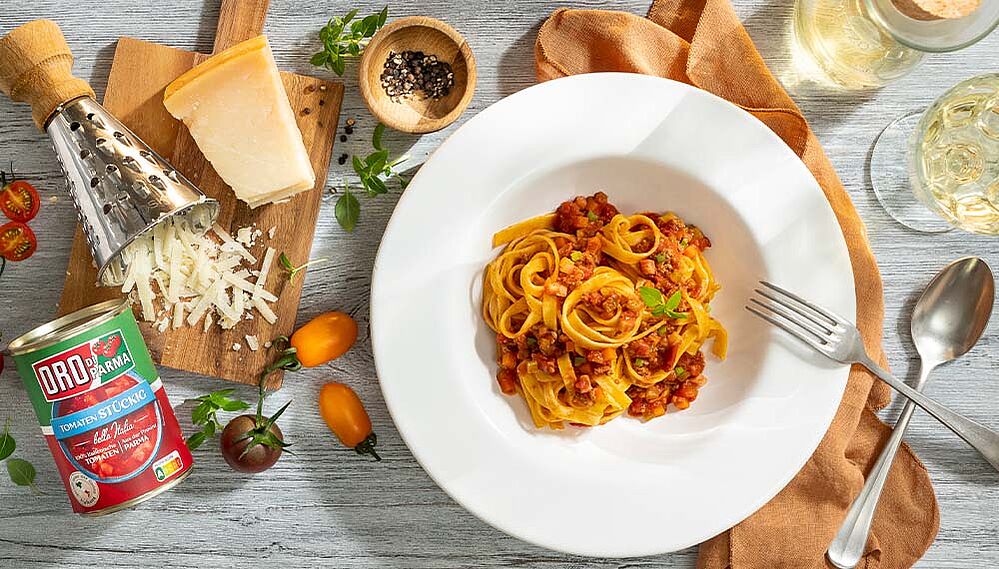
If you want to cook authentic Italian food, you need plenty of amore and pomodoro. The most famous Italian dish is probably ragù alla bolognese. By the way, traditional spaghetti doesn’t go very well with this well-known pasta dish. Instead, farfalle, penne, or tagliatelle are better served with this flavorful ground meat and tomato sauce. That’s because the sauce doesn’t cling well to the smooth, thin strands of spaghetti.
Pizza comes in all kinds of variations, with different toppings, frozen or homemade. But whether it’s from a pizzeria or homemade, pizza just tastes bueno. Homemade pizza made according to an original Italian recipe is quick to make, and you don’t need many ingredients. Why not give it a try with our recipe for homemade pizza?
This Italian casserole made with very wide ribbon pasta (or flat pasta sheets), ragù, and béchamel sauce is also simply delizioso. By the way, the lasagna tastes even better with homemade ribbon pasta.


Is the tomato a fruit or a vegetable?
In the kitchen, the tomato is used as a vegetable. Some people claim it’s a fruit. The truth is: Tomatoes aren’t fruits. However, they aren’t vegetables either. They belong to the category of fruit vegetables. And it gets even more complicated: The tomato isn’t just a fruit—it’s also a berry.
A brief digression: What makes a fruit a fruit and a vegetable a vegetable, and where does the tomato fit in?
Fruits are the edible parts of a plant that develop from pollinated flowers. With vegetables, it is not the fruits but other parts of the plant that are edible. Fruit and vegetable plants differ in whether they bear fruit for one year or for several years. While fruit plants are generally perennial, vegetable plants are usually annuals or biennials. The sugar content also differs between the two groups: vegetable plants contain significantly less sugar than, for example, apples or cherries.
Fruit vegetables fall between the two categories and are characterized by the following traits:
- They are the fruits of annual and biennial plants
- They are the fruits of herbaceous plants
- They are grown as field crops and, depending on classification, used as legumes for food or as oilseeds for fat extraction
They were first introduced to Europe from the Americas and East Asia at the end of the 16th century and are sometimes called “New World fruits”
What characteristics make the tomato a fruit vegetable?
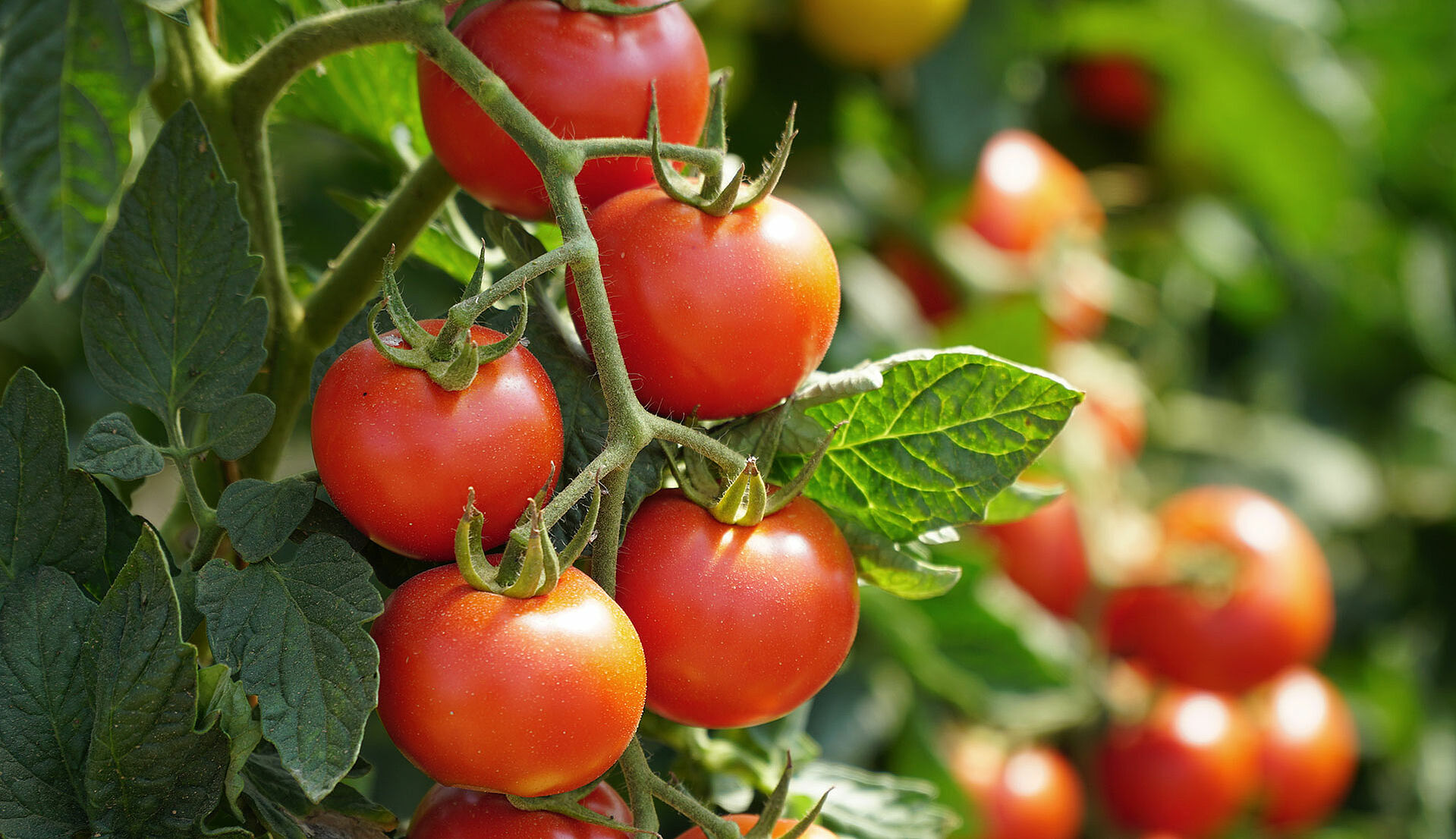
Just like zucchini, squash, cucumber, and eggplant, the tomato belongs to the category of fruit vegetables, meaning it’s a “cross between” fruit and vegetables. The tomato plant is herbaceous. This means that it grows in thickness but does not become woody. There are annual, biennial, and perennial herbaceous plants—and tomato plants come in all three varieties. After flowering, herbaceous plants die off, which distinguishes them from perennial plants that can flower multiple times, such as shrubs and trees.
Planting Tomatoes: How to Grow Tomatoes Successfully
If you’d like to grow your own tomatoes, there are a few things you should keep in mind. We’ve put together some important growing tips for you.
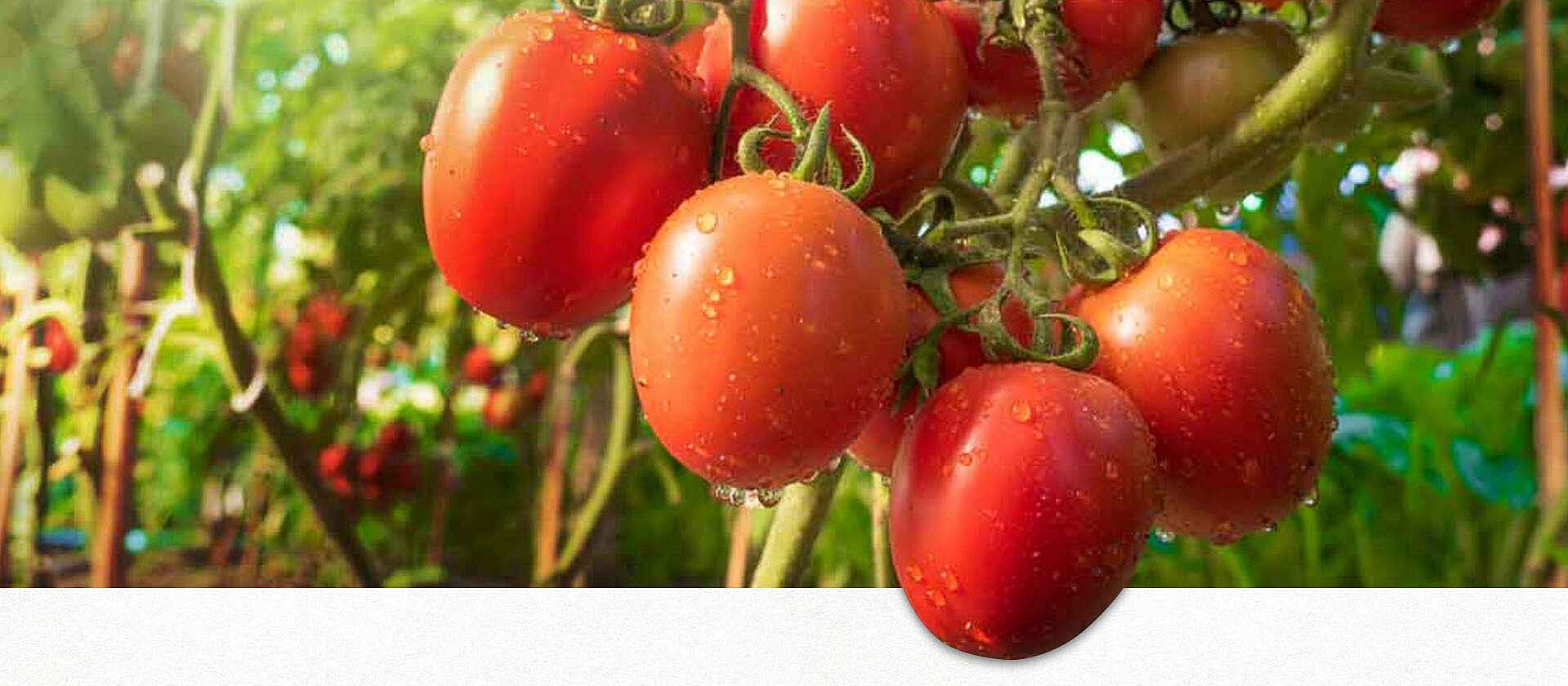
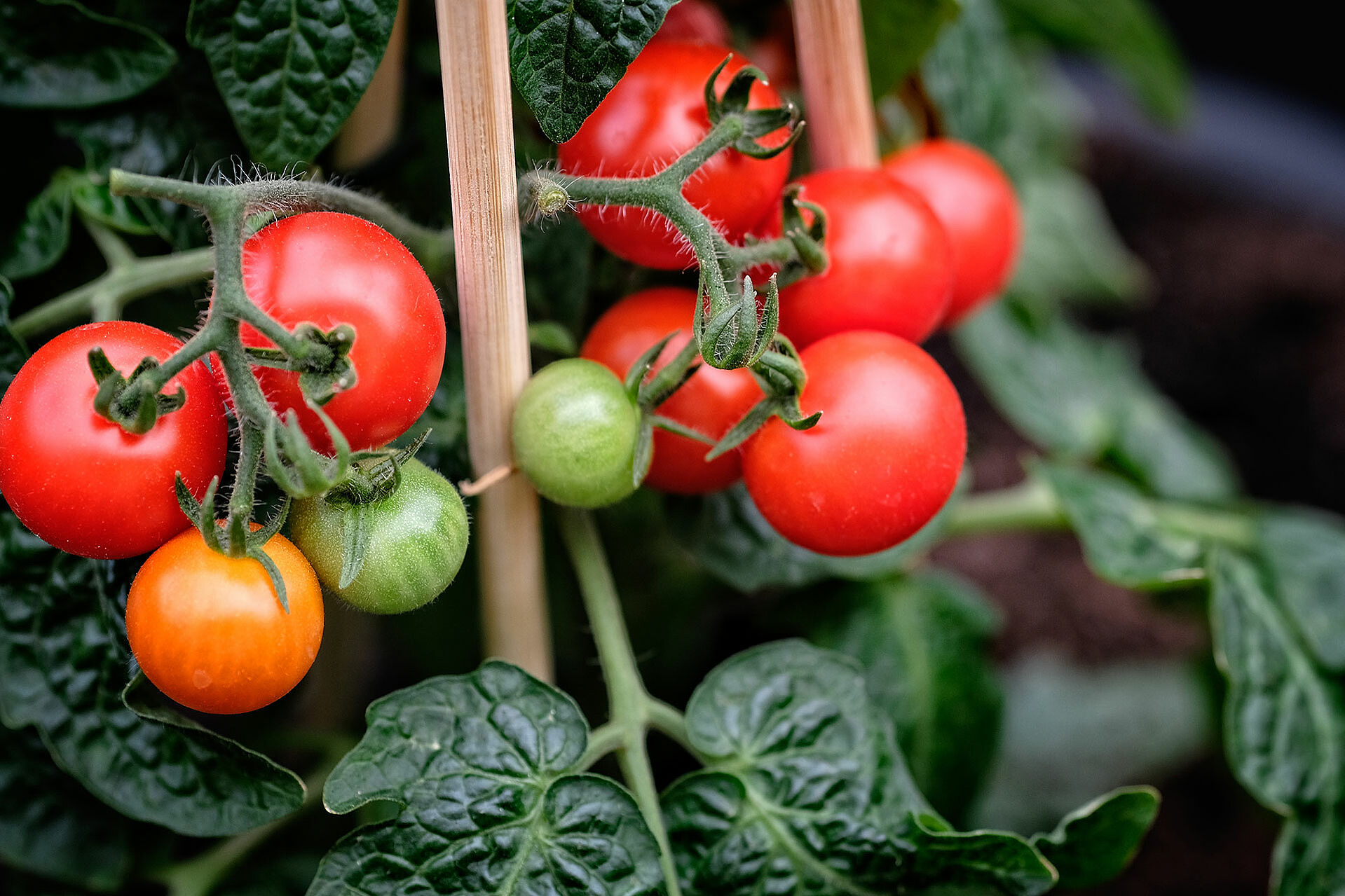
One of the most important rules: Tomatoes like it nice and warm and are very sensitive to rain, because their leaves don’t like water. That’s why they’re often planted in a greenhouse. The tomatoes for ORO di Parma, however, are grown outdoors.
How to Grow Tomato Plants
You can start growing tomatoes in the spring as soon as the ground is no longer frozen (around mid-May). You can grow tomatoes on your balcony or in your garden, but it’s important to make sure the plants are protected from rain.
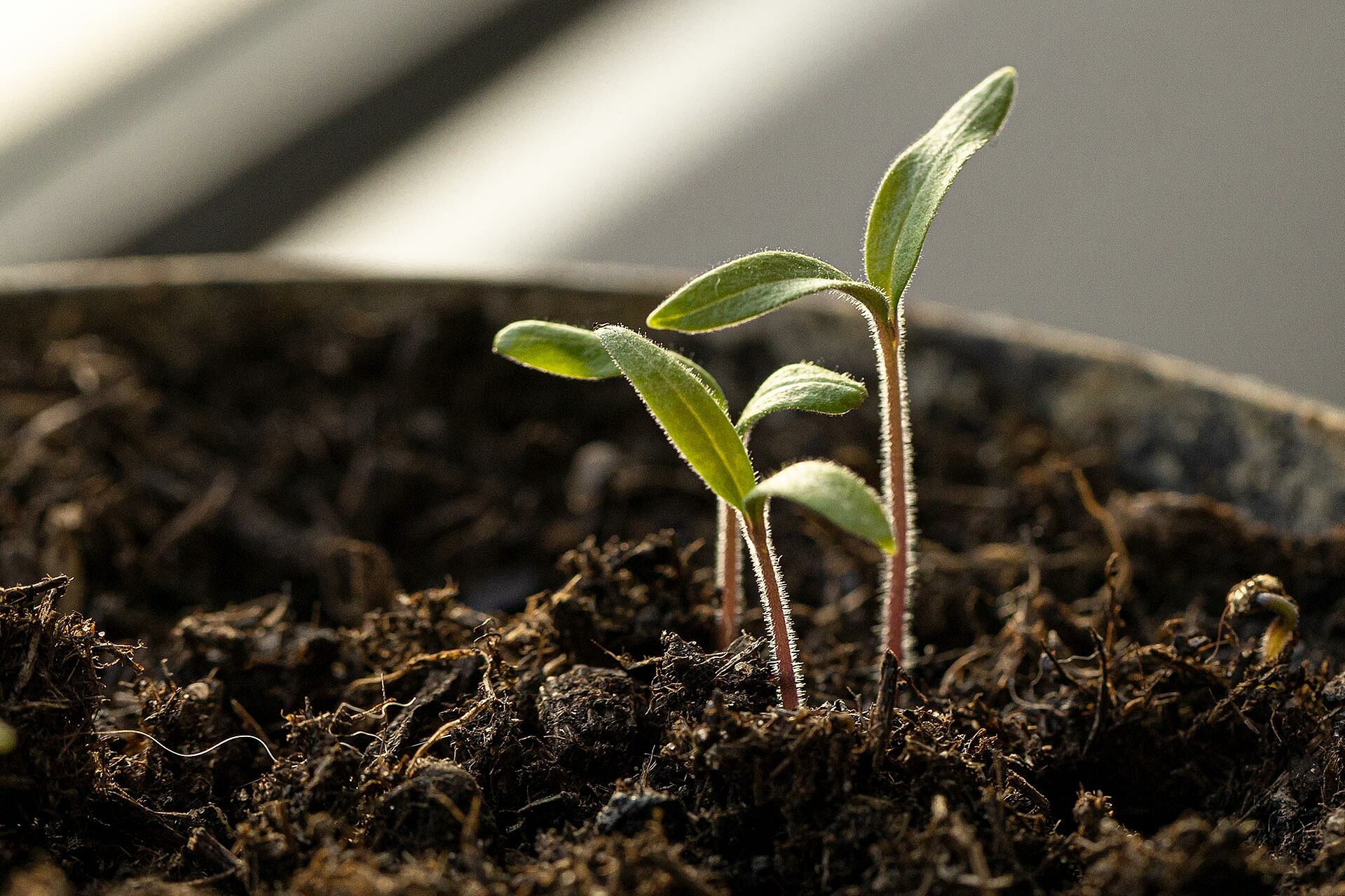
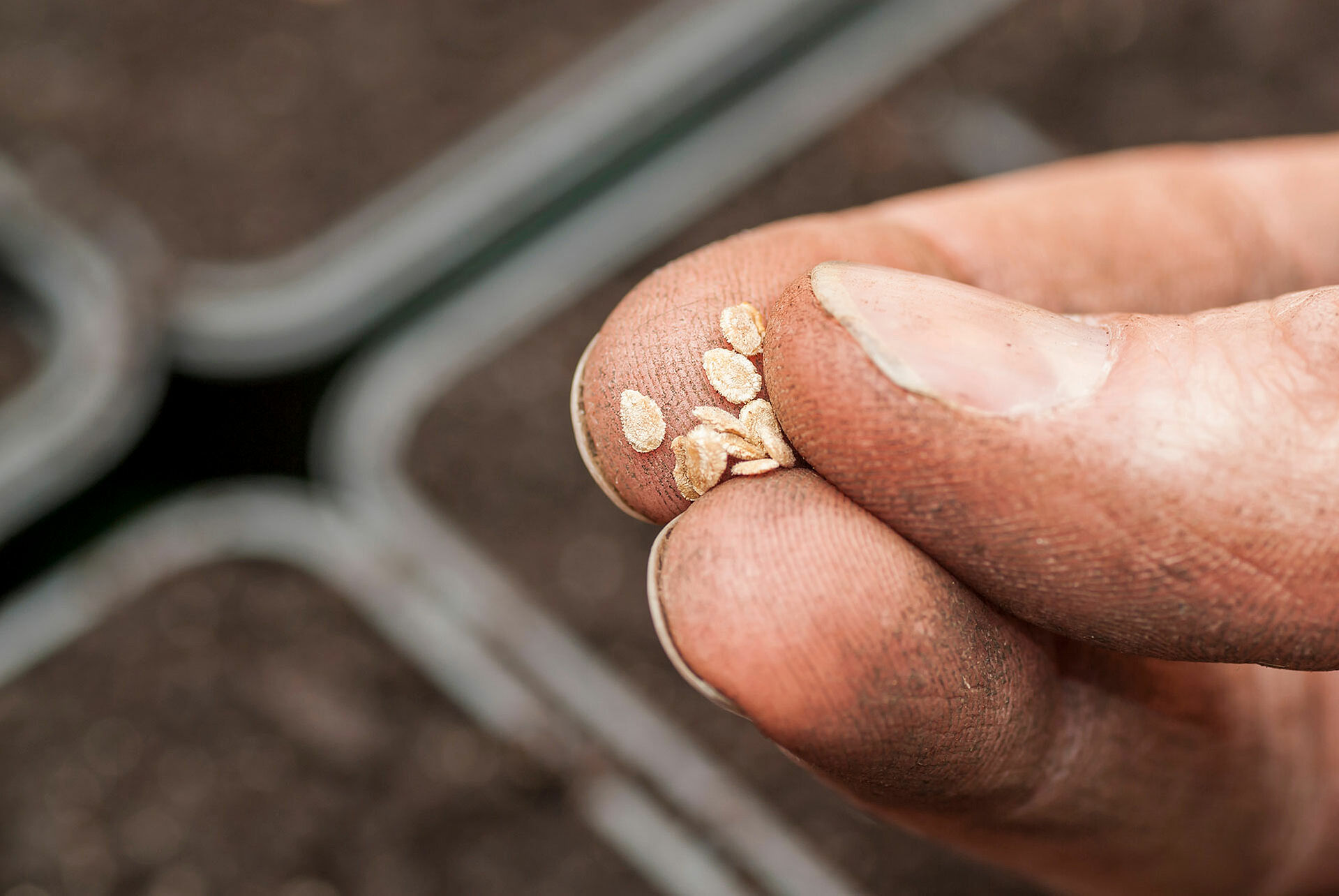
You can either get a young tomato plant at the market or a garden supply store and plant it—or you can buy seeds. You can start the plant indoors first, since it’s protected from the weather and pests there and stays nice and warm. Tomato plants prefer temperatures of 20 degrees Celsius or higher; 24 degrees Celsius is ideal.
Checklist: 9 Things to Keep in Mind When Growing Tomatoes
Tomato plants...
- ...like it sunny and warm.
- ...need at least 8 hours of sunlight a day.
- ...prefer a south-facing windowsill.
- ...should be protected from wind and rain.
- ...don't like drafts.
- ...need to be watered well, but not on the leaves.
- ...need enough space between them and other plants.
- ...need about 60–70 cm of space between plants in a row (depending on size).
- ...need at least 80 cm of space between rows.
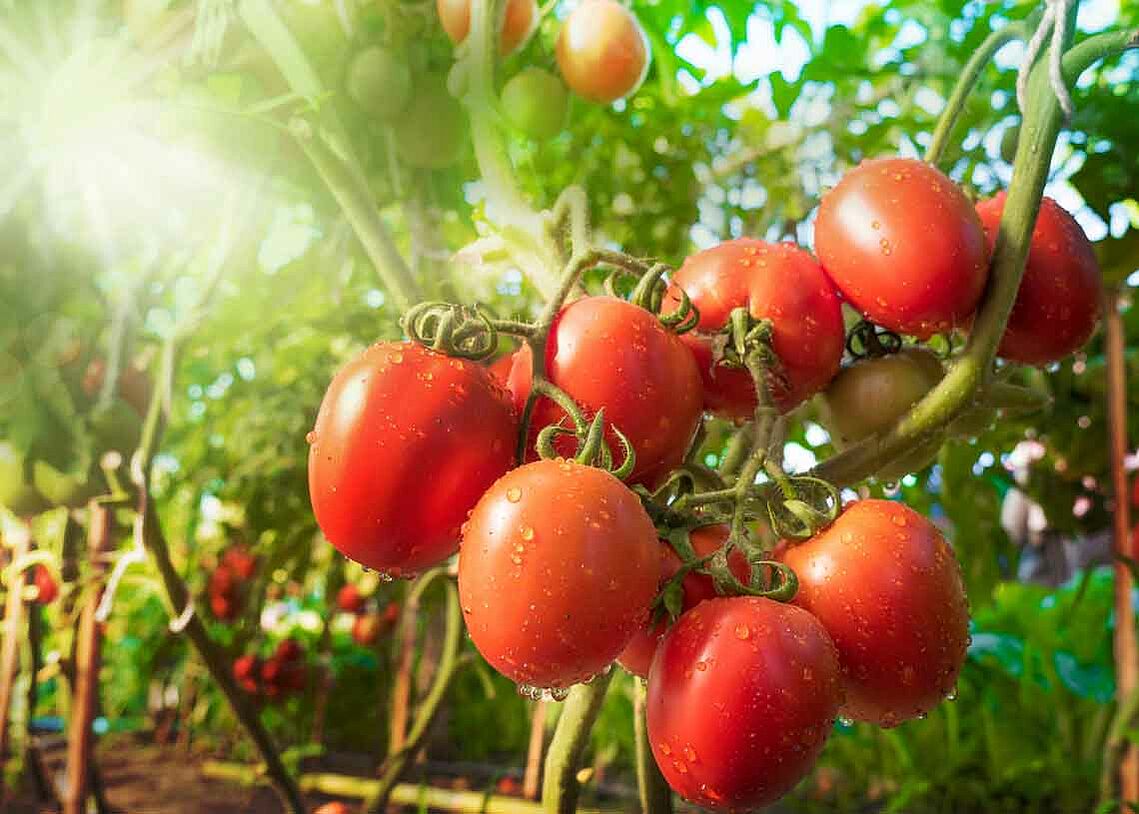
Tomatoes are absolute sun-lovers. They like it nice and warm, can’t stand rain, and avoid the cold. However, this applies not only to growing them but also to storing them.
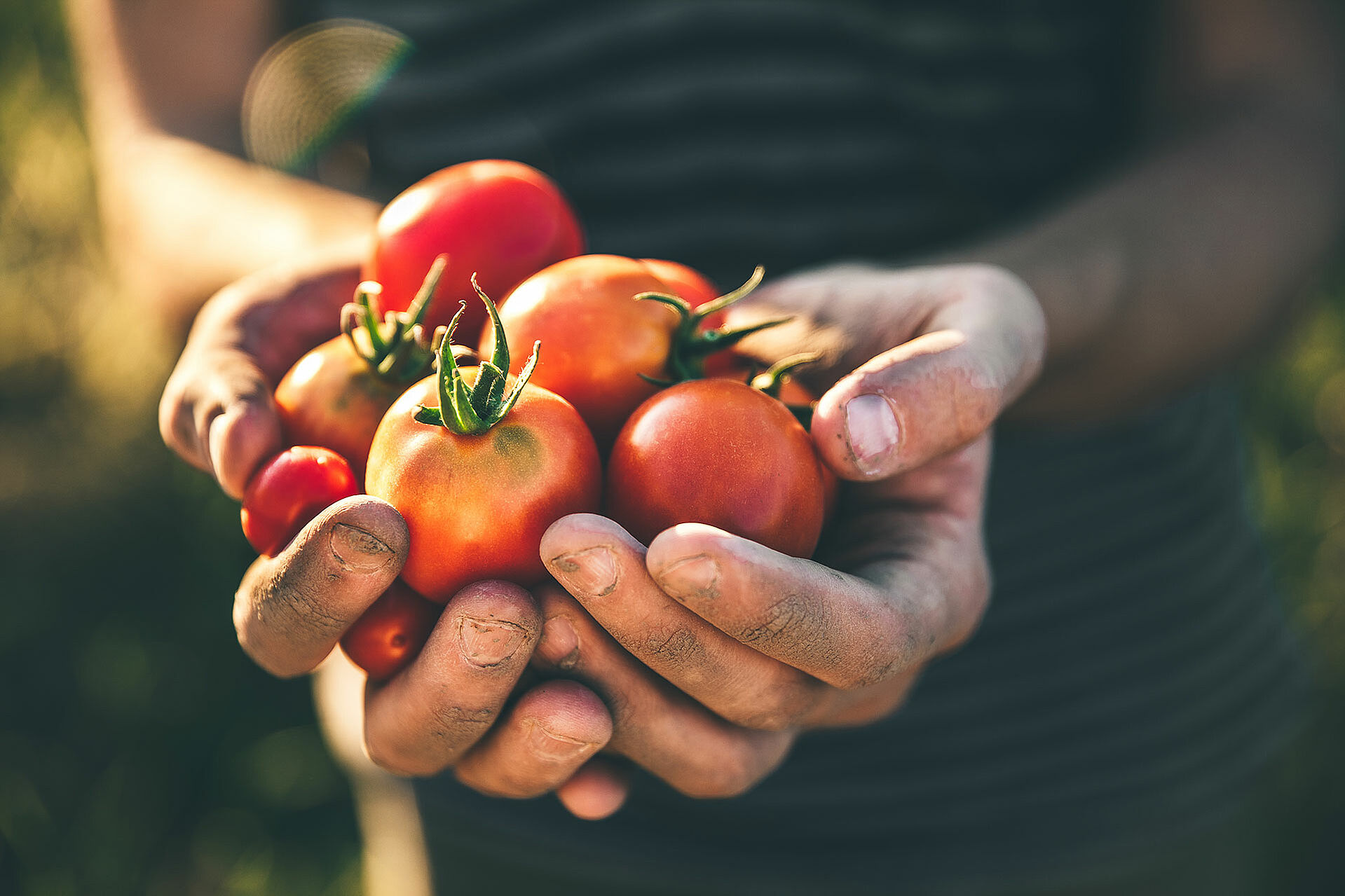
Under NO circumstances should you store tomatoes in the refrigerator! Not only do they dislike the cold, but they also lose their flavor when chilled. Many people think that all foods stay fresh longer in the refrigerator. However, this isn’t true for every food. Tomatoes don’t actually stay fresh longer in the refrigerator. On the contrary: they can actually start to mold more quickly there.
At what temperatures do tomatoes thrive?
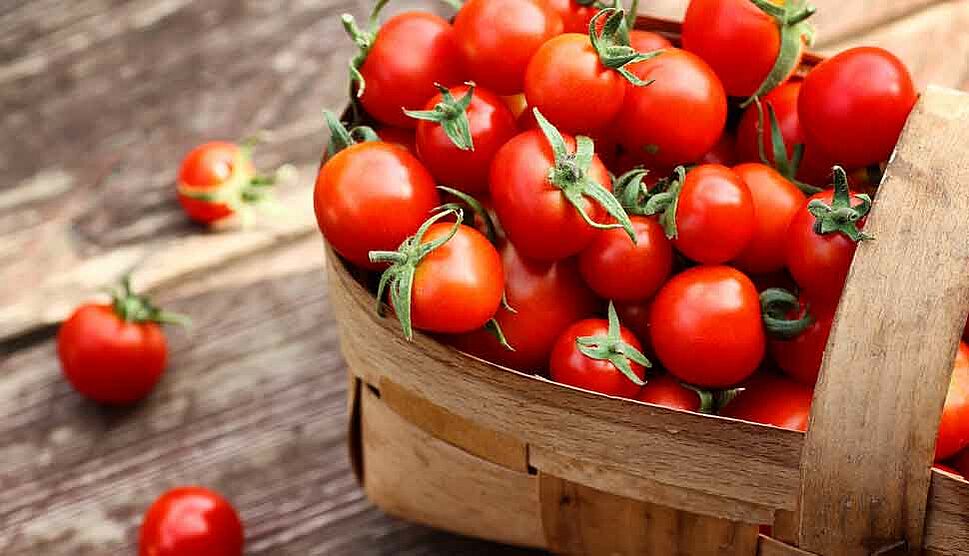
Many tomatoes prefer temperatures between 12 and 16 degrees Celsius when stored. Some varieties, such as vine tomatoes, prefer a slightly warmer range of 13 to 18 degrees Celsius. To avoid compromising their flavor, it’s important not to let the temperature go above or below this range. If you store these red gems in a place that’s too warm, they’ll rot faster.
Are tomatoes healthy?
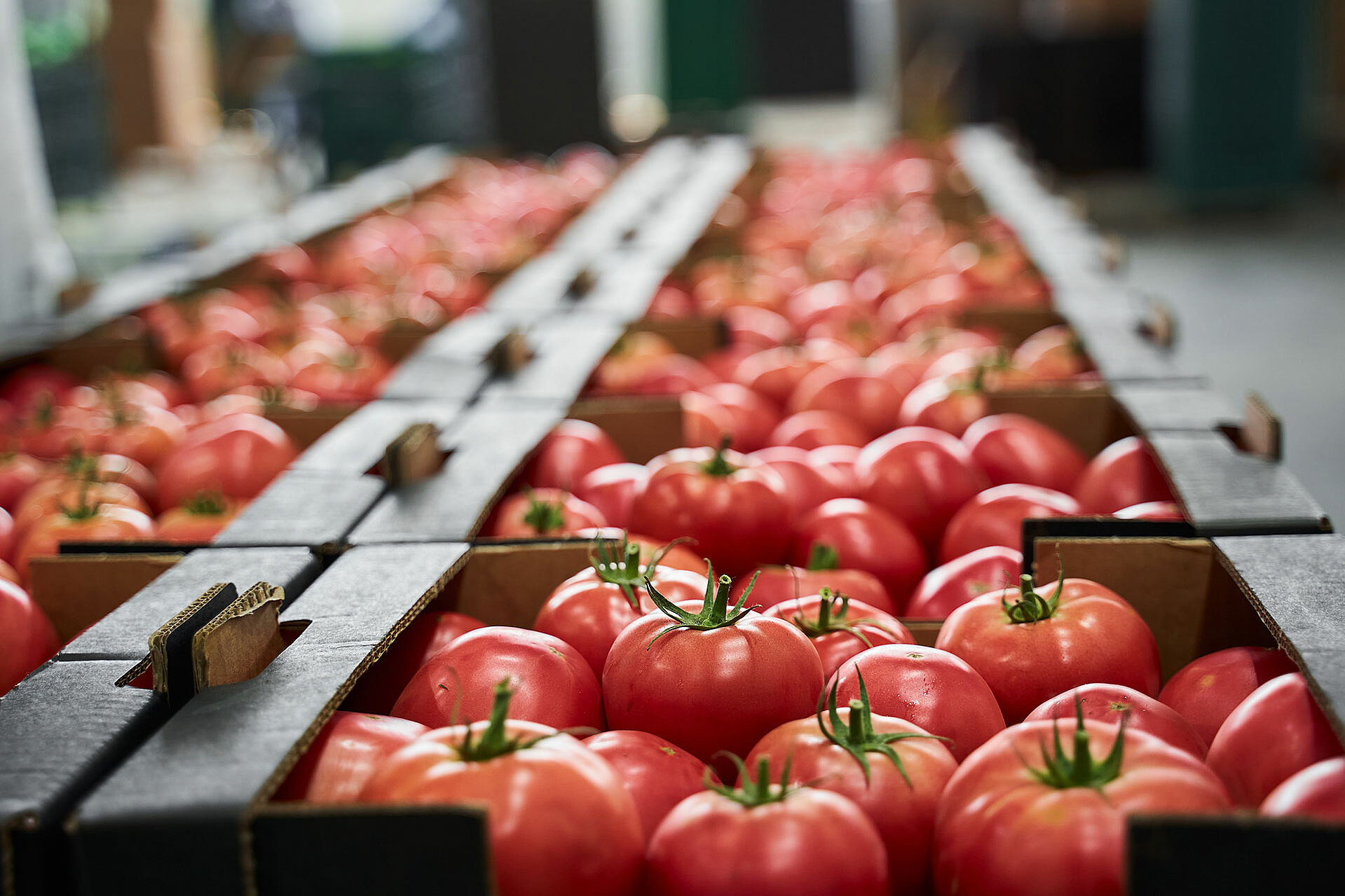
Tomatoes are true all-rounders. Not only are they especially delicious, but they’re also naturally low in calories, fat-free, low in sugar, and high in protein. These red vitamin-packed fruits naturally contain lycopene and are a source of vitamin C. They’re 95% water, making them excellent sources of hydration. Their high water content is also an advantage in cooking, especially when making sauces, since tomato sauces are often very creamy due to this high water content.
Lycopene in Tomatoes and Tomato Products
Tomatoes naturally contain lycopene, which is also found in processed tomato products. The amount of lycopene in a tomato depends heavily on the variety, the degree of ripeness, and growing conditions, such as sunlight exposure. Lycopene belongs to the class of carotenoids, which are phytochemicals. Carotenoids give tomatoes—as well as carrots and watermelons, for example—their red color. Lycopene is generally considered a potent antioxidant and free-radical scavenger. The potential effect of lycopene on cardiovascular diseases is currently under discussion. Researchers believe that lycopene from processed and heated products has higher bioavailability than that from raw, unprocessed fruits.
When tomatoes are heated, the lycopene they contain is released from the broken-down plant cells and is therefore more readily available. According to current research, adding a small amount of fat or oil further enhances this effect.
According to Stiftung Warentest, tomatoes are the most popular vegetable (fruit vegetable) among Germans. And this is not least because they are so versatile: whether in salads, served with meat or fish, or even as a dessert, such as tomato sorbet. Tomato products in particular—such as tomato juice, strained tomatoes, tomato paste, and tomato ketchup—are especially popular among Germans. This results in a per-capita consumption of 31 kilograms of tomatoes per year.


Black tomatoes or yellow tomatoes—what’s behind the color?
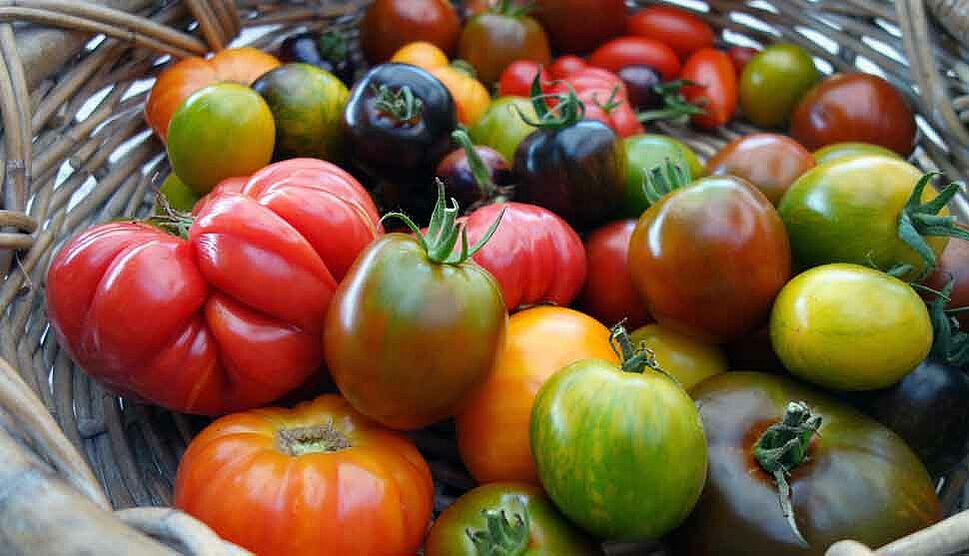
Tomatoes were originally yellow
Yellow tomatoes were called “golden apples” because of their color. This is also the origin of the Italian term “pomodoro,” since “pomo” means apple and “oro” means gold. Yellow tomatoes are said to be particularly easy to digest and gentle on the stomach due to their low acid content.
Black Tomatoes
Even though red is the most common tomato color, not all tomatoes are red. The best-known black tomato—one that is truly black, not purple or blue—is the “Black Krim” variety. This tomato variety is a beefsteak tomato that originates from the Crimean Peninsula. Black tomatoes can weigh more than 200 grams, making them among the largest tomatoes in existence. Black Krim tomatoes are juicy and flavorful, and their firm skin makes them very sturdy.
When is someone considered a “disloyal tomato”?
The tomato isn’t just Germans’ favorite “vegetable”—there are even idioms involving this red vitamin-packed fruit. When we call someone a “treacherous tomato,” we’re referring to someone who doesn’t keep their appointments or is generally unreliable. Most of the time, however, the expression is used not in a negative but rather in a humorous context. The exact origin of the expression “unfaithful tomato” is not entirely clear. It could be related to tomato cultivation itself, which was very unpredictable in the early 19th century due to a high number of crop failures. Another theory is that the phrase “unfaithful tomato” dates back to World War I. The Italians, who were already known for their tomato cultivation at the time, sided with the Allies in 1915, thereby breaking their word to their allies, Germany and Austria. As a result, the Germans used the derogatory term “tomato” to refer to Italians.
Why would someone have tomatoes over their eyes?
The idiom “Does he have tomatoes on his eyes?” is often used, for example, by soccer fans when the referee has made a “bad call.” It means that a person can’t see properly and overlooks important things. The idiom comes from people who have just woken up and still have sleepy, sometimes red eyes. These red eyes resemble tomatoes. Also, people who have just woken up are usually not yet fully alert and therefore often overlook important things.
If this has whetted your appetite for tomatoes, we’ve got some authentic Italian recipes for you to try. Buon appetito!