Pasta secca: The Basic Recipe for Homemade Durum Wheat Pasta
With this recipe, you can make your own Italian pasta. Durum wheat semolina and water make for wonderfully fresh pasta. Simply delicious.
You don’t have to go to Italy for good pasta—although every Italian will tell you that’s exactly what you should do. Fortunately, there’s a wide selection of high-quality pasta available at local supermarkets or online. But homemade pasta tastes especially good. And making your own pasta isn’t difficult at all. With our recipe for Italian pasta, all you need is durum wheat semolina, water, salt, and olive oil (which makes the dough smoother). This makes what’s known as “pasta secca,” which, unlike pasta all’uovo, contains no eggs. If you make fresh pasta without eggs, it will also keep longer.
Egg-free pasta is more typical of southern Italy. The further north you go in Italy, the more common “pasta all’uovo” becomes.
Ingredients
350 g durum wheat semolina
about 140 ml lukewarm water (up to 200 ml, depending on consistency)
1 tsp salt
1 tsp extra virgin olive oil
Step 1 : Make the pasta dough
Put the durum wheat semolina, water, salt, and olive oil in a mixing bowl and knead for about three minutes using the dough hooks on your hand mixer. You can also use your hands, but it will take a little longer. Make sure no semolina sticks to the sides of the bowl. If the dough feels too dry, carefully add a little lukewarm water. As a rule of thumb: the finer the durum wheat semolina, the less water you’ll need. Then knead the dough by hand for about three minutes. If the dough is crumbly, continue kneading it gently so it doesn’t fall apart.
Step 2 : Let the homemade pasta dough rest
The pasta dough is ready when it feels dry to the touch and no longer sticks to your fingers. Wrap the finished dough in plastic wrap and let it rest at room temperature for no longer than one hour.
If you put the dough in the refrigerator, you can also make your pasta the next day. Be sure, however, that the dough is at room temperature when you’re ready to work with it. So take it out of the refrigerator in plenty of time.
Step 3 : Roll out the dough sheets
Cut off a piece of the dough, knead it a few times, and flatten the pasta dough with the palm of your hand or a rolling pin until it’s about 1 cm thick. Then pass the dough through the pasta machine and fold it in half. Repeat this step about five times until the dough is evenly soft. To do this, select the setting with the widest roller gap (pasta machine: setting 0).
Once the sheet of dough is rolled out, set it aside and repeat the process with the next piece of dough. If the dough sticks to the pasta machine, place it between two dish towels to dry.
Now take each sheet of dough one by one and pass it through the pasta machine with progressively narrower roller spacing until you reach the desired thickness for your pasta. You’ll find details in your pasta machine’s instruction manual. With time—and a little practice—you’re sure to find your own “favorite thickness.”
Step 4 : Shaping the pasta
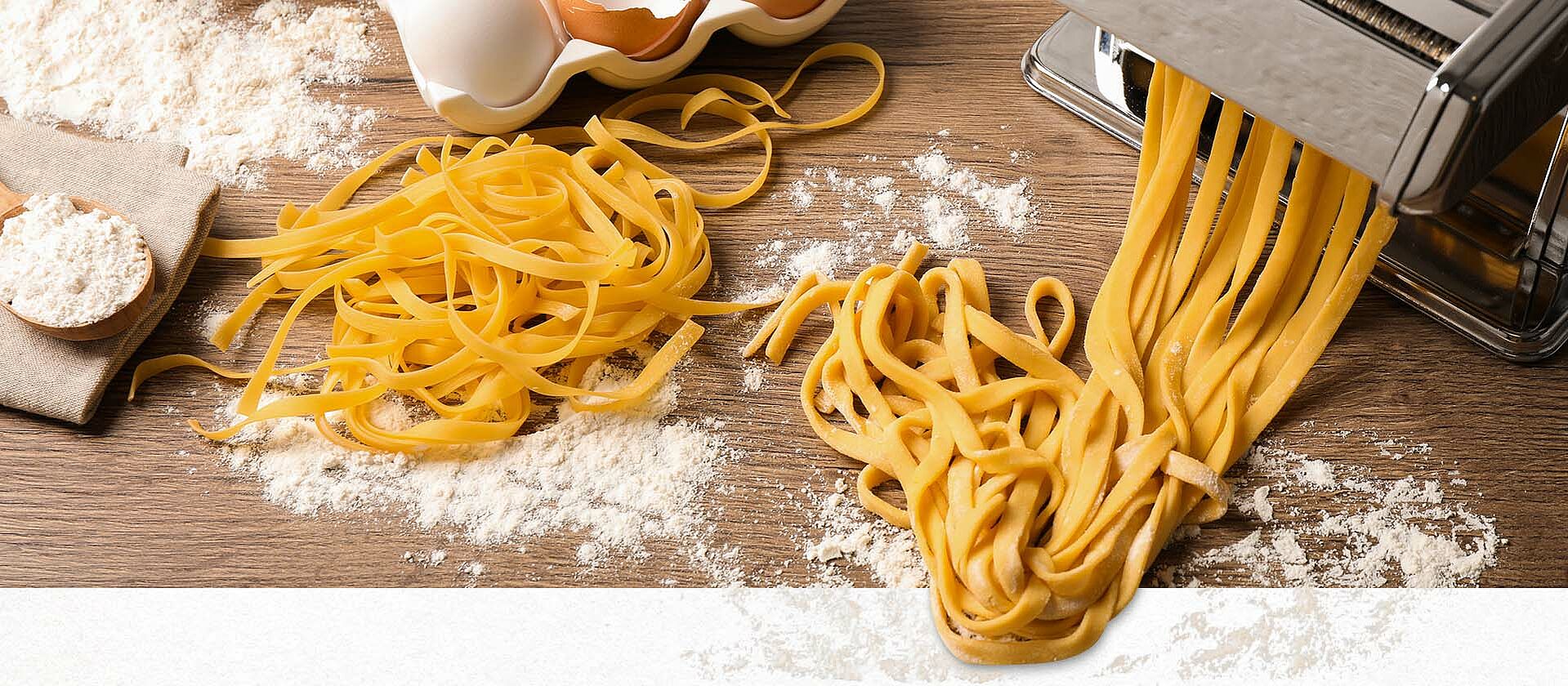
Attach the appropriate cutting attachment for the selected pasta shape to your pasta machine. If necessary, you can also cut long pasta—such as tagliatelle—by hand. “Thread” a sheet of dough through the cutting attachment while turning the crank. Carefully pull the pasta out with the flat of your hand as it comes out so that the strands don’t stick together. Repeat these steps with all the sheets of dough. Let the pasta dry for a few minutes before cooking. This will make it a little firmer.
Step 5 : How to Dry Fresh Pasta: Here's How
To dry the pasta, you’ll need as much space as possible so you can spread it out well and prevent the strands from sticking together. You can use a baking sheet lined with parchment paper or a special pasta dryer. A long wooden stick (such as a broomstick) placed horizontally between two chairs works just as well. If you dry the pasta this way at room temperature, you can remove it after 1 to 2 days. It’s important that the pasta is completely dry. When stored in airtight containers, dried pasta has a very long shelf life. By the way: you can also freeze your homemade pasta—in that case, it doesn’t necessarily have to be completely dry.
Step 6 : Cooking Homemade Pasta
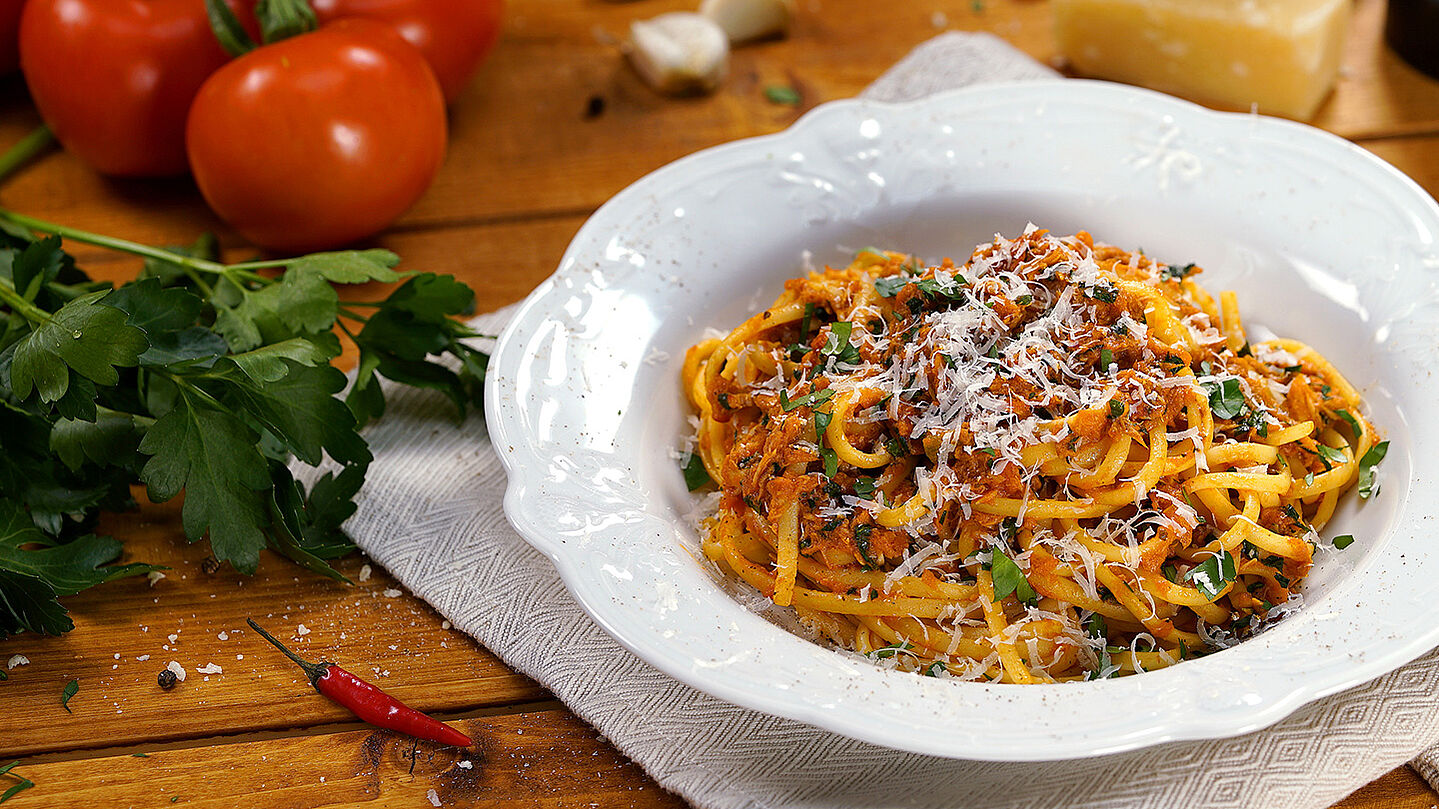
Fresh pasta cooks very quickly. It takes just 1–2 minutes for the pasta to cook in boiling water. The pasta is perfetto when it rises to the top of the pot—or floats to the surface. Now quickly drain the pasta through a colander—and serve.