Everything About Italian Pizza
Italian Pizza – Everything About This Beloved Classic of Italian Cuisine
Interesting facts about the history, preparation, and delicious recipes for authentic Italian pizza
Pizza is the most famous dish of all—and is enjoyed all over the world. The art of pizza-making likely originated in Naples. Although its origins are lost in the mists of time, the dish is so popular that the Neapolitan art of pizza-making is now officially recognized by UNESCO as an Intangible Cultural Heritage of Humanity. Find out how to make a traditional Italian pizza, what role the oven plays in the process, what regional variations exist, and whether you should actually eat pizza with a knife and fork.
What does the word "pizza" mean?
Exactly what the name “pizza” means and where it comes from is unclear. What is certain, however, is that a pizza is a flat yeast-leavened bread topped with a thin layer of various ingredients and then baked in an oven. Starting in the 18th century, tomatoes became popular in southern Italy, and the type of pizza we know today—with tomatoes, cheese, and oregano—is mentioned.
The Oven—The Key to a Great Pizza
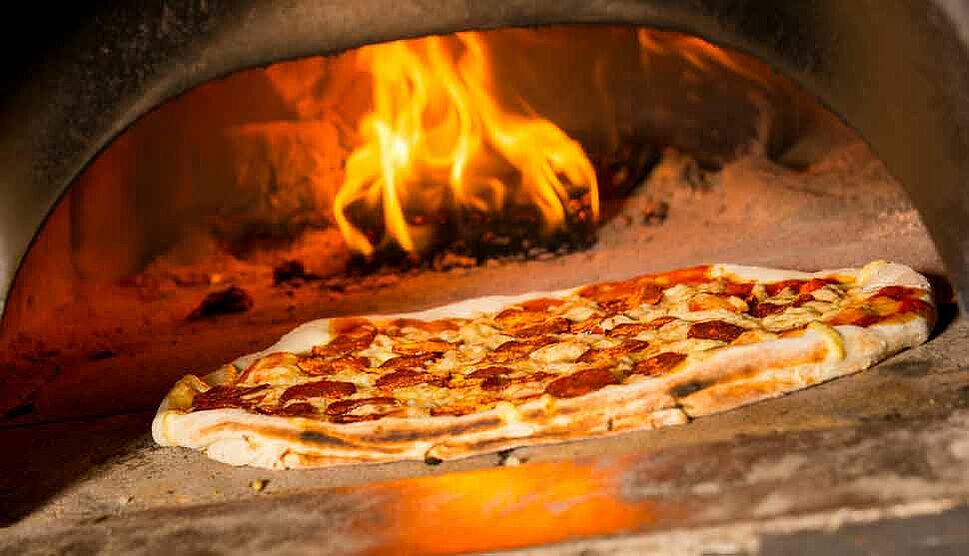
Italian pizza is traditionally baked in a wood-fired oven. The temperature reaches around 350 °C. The pizza is baked directly on the stones without a baking sheet. This prevents condensation from forming on the bottom of the crust, resulting in a nice, crispy pizza. The thin crust is done in a matter of minutes, and the cheese melts perfectly.
You probably don’t have a wood-fired oven at home. However, there are special pizza stones that can be preheated in the oven and produce a similar effect.
Alternatively, you can try a perforated pizza pan, which allows condensation to evaporate more quickly.
Since every oven is different, just experiment to find out what temperature and baking time will make the pizza soft or crispy enough.
If you enjoy eating pizza often, a small pizza oven might also be a good option. These units feature a fireproof “schamott” brick on which the pizza can be placed directly. Pizza ovens reach temperatures of up to 400 °C—so, much like in a wood-fired oven, the pizza is ready in just a few minutes.
The Basic Pizza Recipe and Popular Variations
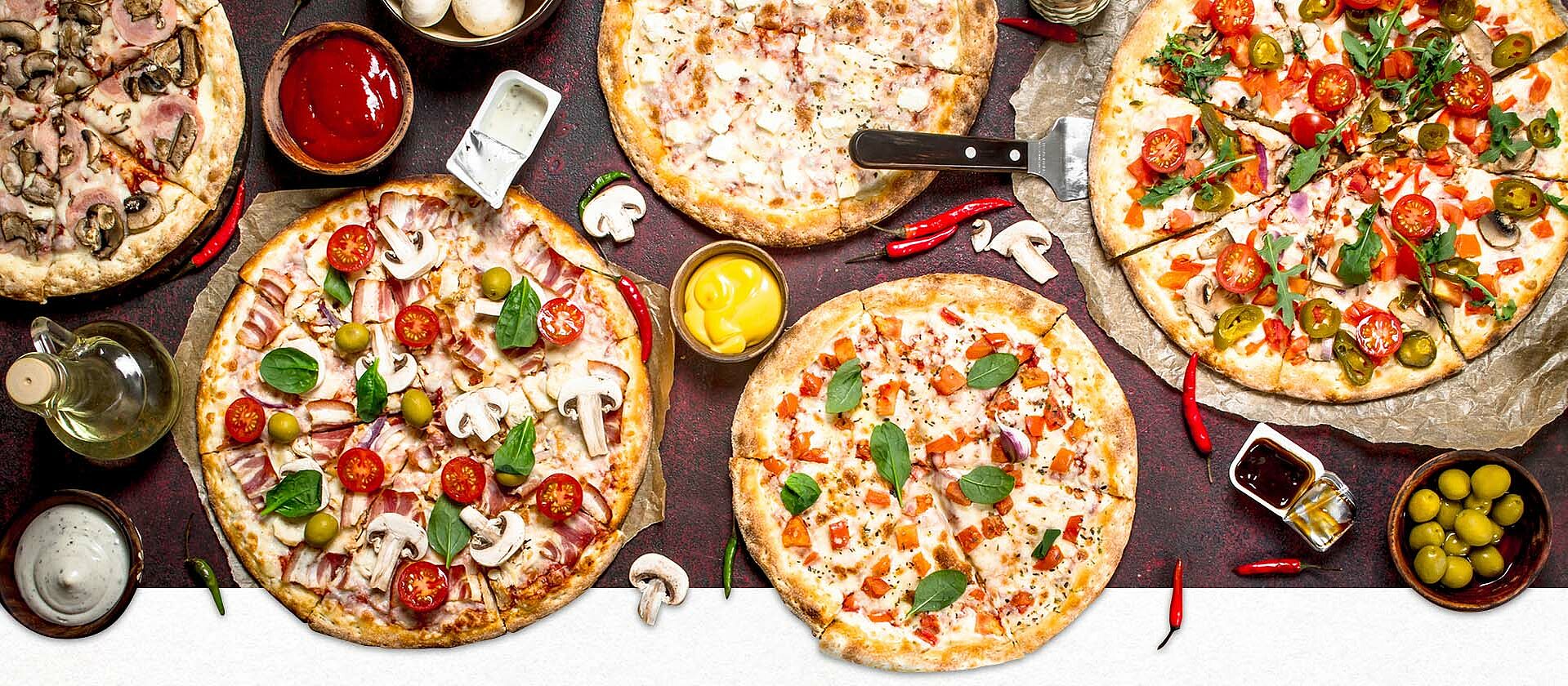
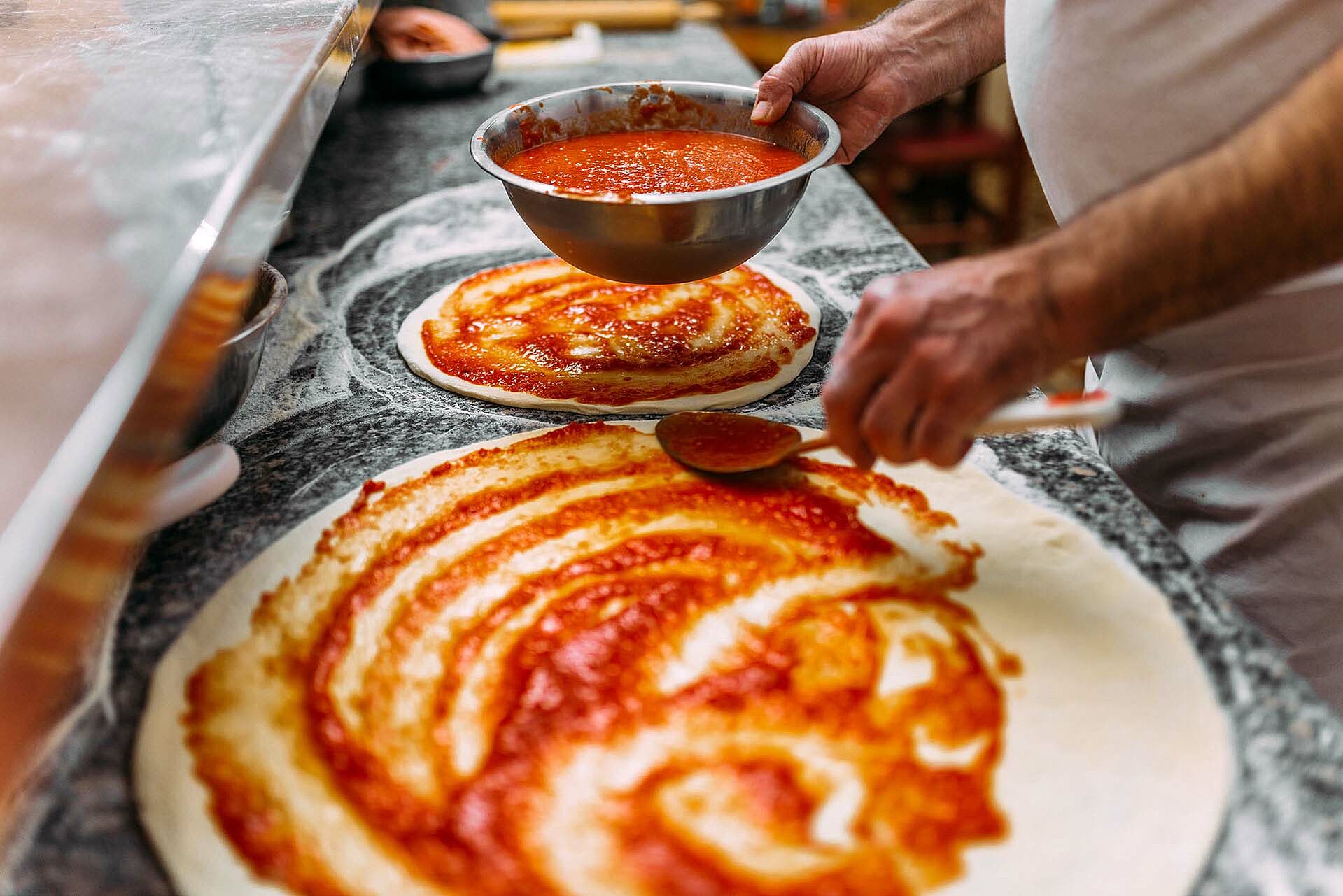
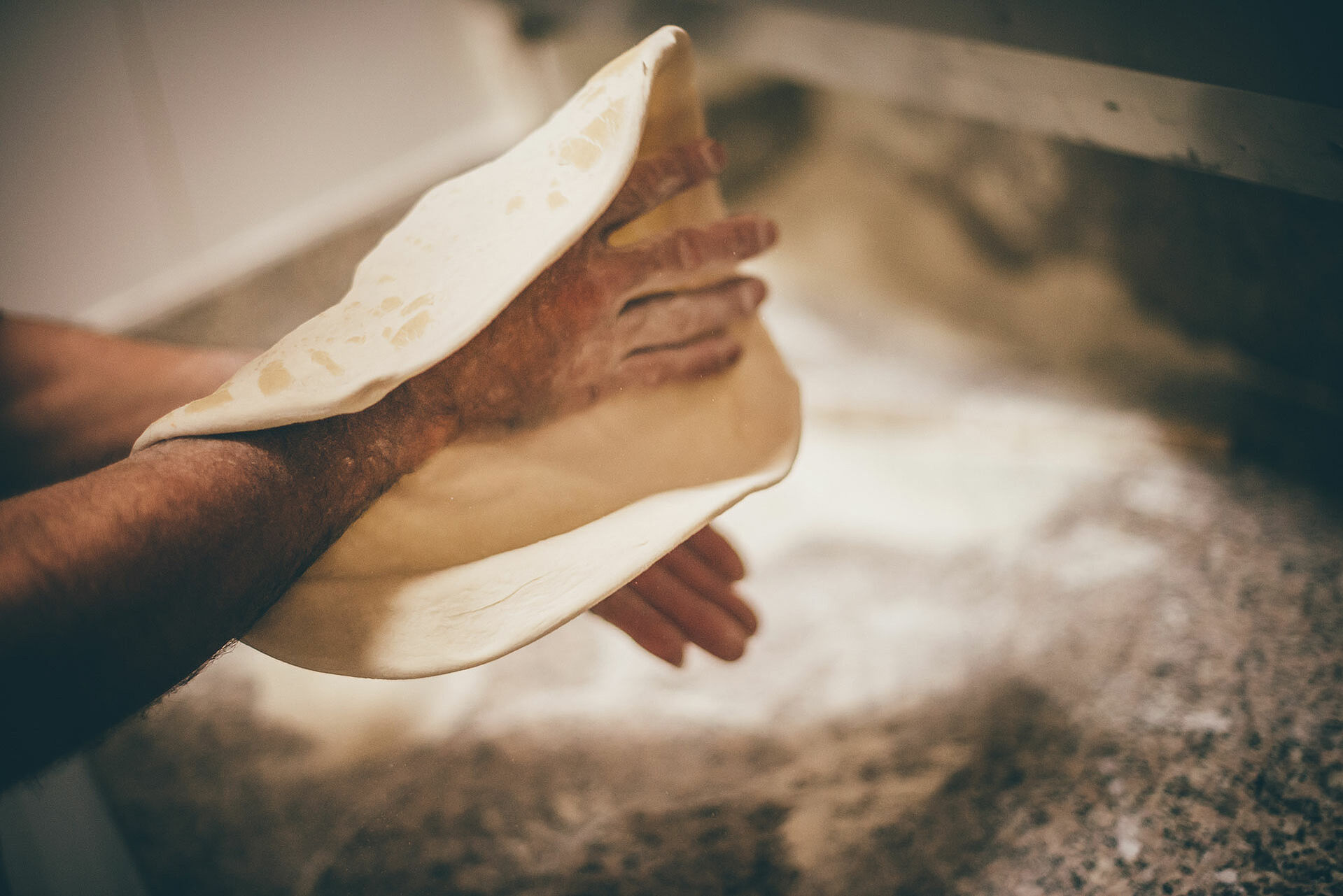
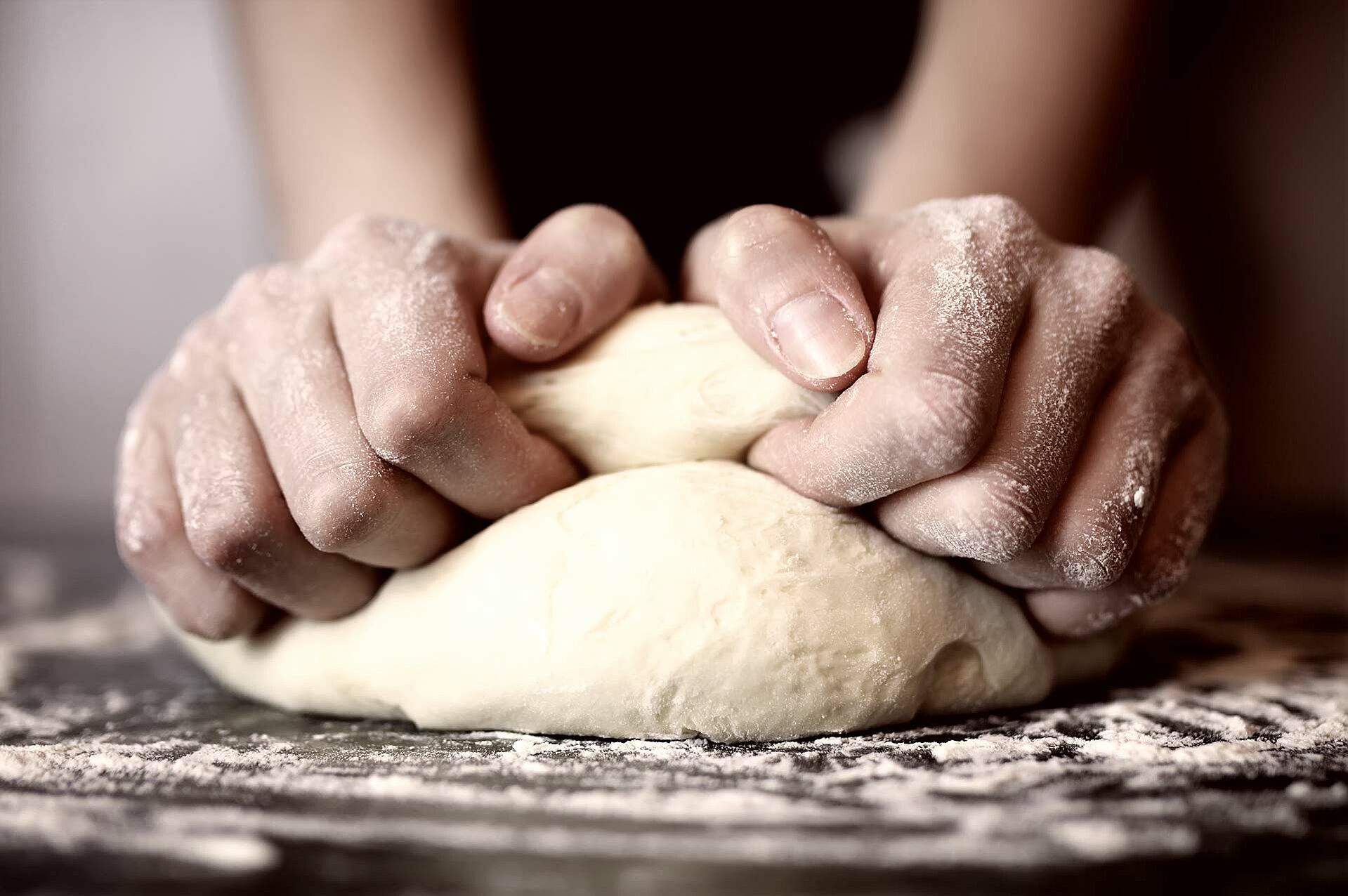
The base for Italian pizza is dough made from flour, water, yeast, salt, and possibly a little olive oil. It’s not hard to make, and you can easily make the dough yourself. In Italy, the dough is rolled out very thin—unlike the American version. First, a creamy tomato sauce is spread on the dough, which is then topped with cheese and various other ingredients according to personal taste: finely chopped vegetables, mushrooms, fish, or seafood are all good choices, and there are many regional variations.
Pizza Quattro Stagioni
On the pizza quattro stagioni (which translates to “Four Seasons Pizza”), each quarter of the pizza is topped with different seasonal ingredients. The classic Italian cookbook “The Silver Spoon” (“Il cucchiaio d’argento”) lists the following toppings for the quarters of the pizza quattro stagioni:
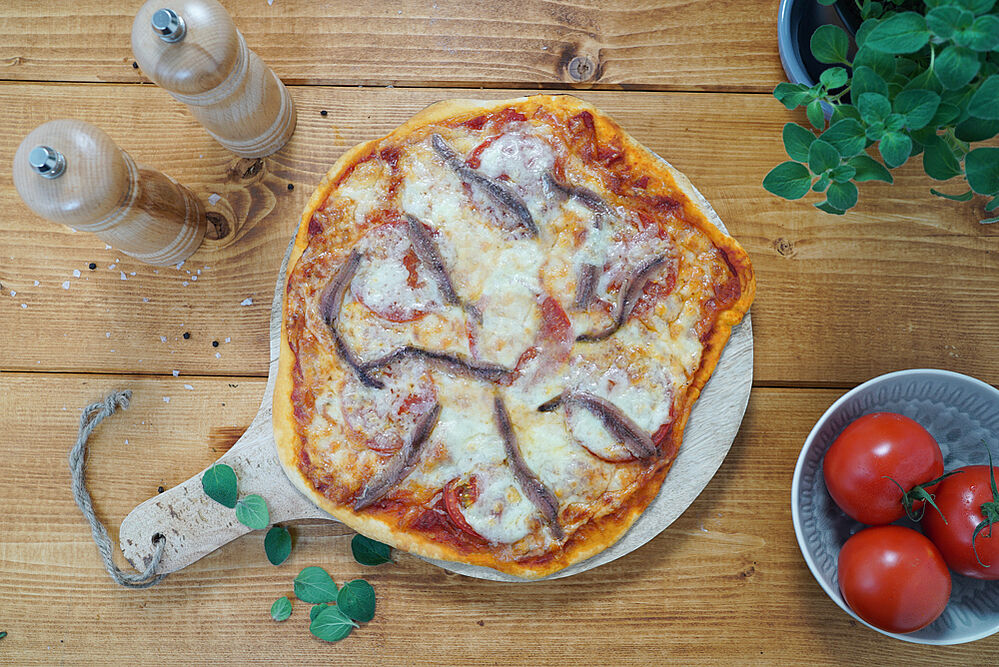
- anchovies and olives
- Mussels
- Cooked ham and mozzarella, and
- Artichokes and black olives
Hawaiian Pizza
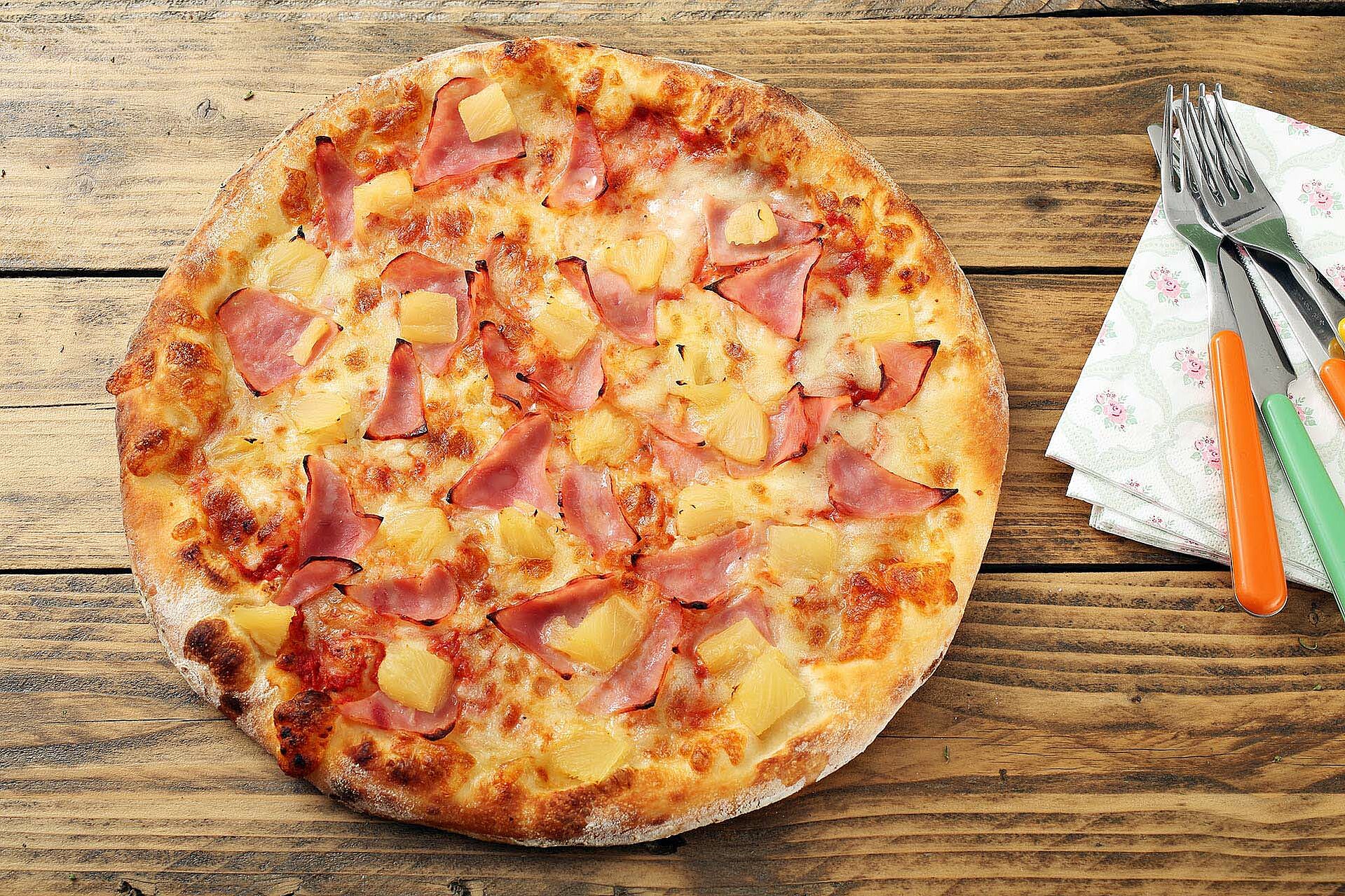
The Hawaiian pizza, topped with cooked ham and pineapple, does not actually originate from Italy, but rather from Canada, where it was invented by a restaurateur. It bears this name because it is distinguished by the ingredient pineapple, and Hawaii is home to the largest pineapple-growing region.
Margherita Pizza
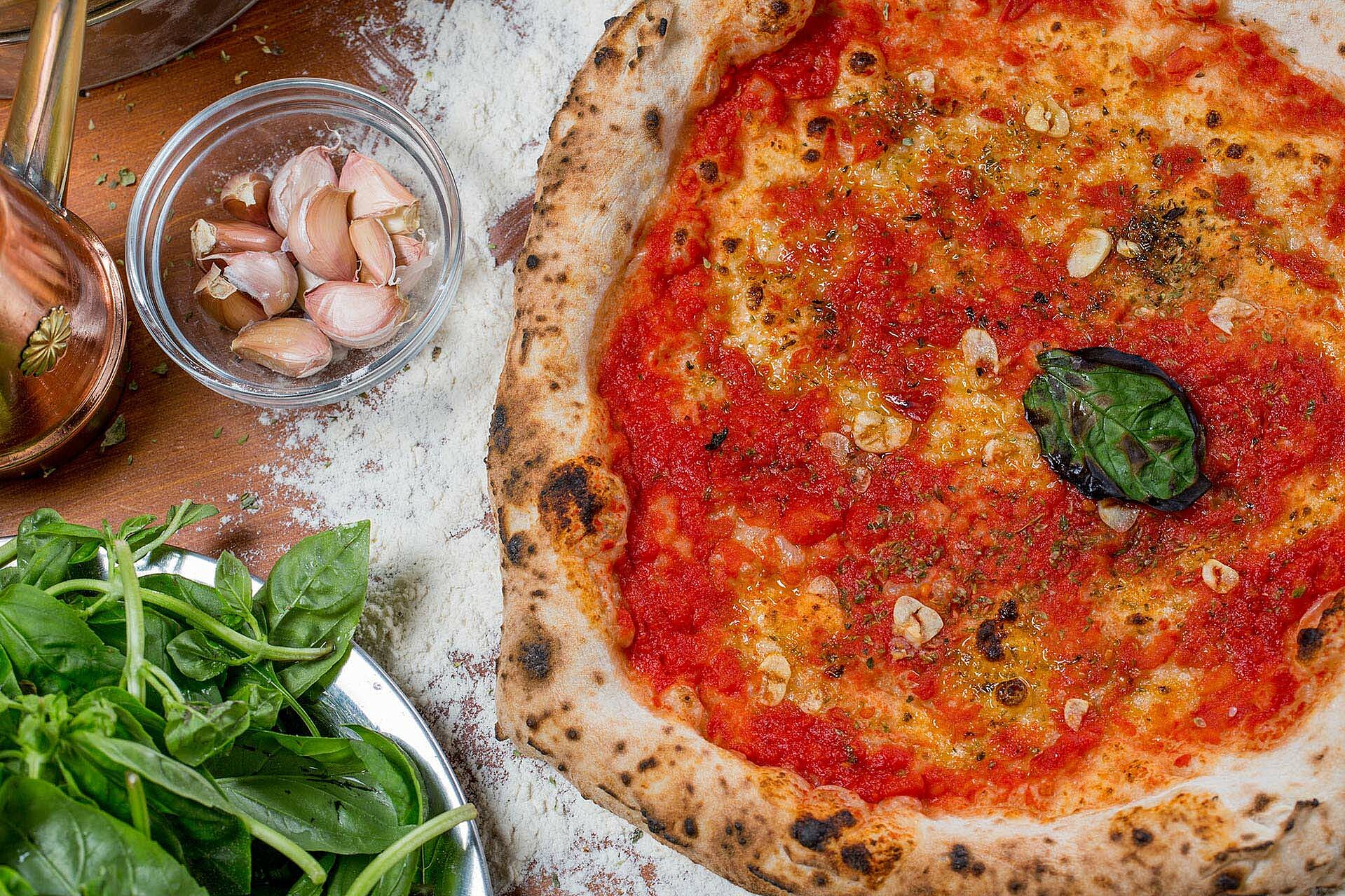
There are also pizza varieties with very sparse toppings. However, thanks to their unique combination of ingredients, they have become true classics—such as the pizza marinara, which is topped only with oregano and garlic in addition to tomato sauce.
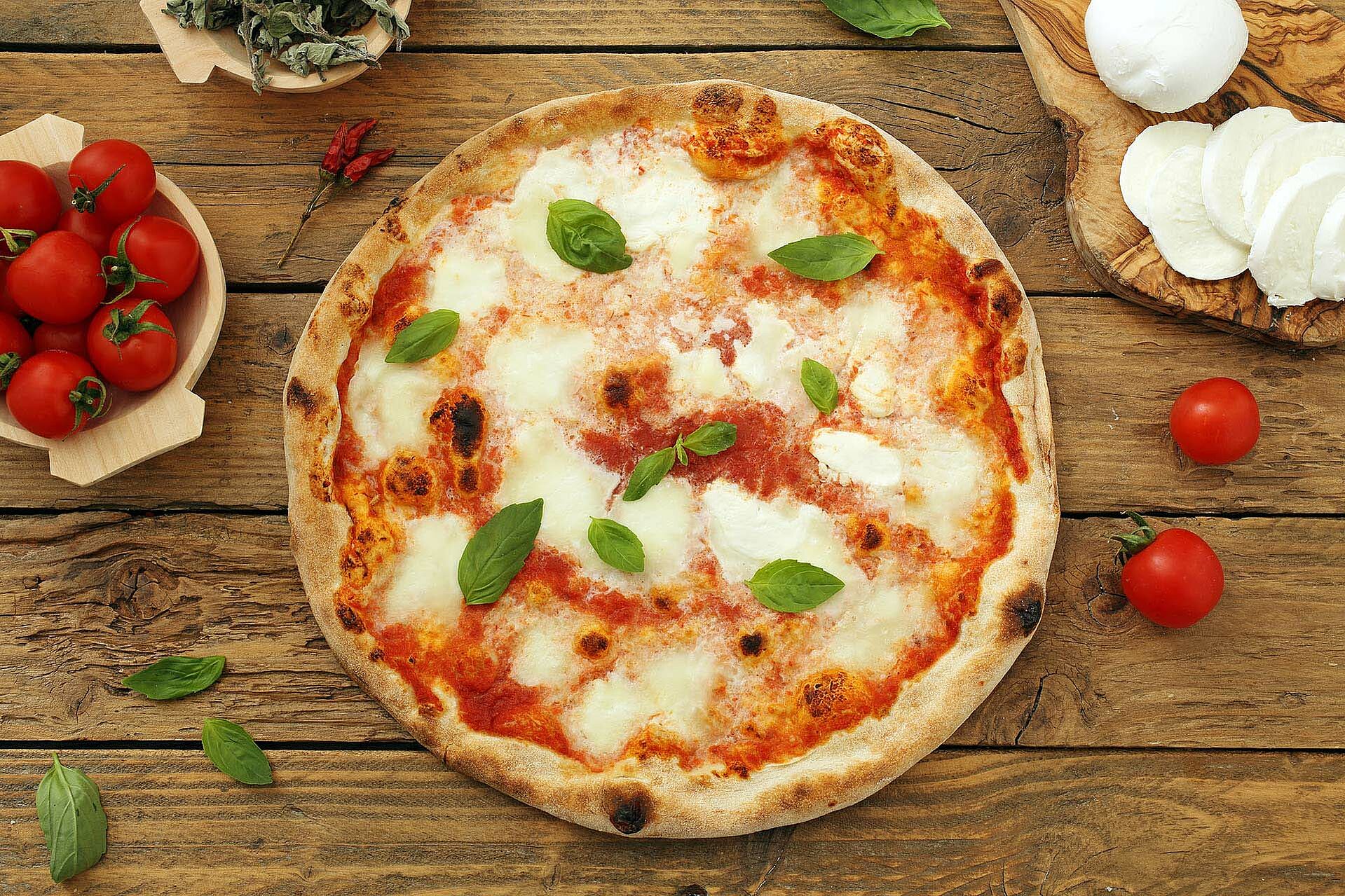
Or the well-known pizza margherita, which is topped with tomatoes, mozzarella, and (after baking) fresh basil. The colors of the ingredients—red, white, and green—are also the colors of the Italian flag.
Roman-style white pizza
Pizza bianca romana doesn’t even use tomato sauce. The dough is simply sprinkled with salt or, sometimes, oregano. According to legend, bakers in the capital came up with this recipe to test the temperature of their wood-fired ovens. Today, this pizza is often served as a side dish in Italy. Fresh out of the oven, it’s absolutely delicious!
Tip 1: Adding toppings to a pizza: What’s the best order? When should you add the cheese to the pizza?
Italian pizza is topped in this order:
- Tomato sauce.
- Cheese
- Toppings of your choice
For one thing, this makes it easy to tell which pizza is yours. For another, as we all know, you eat with your eyes first. The vibrant red of the tomatoes and the varied, delicious toppings—it would be a shame if this sight were hidden under the cheese.
Tip 2: How long should the pizza dough rest?
Many pizza makers in Italy swear by letting the pizza dough rest for a long time. As a rule of thumb, the dough is “ready” when it has doubled in volume. Temperature is a key factor here—it speeds up the fermentation process. You should let the dough rise in the refrigerator for at least 6 hours. Some Italians are convinced that truly good pizza dough should rest for 48 hours before you use it.
If you’ve opted for a quick-prep pizza dough recipe, let the dough sit at room temperature until it reaches the desired volume. Or you can place the dough in the oven at 50 degrees for about 20 minutes—that’s the fastest way.
Tip 3: The Window Test
Stretch your kneaded pizza dough so that it doesn't tear. Hold the stretched dough up to the light coming through your kitchen window. If you can see through the dough—meaning it’s thin and translucent—you’ve kneaded it enough. If you can’t see through it, keep kneading. The smoother the dough, the greater the culinary delight. And you’ll get toned upper arms as a bonus.
The cheese on Italian pizza
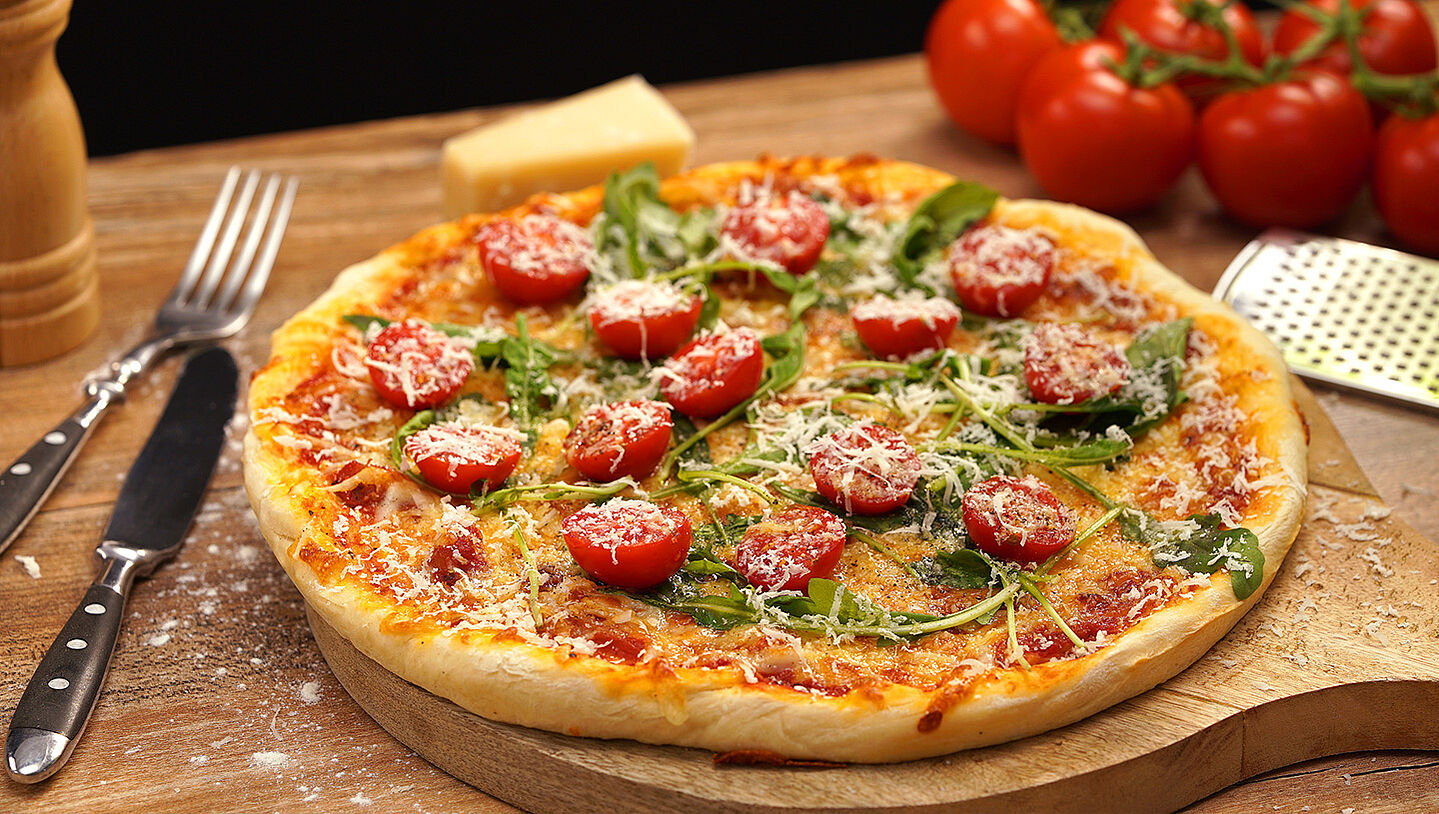
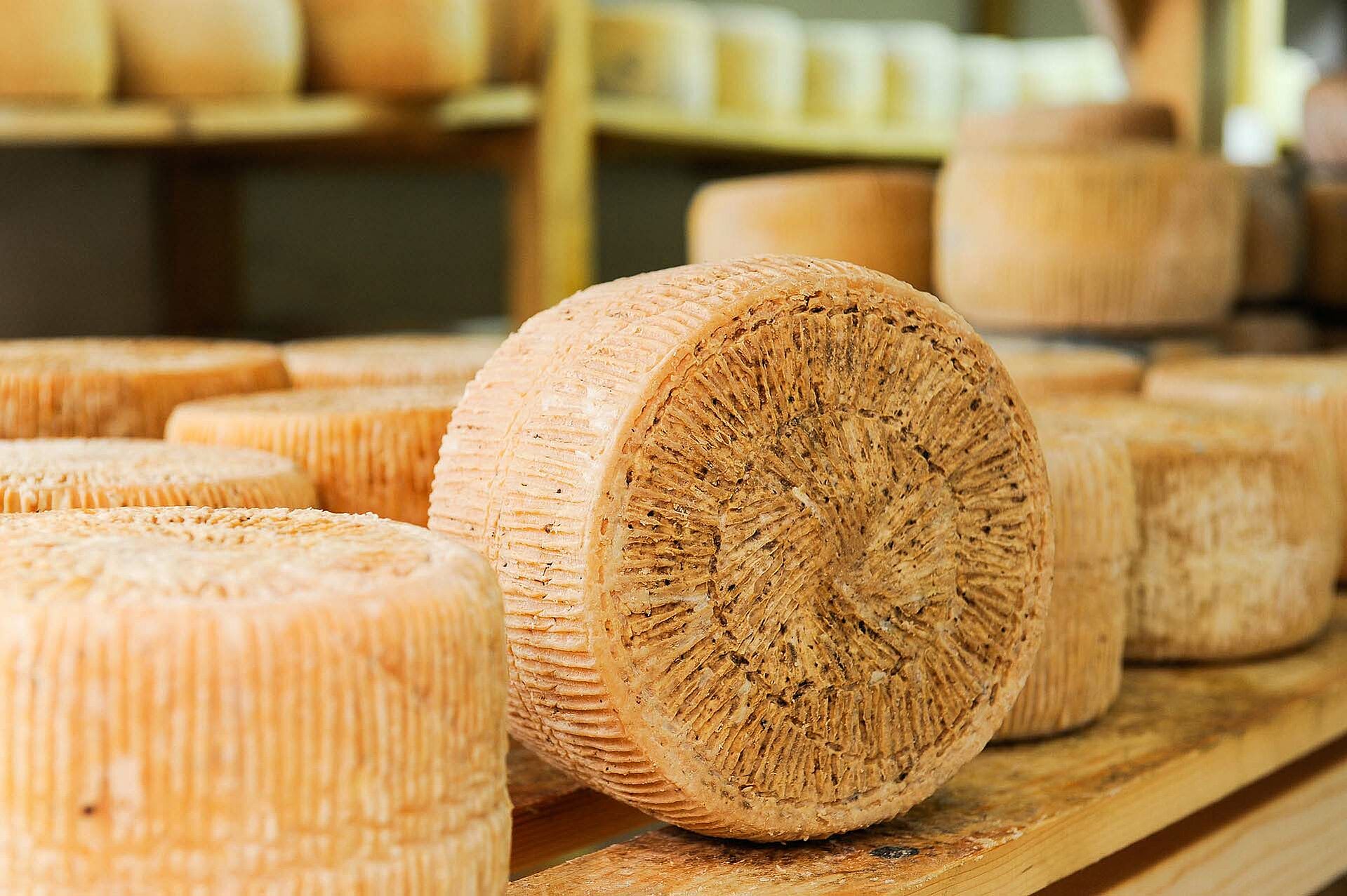
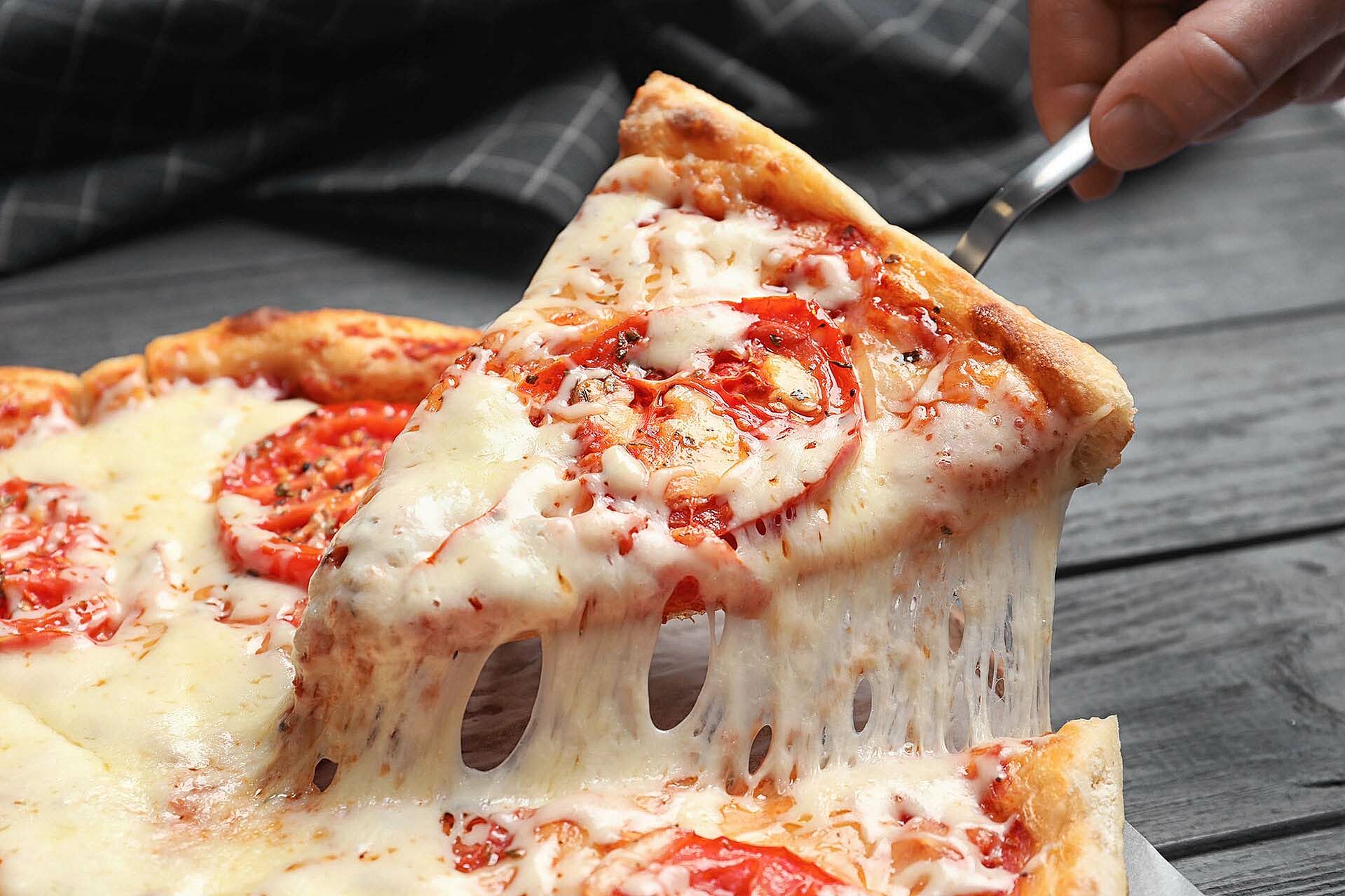
On a classic Italian pizza, the cheese is placed on top of the tomato sauce. It melts deliciously in the oven and browns slightly. Which cheese you use is entirely up to your taste. In Italy, mozzarella is the standard choice because it has a mild flavor and is low in salt. This makes it a good match for any topping. However, Parmesan or the tangy Pecorino are also used. A “pizza quattro formaggi” features a variety of Italian cheeses, usually including the popular Italian Gorgonzola.
Which pizza cheeses stretch into strings?
Not all types of cheese stretch into strings. Young, soft cheeses with a high fat content—such as mozzarella, Gouda, or Edam—melt particularly well. Hard cheeses like Parmesan aren’t as suitable.
Calzone - Folded Pizza
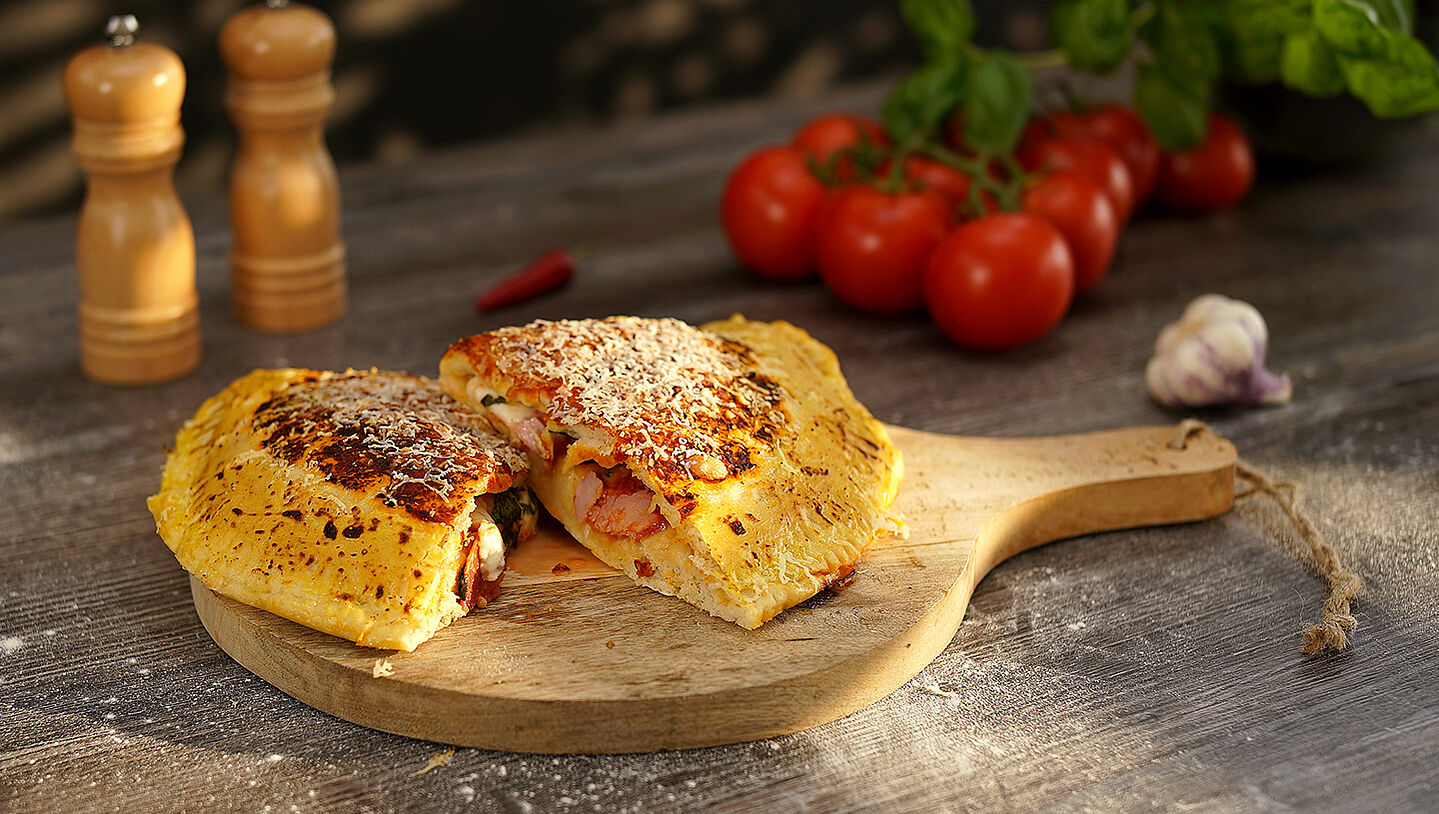
Another pizza variation is the pizza calzone, which could be described as a folded pizza. Translated, the Italian word “calzone” means “stockings” or “pants” (perhaps because the dough covers the ingredients). The calzone originally comes from Naples. The pizza is topped on one half, then folded in half and baked. Many restaurants serve an aromatic green sauce (salsa verde in Italian) with the calzone, made from chopped green herbs, oil, lemon juice, and garlic.
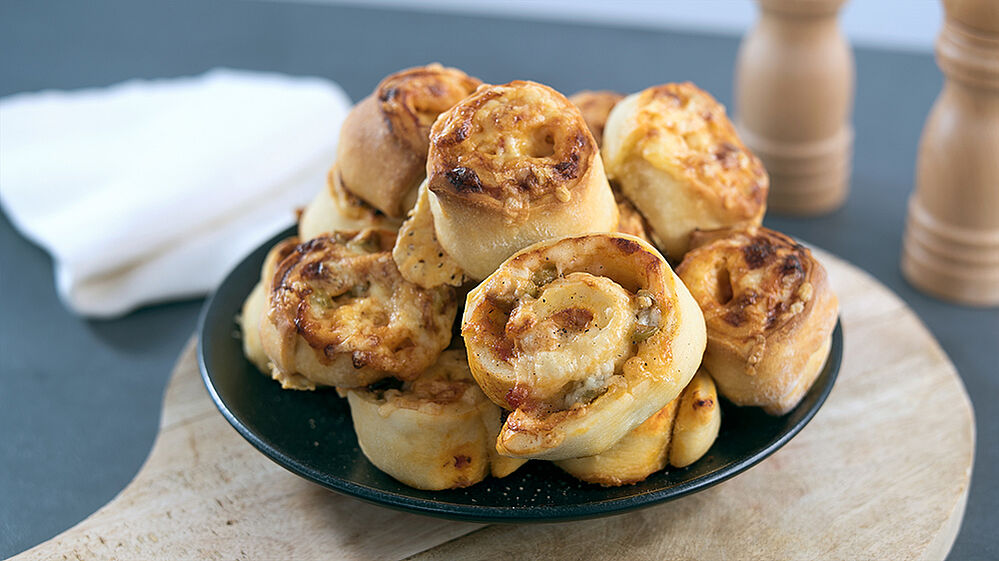
Pizza bread is also a popular side dish for an Italian meal or with a salad. It’s baked from simple pizza dough and sometimes seasoned with oregano or salt. It’s often served in the form of small rolls.

How to Eat Pizza in Italy
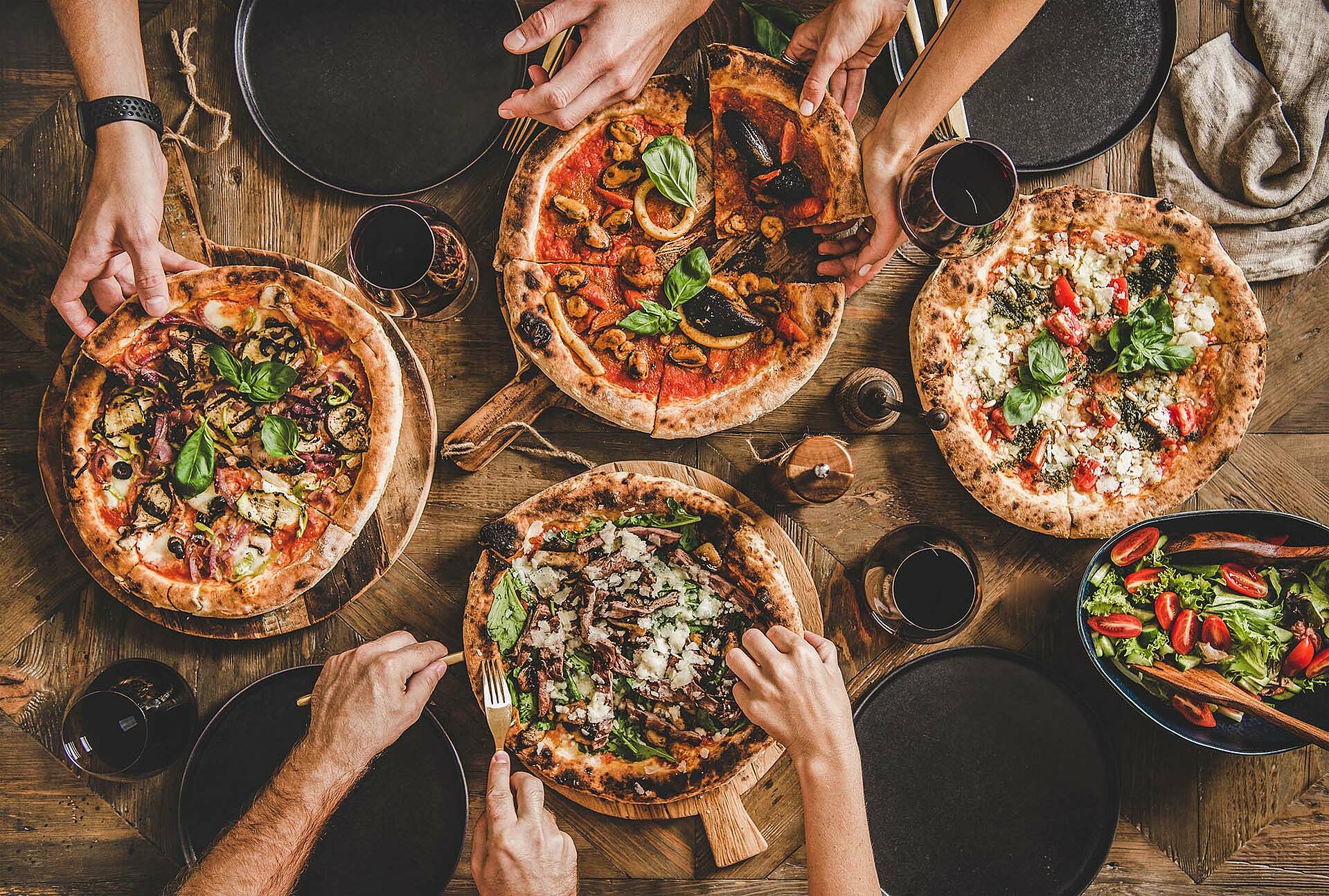
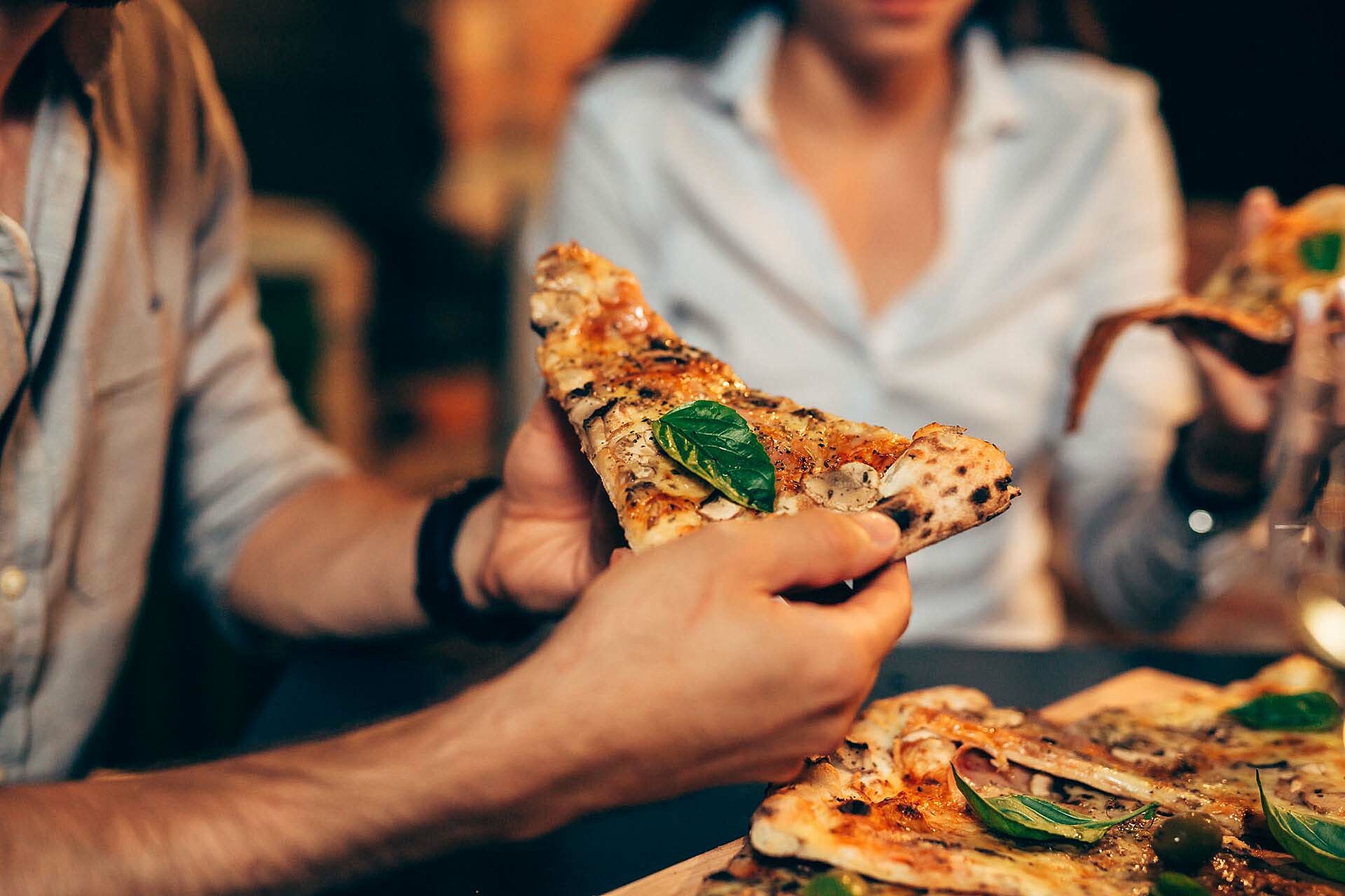
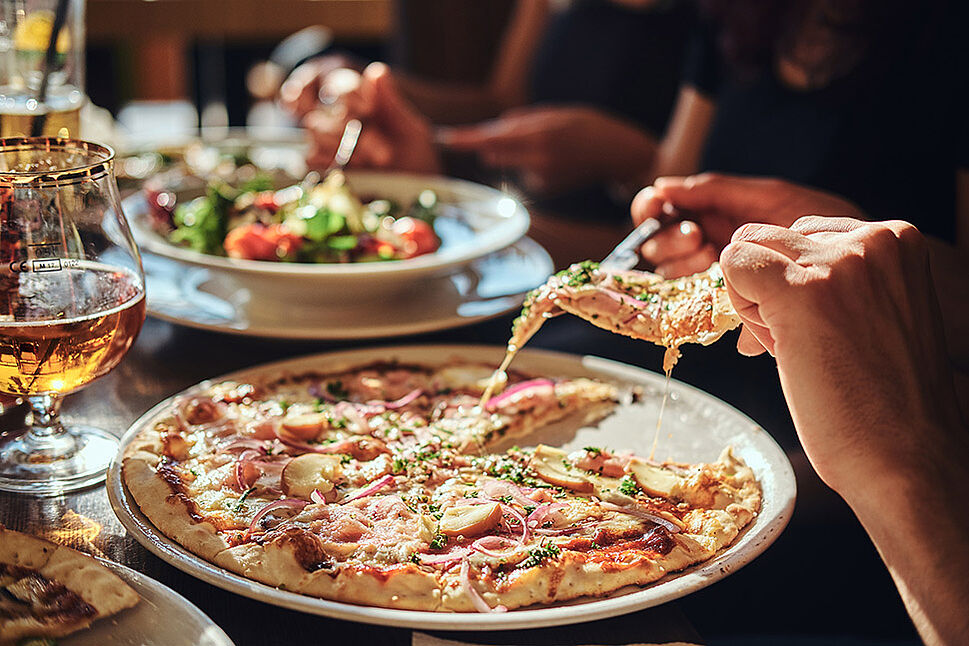
There’s a lot of debate about the proper way to eat pizza. Are a knife and fork allowed, or is it better to eat pizza with your hands? Here’s a rule of thumb: It really depends on where you’re eating the pizza—as street food, in a pizzeria, or at a restaurant. In Naples, people like to fold their pizza slices—twice—and eat them right out of their hands. This keeps the toppings and sauce on the pizza. Another option is to cut the round pizza into eighths and eat the slices with your hands. And if you prefer to eat with a knife and fork, you can certainly do that with pizza as well; especially in restaurants, that’s the usual way to eat pizza.
By the way: Since pizza is considered a snack in Italy, Italians serve beer, water, or cola with it—not wine.
The Global Triumph of Pizza
Whether in Japan, France, or South Africa—pizza is enjoyed all over the world today. Local variations have also emerged, such as Hawaiian pizza or chicken masala pizza. And: In New Zealand, you have to order the tomato sauce separately; the toppings are usually placed directly on the dough—just like in the earliest Italian pizza recipes, before Columbus brought tomatoes back from the Americas.
For a long time, pizza was considered a food for the poor in Italy. Tourists are said to have played a decisive role in making pizza Italy’s national dish today. Demand quickly spread throughout the entire country, and pizza thus became a sought-after classic for both tourists and locals.
Buon appetito!