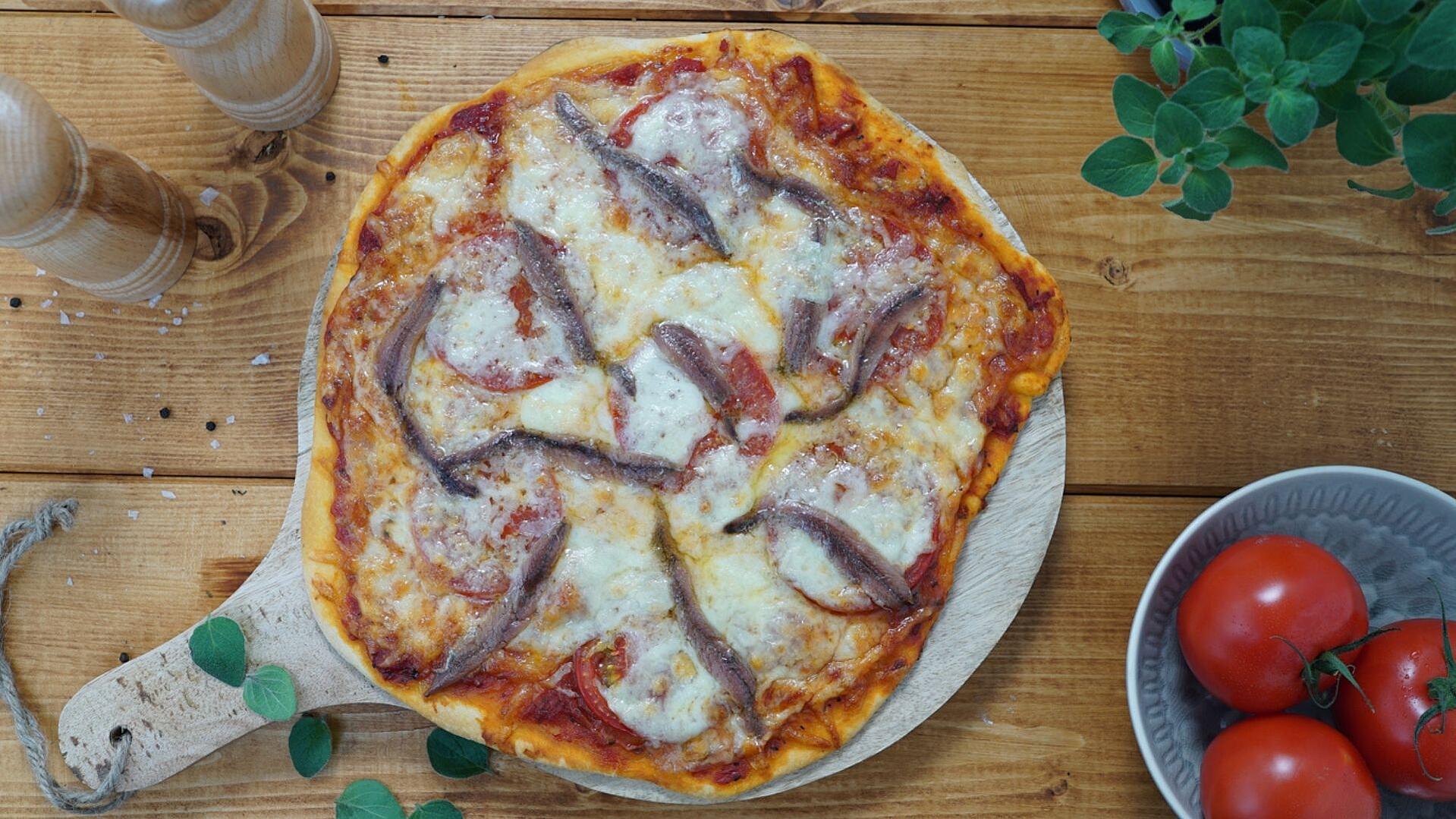
Pizza with Anchovies
Recipe for Homemade Pizza with Anchovies alla Napoletana
Anchovies (“Acciughe”) are a delicacy of Mediterranean cuisine—especially Italian cuisine. Their tender flesh and robust flavor make them a popular fish: pan-fried, grilled, deep-fried, or preserved in salt or oil. Anchovies give pizzas a wonderful flavor. But they also taste especially good in a homemade tomato sauce. And if you use anchovy fillets, you’ll save yourself the trouble of filleting the fish.
This Neapolitan pizza with anchovies is the favorite pizza of Italian actress Sophia Loren—born in Rome and raised near Naples. Maybe this “alla napoletana” anchovy pizza will soon become your favorite too?
Ingredients
Homemade pizza dough or—for those in a hurry—ready-made dough from the supermarket
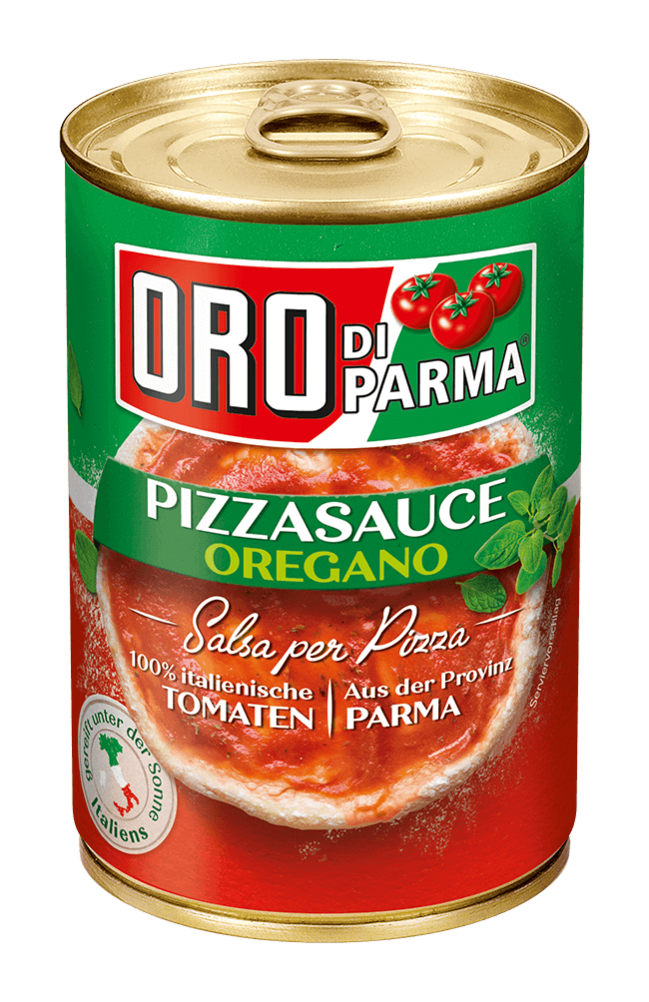
1 can of ORO di Parma pizza sauce with oregano (425 ml)
1 jar of anchovy fillets in oil (50–100 g)
3–4 fresh tomatoes
2 balls of mozzarella (125 g each)
250 g Provolone cheese (alternatively, an additional 250 g mozzarella)
Extra virgin olive oil
Flour for rolling out the dough
Fresh oregano leaves for garnish
Step 1 : The Preparation
If you want to make your own pizza dough, you’ll find instructions for authentic Italian pizza dough in our “Kitchen Secret: Make Your Own Pizza Dough” guide.
If you don’t have that much time, you can of course use store-bought pizza dough—this will cut the preparation time by an hour.
Divide your homemade pizza dough into four equal pieces, flatten them briefly by hand, and then roll out the dough pieces with a rolling pin on a floured work surface.
Preheat the oven to about 200 degrees, and in the meantime, slice the tomatoes and mozzarella.
Not sure which tomatoes to use or whether your tomatoes are still fresh? In our “Kitchen Secrets” section on ripe and fresh tomatoes and tomato varieties, you’ll find lots more information about tomatoes.
Step 2 : The Anchovies
To make your anchovy pizza, take the anchovy fillets out of the can and pat them dry a little so your pizza doesn't get too oily.
Step 3 : Topping the pizza
Place the prepared pizza crusts on baking sheets lined with olive oil or parchment paper. Next, spread the pizza sauce with oregano over the four pizzas and arrange the tomato slices on top. Now grate the Provolone over them and place the mozzarella slices on the pizza. Finally, arrange the anchovy fillets on top of the mozzarella and drizzle with a little olive oil—your pizza is ready to bake, and the anticipation is building!
Step 4 : The Finale
Slide the pizza into the preheated oven. The baking time depends heavily on the temperature. At 220 °C, it takes about 20 minutes. Professional Italian pizza ovens reach temperatures of 400–500 °C. The pizza will be ready in just a few minutes. If you heat your oven to its highest temperature—usually up to a maximum of 300 °C—the baking time will be shorter. Then just trust your eyes: when the cheese has melted, the pizza sauce is bubbling, and the crust is turning slightly brown, the pizza is done. Now take the pizza out of the oven, garnish it with oregano leaves—and transfer it to a plate or cutting board.

Tip
Fun Facts About Provolone
While your anchovy pizza is in the oven, here’s some interesting information about a special Italian cheese: Provolone. Provolone is an Italian semi-hard cheese made from pasteurized cow’s milk. Today it comes from the Po Valley in northern Italy, though it was originally brought north from Campania by southern Italian shepherds. Provolone is heated, stretched, and shaped into a wide variety of forms using a special production process. Provolone is slightly elastic, white to pale yellow, and has irregular cracks. There are mild, creamy varieties of Provolone (“dolce”) and stronger ones (“piccante”). Because it melts well, Provolone is an ideal cheese for pizzas.
The “authentic” Provolone is called Provolone Valpadana DOP. This designation of origin is protected by the EU—Provolone Valpadana DOP may only be produced in just over ten cities and municipalities. You can buy it at Italian delis, specialty cheese shops, and some larger supermarkets.
Ingredients
Homemade pizza dough or—for those in a hurry—ready-made dough from the supermarket
1 can of ORO di Parma pizza sauce with oregano (425 ml)
1 jar of anchovy fillets in oil (50–100 g)
3–4 fresh tomatoes
2 balls of mozzarella (125 g each)
250 g Provolone cheese (alternatively, an additional 250 g mozzarella)
Extra virgin olive oil
Flour for rolling out the dough
Fresh oregano leaves for garnish