Polenta – the Italian master of transformation made from corn
Everything about corn polenta—from its origins to how to prepare it.
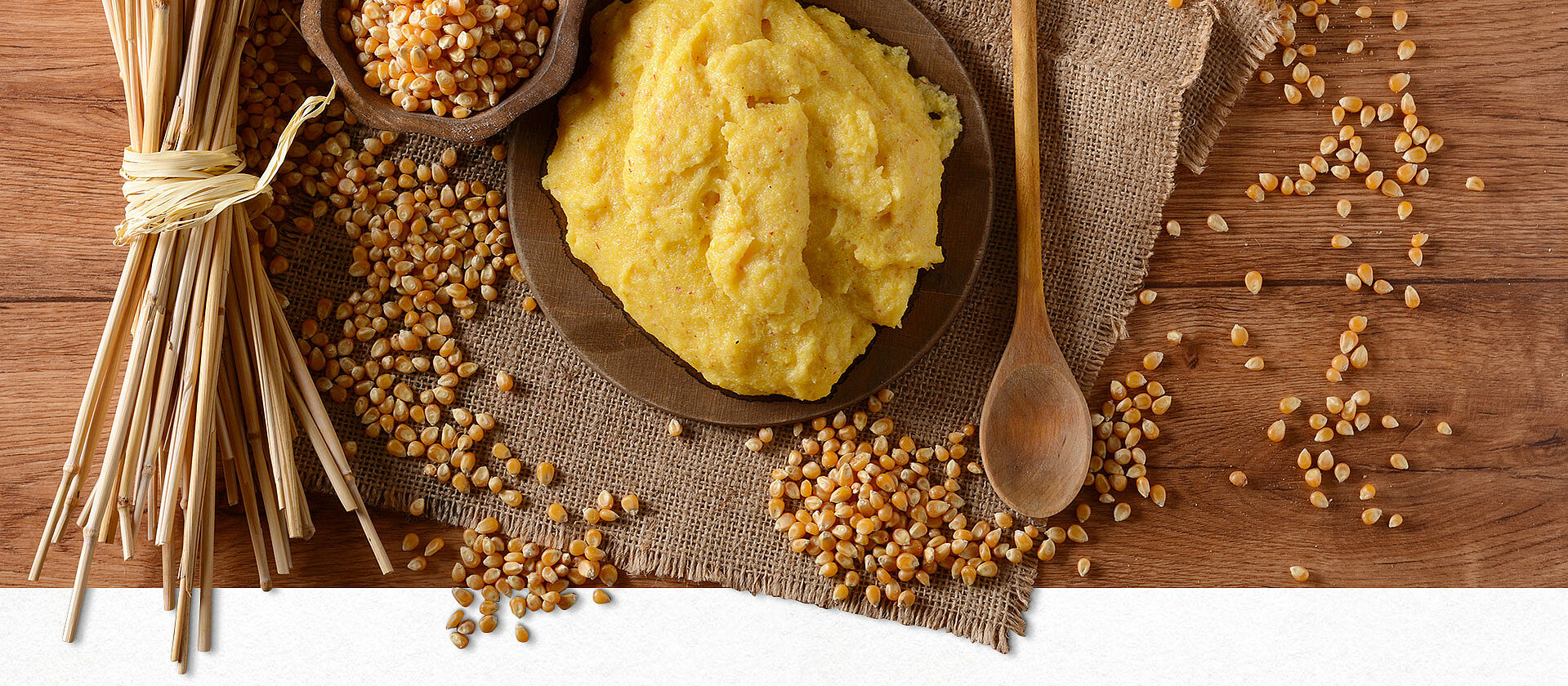
Polenta is a traditional Italian dish made from cornmeal and often served as a side dish with meat dishes. Polenta is popular throughout Italy, but it’s especially cherished in northern Italy. That’s why people from northern Italy are often affectionately and jokingly called “Polentoni.” In this culinary secret, we’ll reveal how polenta came to Italy and the different ways to prepare it.
The Origins of Polenta
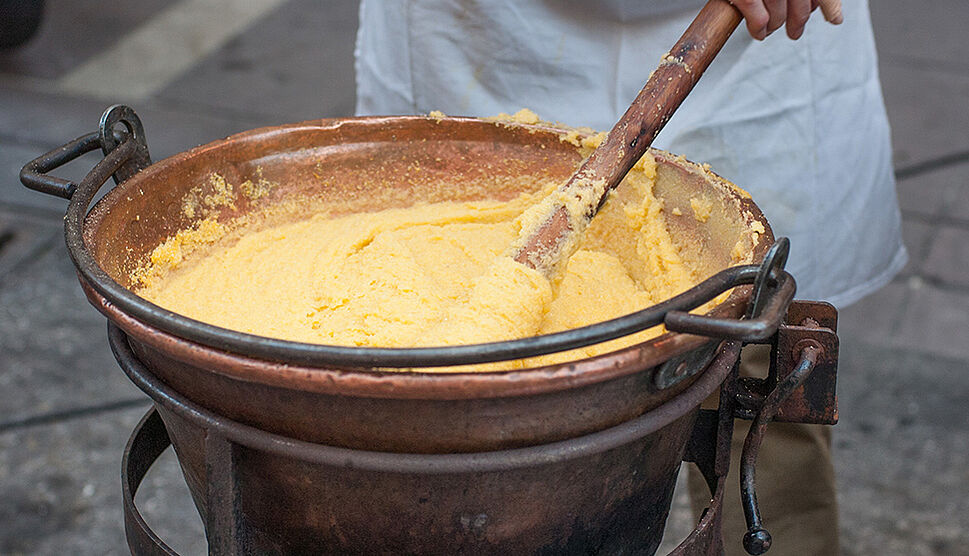
Even the Romans ate a grain porridge they called “puls” or “pulmentum.” However, it was not made from corn, since corn was not yet known in Europe at that time. Instead, the Romans cooked porridge from millet, spelt, or chickpea flour, and it was Christopher Columbus who brought corn back from his voyages to America—along with tomatoes. This is how corn cultivation began in Europe as well—and polenta became a popular dish here starting in the 17th century. For a long time, polenta—which is inexpensive and nutritious—was considered a poor man’s food. Because it can be prepared in so many different ways, however, it now has a firm place in Italian cuisine: polenta can be stirred until creamy, baked, served with sauce alongside meat dishes, or even fried until crispy. The basic recipe is always the same and very simple: cornmeal is added to boiling broth and cooked while stirring. To prevent the polenta from clumping or burning, the cornmeal requires careful attention and must be stirred thoroughly.
How to Cook Polenta—The Basic Recipe
The traditional, authentic Italian basic recipe takes a little time to prepare but is simple—and the result is well worth it. First, bring the liquid to a boil and add the cornmeal while stirring. Use about four parts liquid to one part polenta. For two people, use about 150 g of polenta, which you cook in about 600 ml of water or broth. Keep stirring constantly so that the cornmeal disperses evenly in the liquid, and let the cornmeal soak. Finally, add butter, grated Parmesan, salt, pepper, and nutmeg to taste.
Use regular or precooked cornmeal for the polenta
Cornmeal for making polenta is available today in both the classic and pre-cooked varieties. While you can prepare the pre-cooked version in a matter of minutes, you have to cook traditional polenta for up to an hour, stirring constantly so it doesn’t burn. Traditional polenta cooking can therefore be a labor-intensive process—much like making risotto. The polenta is ready when it pulls away from the sides of the pot.
Creamy polenta, polenta slices, and fried polenta—polenta is incredibly versatile
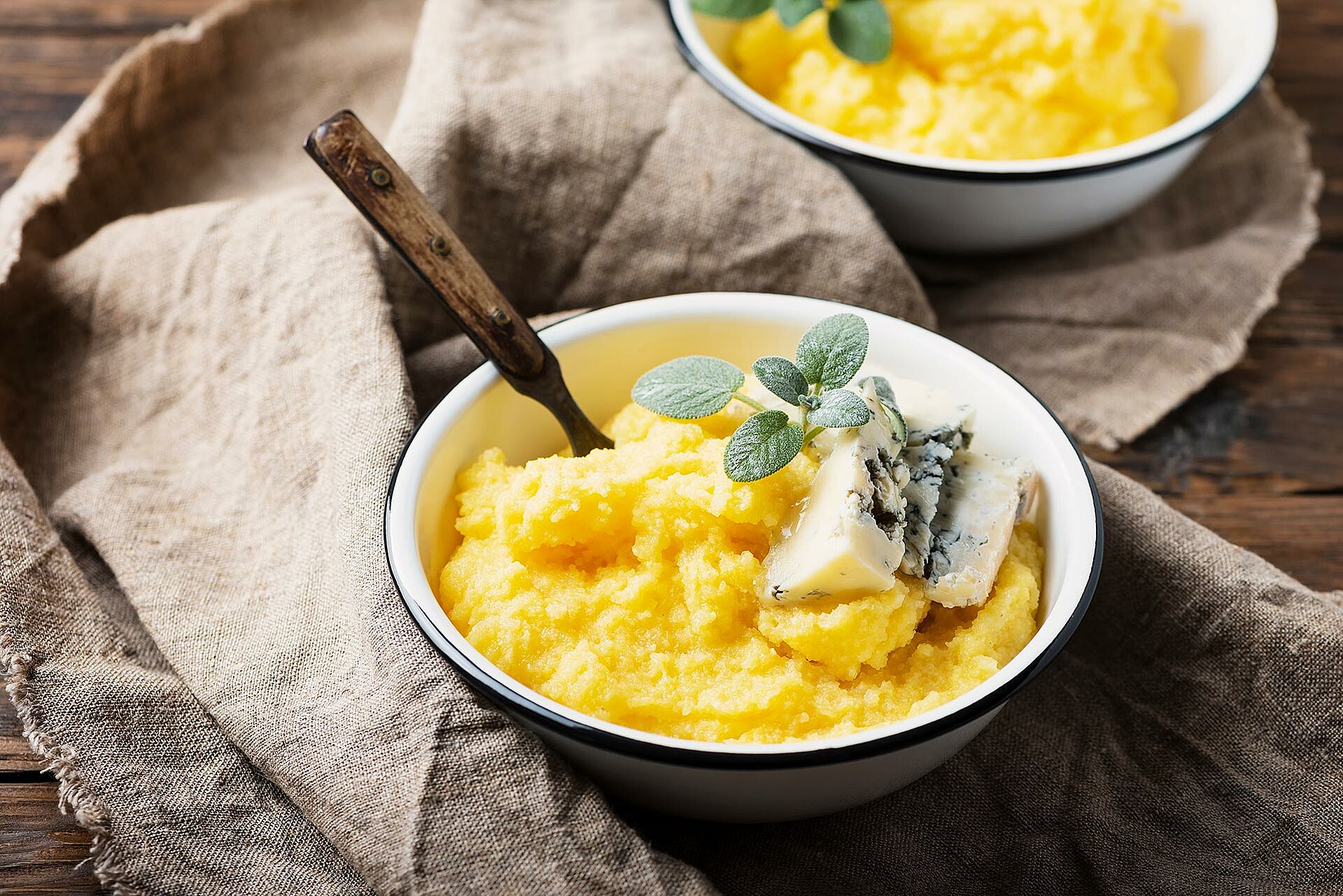
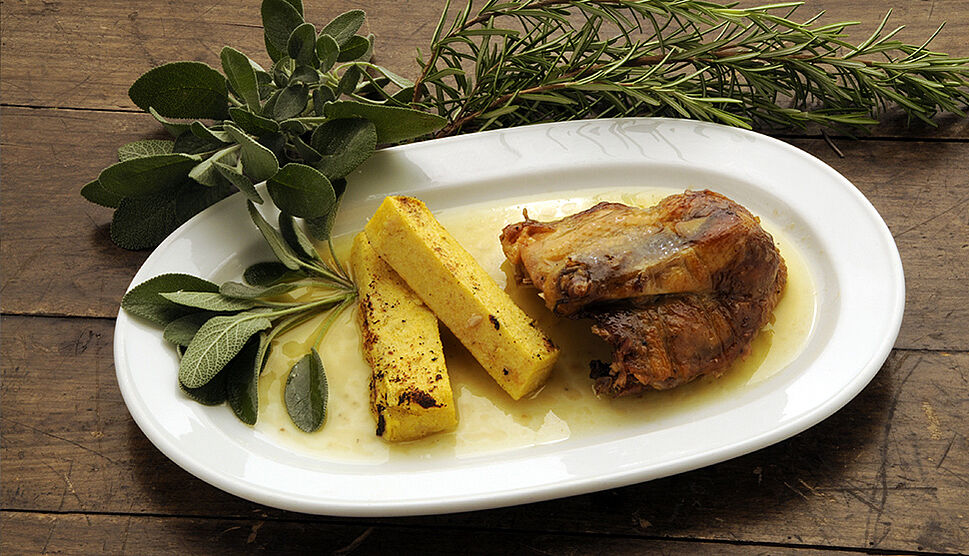
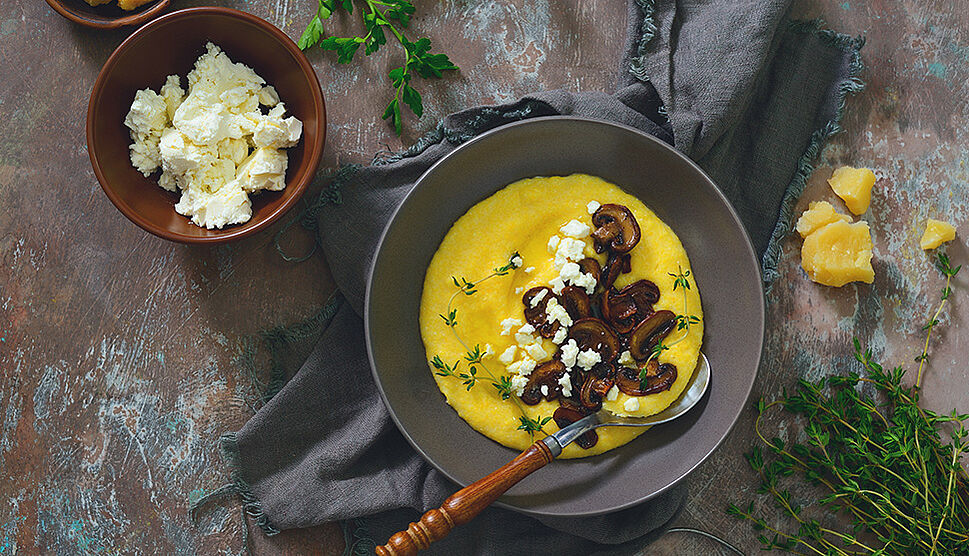
The various types of polenta always start with the basic recipe, which means you always begin by cooking a polenta porridge. Depending on how you want to use the polenta, cook it until it’s creamy or firm. Add a little more liquid if needed. Cook the polenta in broth instead of water to make it especially hearty and flavorful. You can then serve it right away as a side dish with your meal.
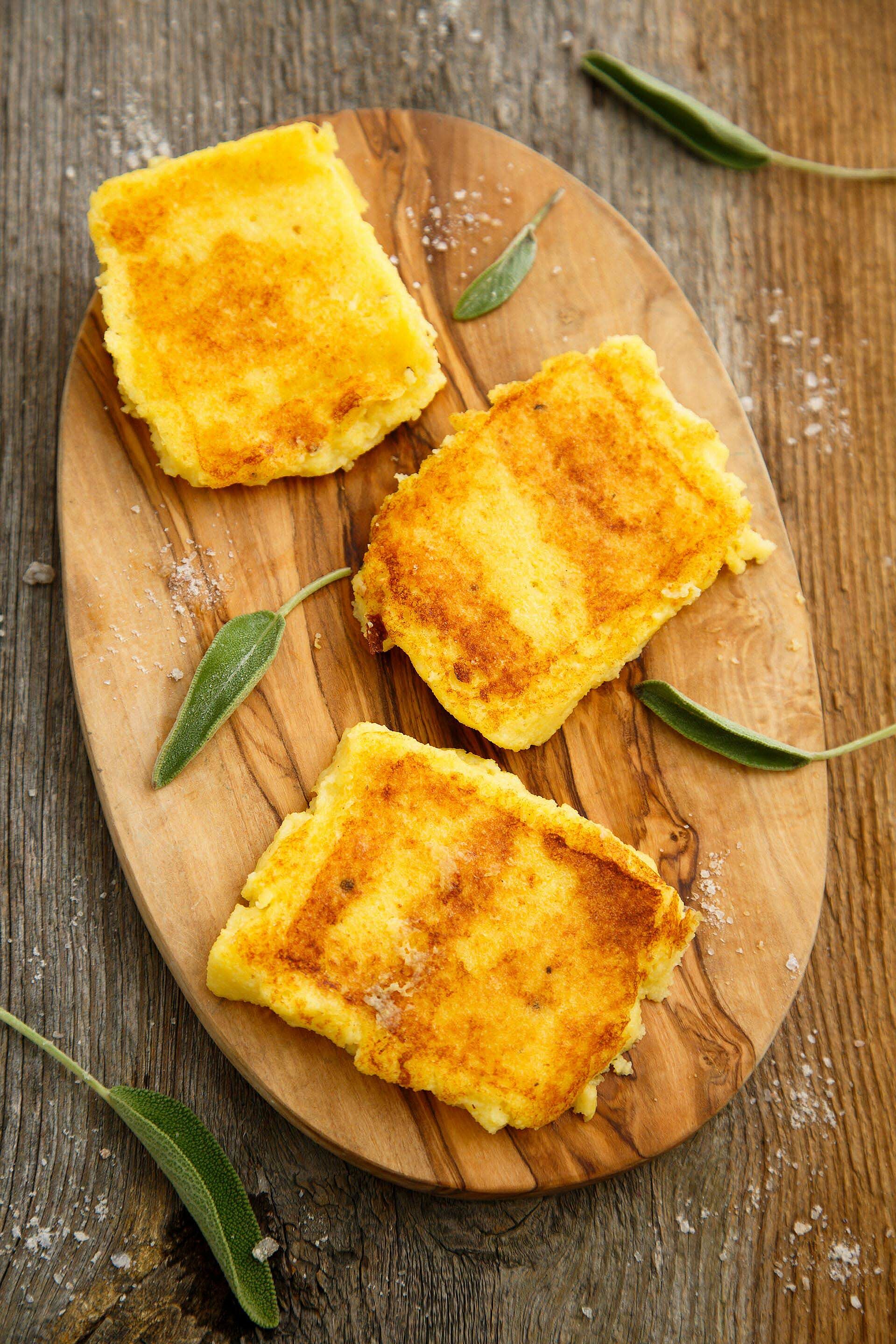
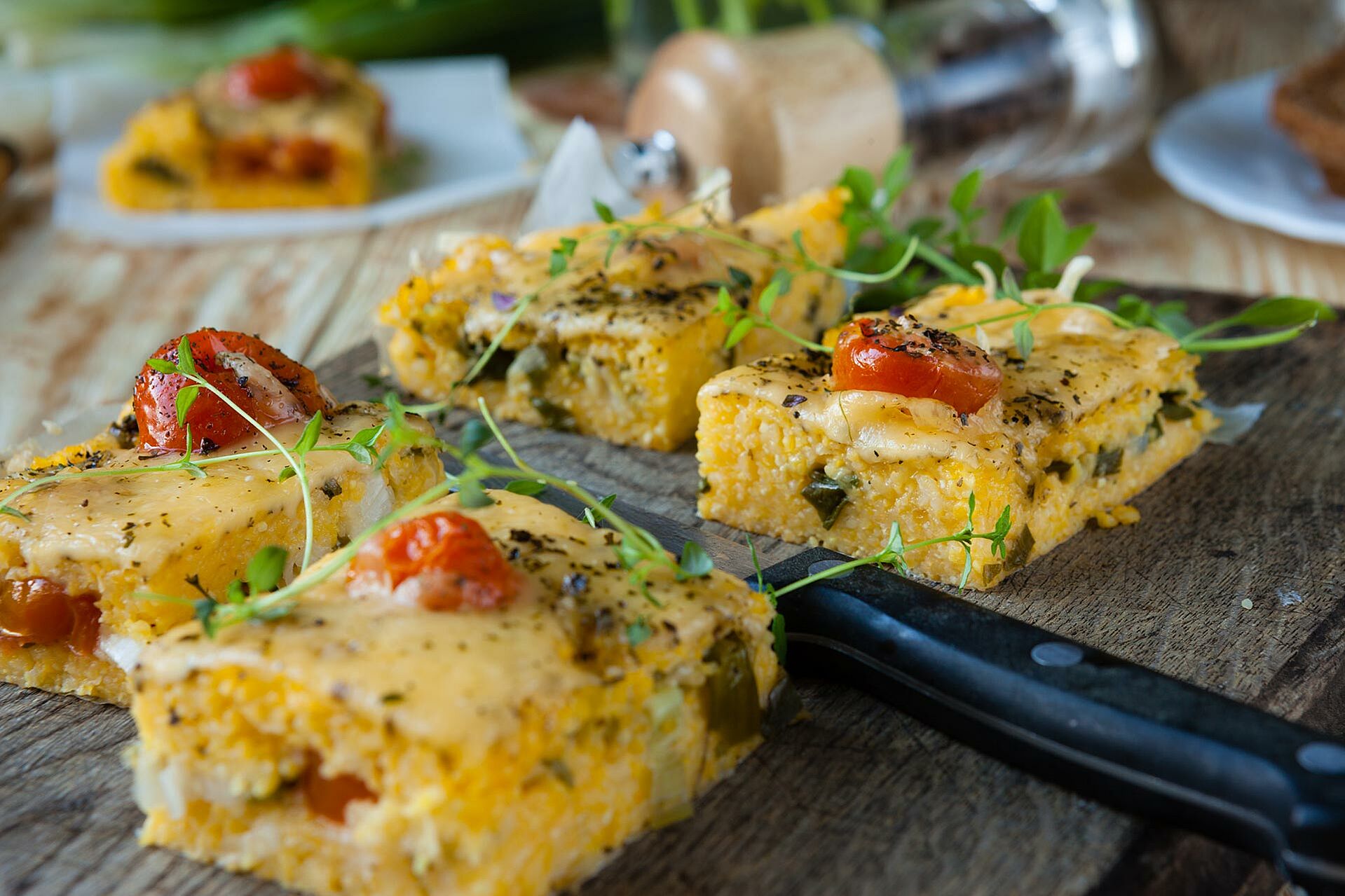
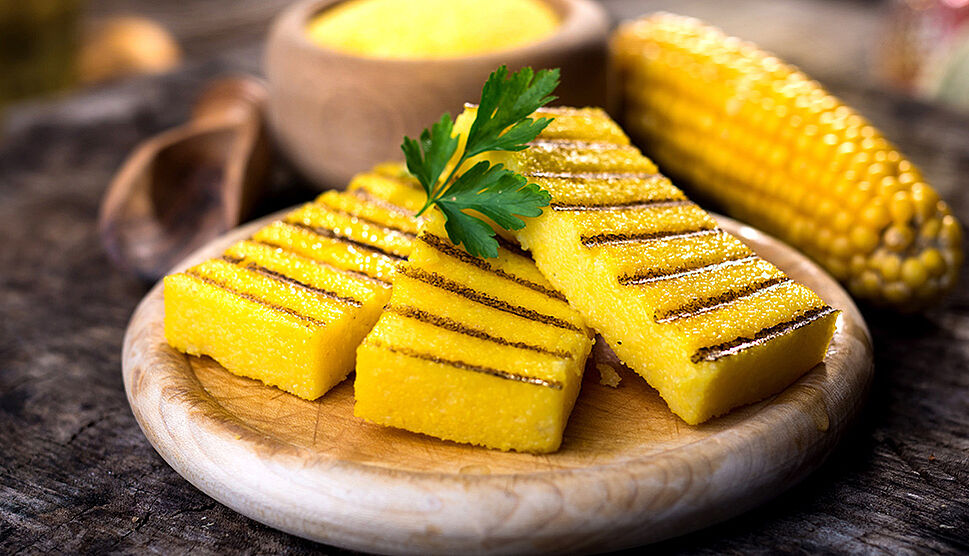
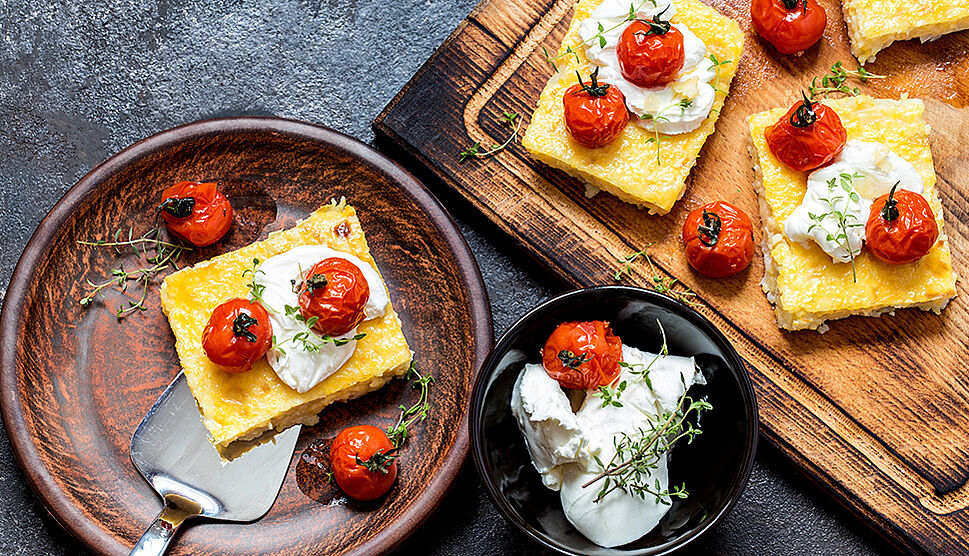
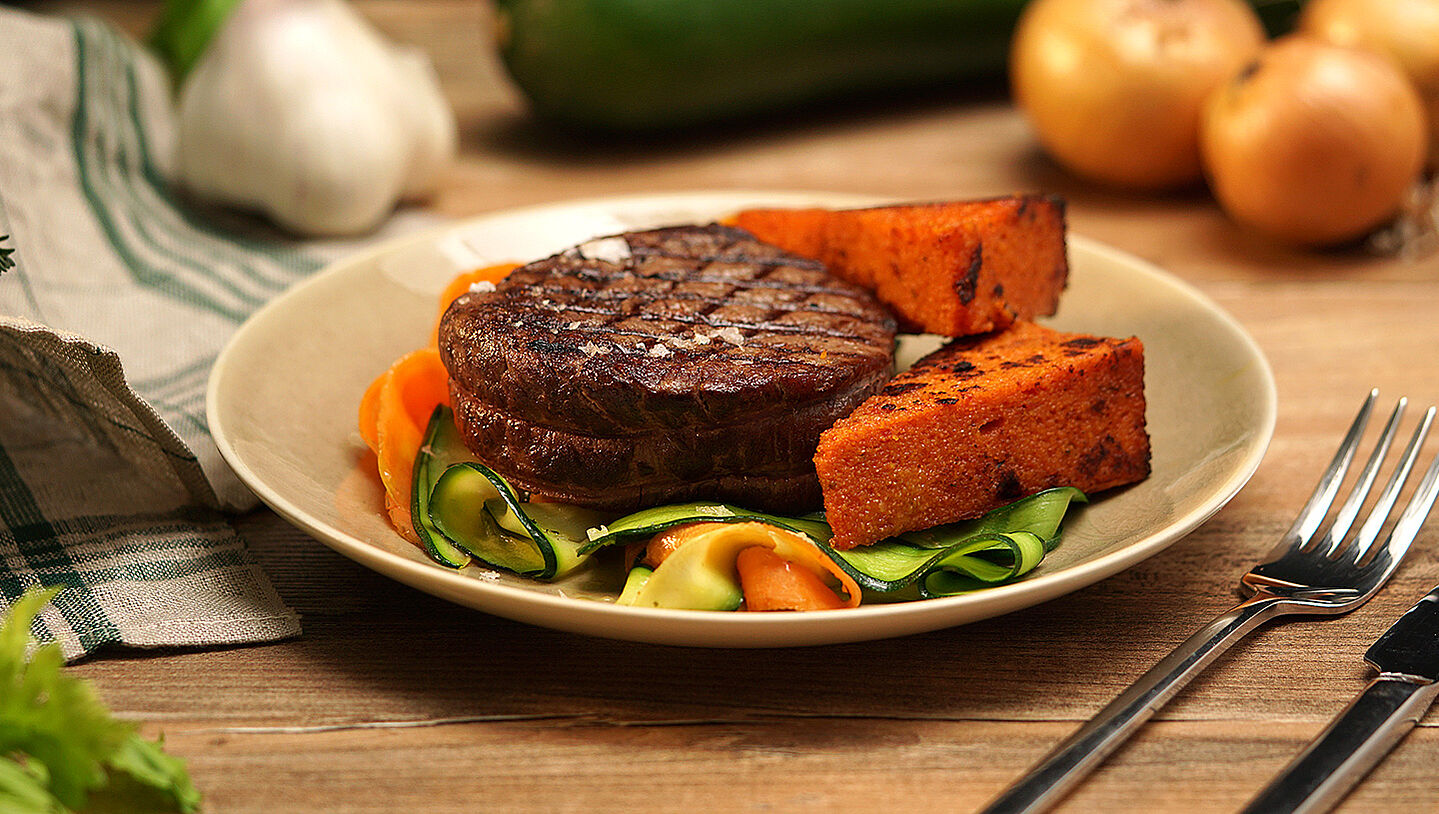
If you want to make polenta slices, pour the cooked polenta into a baking dish. It should still be creamy and pour easily; otherwise, it will become too firm in the oven. Let the polenta cool completely, then cut it into slices. You can also sprinkle some Parmesan cheese on top of the polenta and then broil it in the oven until the cheese is nicely browned. Sliced polenta is often served in Italy as a side dish with meat or vegetable dishes.
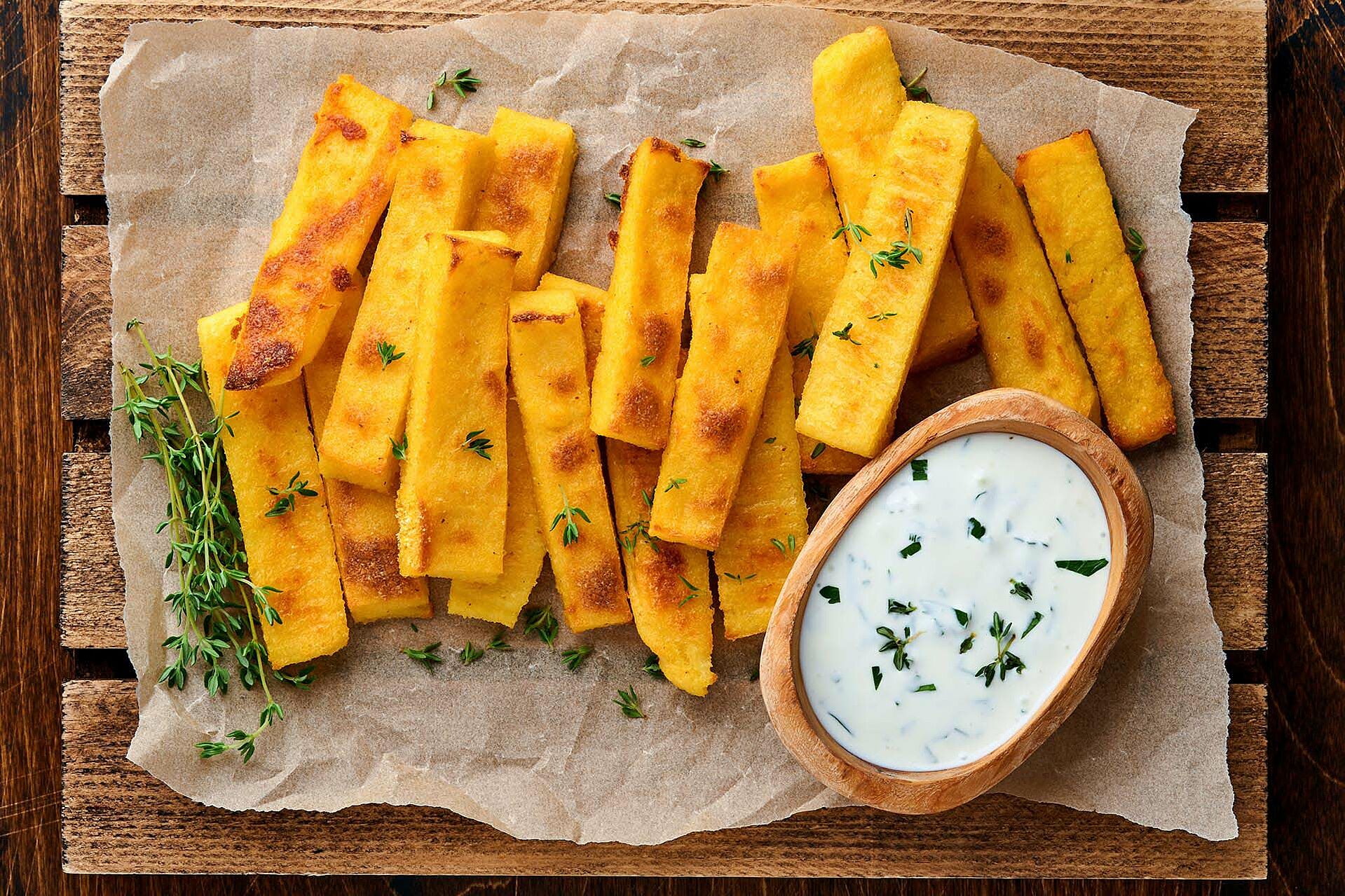
Pan-fried polenta is a great way to use up leftover polenta from the day before. To make it, cut the polenta into cubes or slices and sauté them in a little olive oil in a skillet.
Cooking with Polenta –
Main Course, Side Dish, or Dessert?
In Italy, there are many polenta recipes that are used for every course of a typical Italian meal. In Friuli, polenta is often served in small bowls as an antipasto. But you can also serve polenta as a main course or a side dish.

Polenta for Dessert
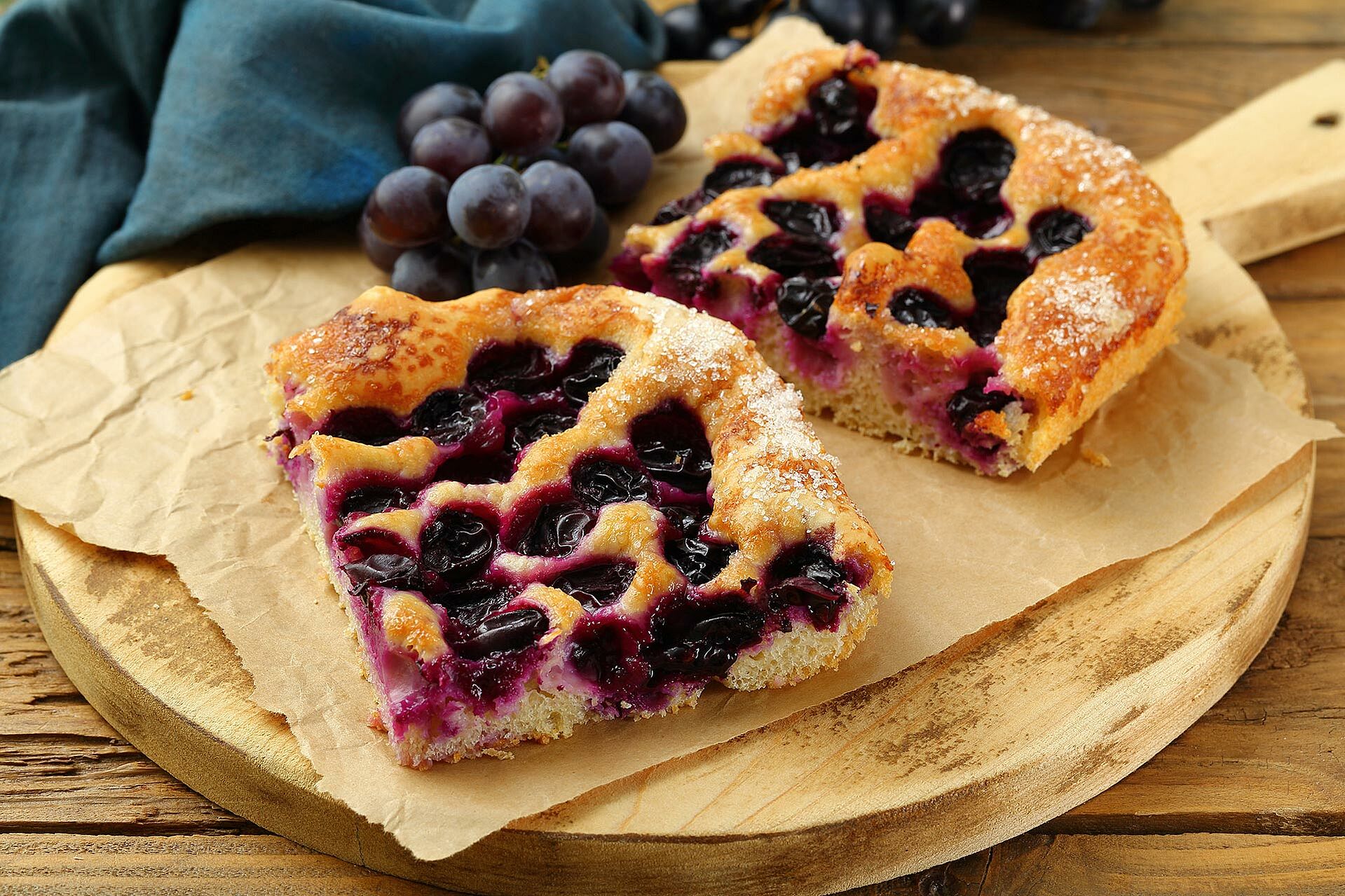
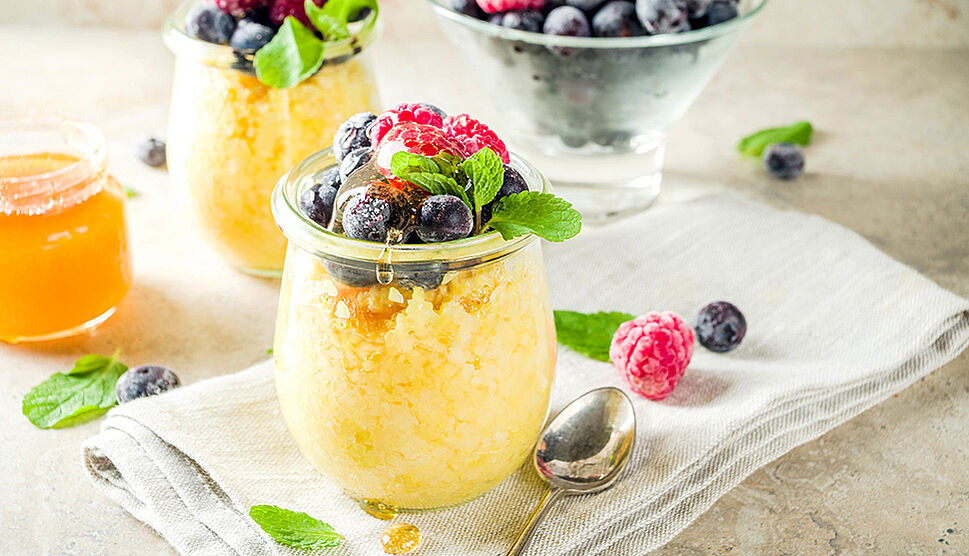
But polenta also features in dolci, Italian desserts. If you’d like a creamy, slightly sweet polenta, simply replace half the water with milk. And with milk, sugar or honey, and cinnamon, polenta instantly becomes a sweet dessert. Polenta slices also make a great dessert: Add a little sugar to the polenta and stir in almonds, lemon zest, and raisins before baking the polenta in the oven.
Pizza dolce con la pastella comes from Lazio, the region around Rome. This dish made from cornmeal used to be slipped into the oven when the wood was blazing. This sweet pizza is made exclusively with cornmeal or leftover polenta from the day before. It’s sprinkled with sugar, cinnamon, and raisins, drizzled with olive oil, and baked in the oven for about 20 minutes.