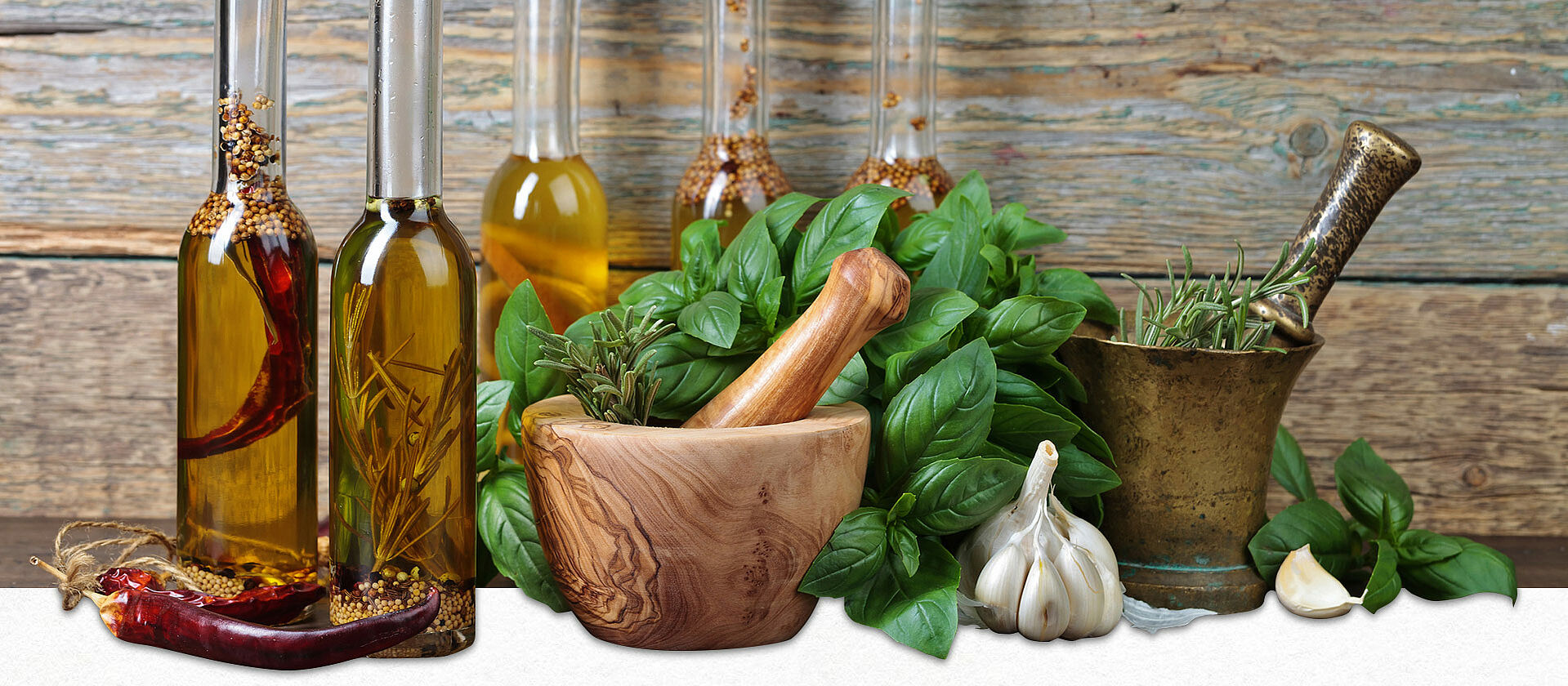
Herbal oils have a wonderfully aromatic flavor and look delicious. They’re an indispensable part of Italian cuisine. What you’ve bought—or perhaps just admired—in specialty food stores so far, you can easily make yourself.
Herbs are steeped in cooking oil because the essential oils are extracted from the herbs. This creates a delicately flavored oil that preserves the herbs’ flavor for several months. Once the flavor compounds are dissolved in the oil, this results in a particularly intense flavor experience, as the herb’s aroma is distributed very evenly throughout the oil.
Herbal oil is versatile
Herbal oils are incredibly versatile and simply delicious. These flavored olive oils are especially great for dressing salads, adding a unique flavor to fish or roasts, or as a dip for toasted baguette. Need even more reasons to make your own herb oil right now? Marinated feta cheese or sautéed shrimp also taste incredibly good with your homemade herb oil! Plus, it makes a great gift from your kitchen!
Use the best olive oil as
the base for homemade herb oils
The foundation for a particularly fine herb oil is always the oil itself. In general, all cold-pressed oils work well for herb oils. Olive oils are typical for Italian recipes. They have a fruity aroma and many valuable nutrients. You can find out how to recognize high-quality olive oil in our olive oil guide.
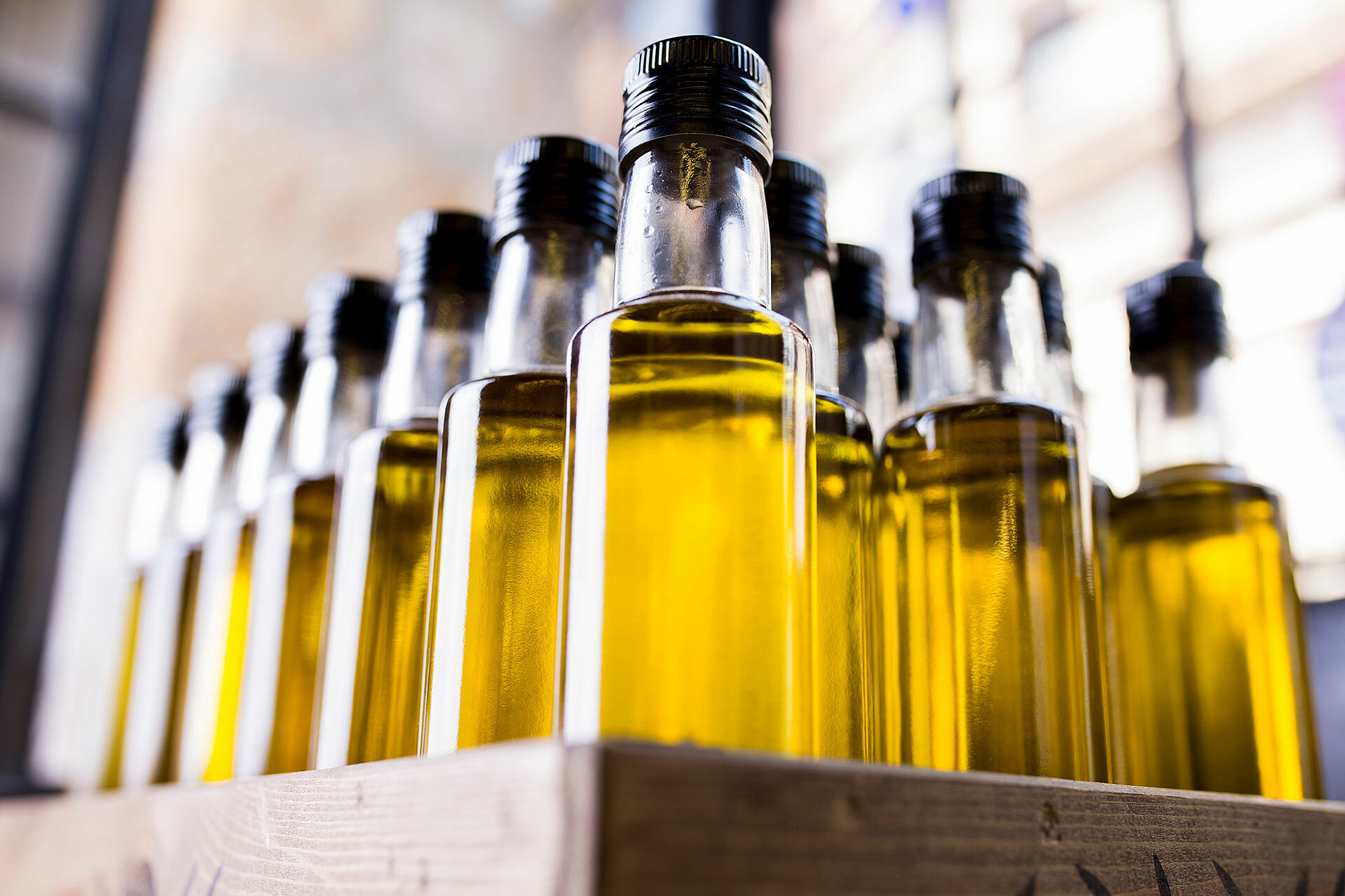
The Container
Choose a suitable container for your herbal oil
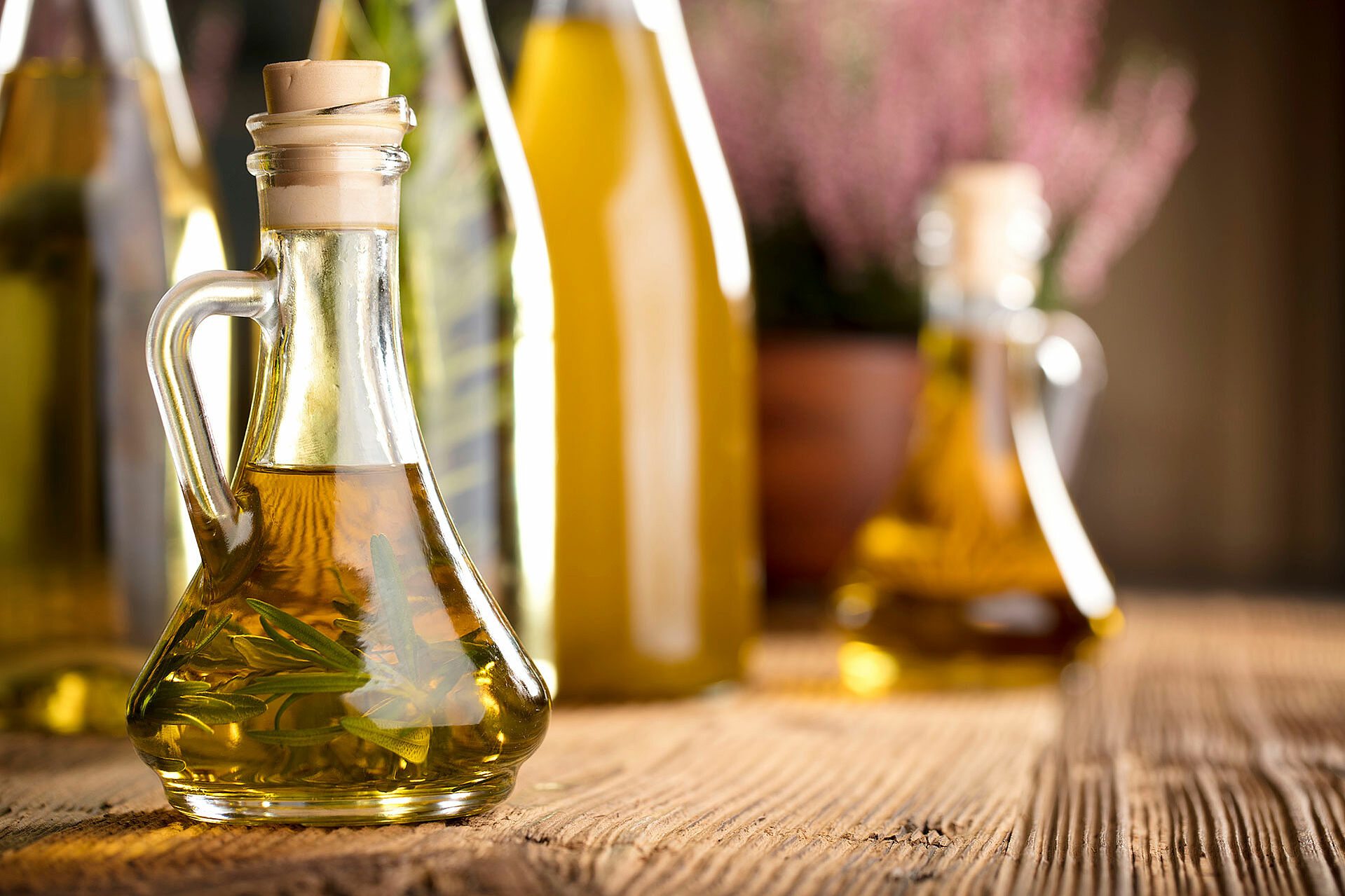
A glass container is best, since glass is completely flavor-neutral. Herbal oil also looks particularly pretty when prepared in a glass bottle, as this allows the oil’s vibrant color and the decorative sprig of herbs to be clearly visible. To ensure that whole herb stems can be easily added and removed, a glass bottle with a wide opening is ideal—though it should have a secure lid. Be careful when pouring due to the wide opening! If you’re adding spices like peppercorns or chili peppers to the oil, you can also use a container with a smaller opening and should strain the oil through a fine-mesh sieve.
The glass bottle should be completely clean; it’s best to sterilize the bottles in boiling water before filling them and dry them thoroughly with a clean dish towel.
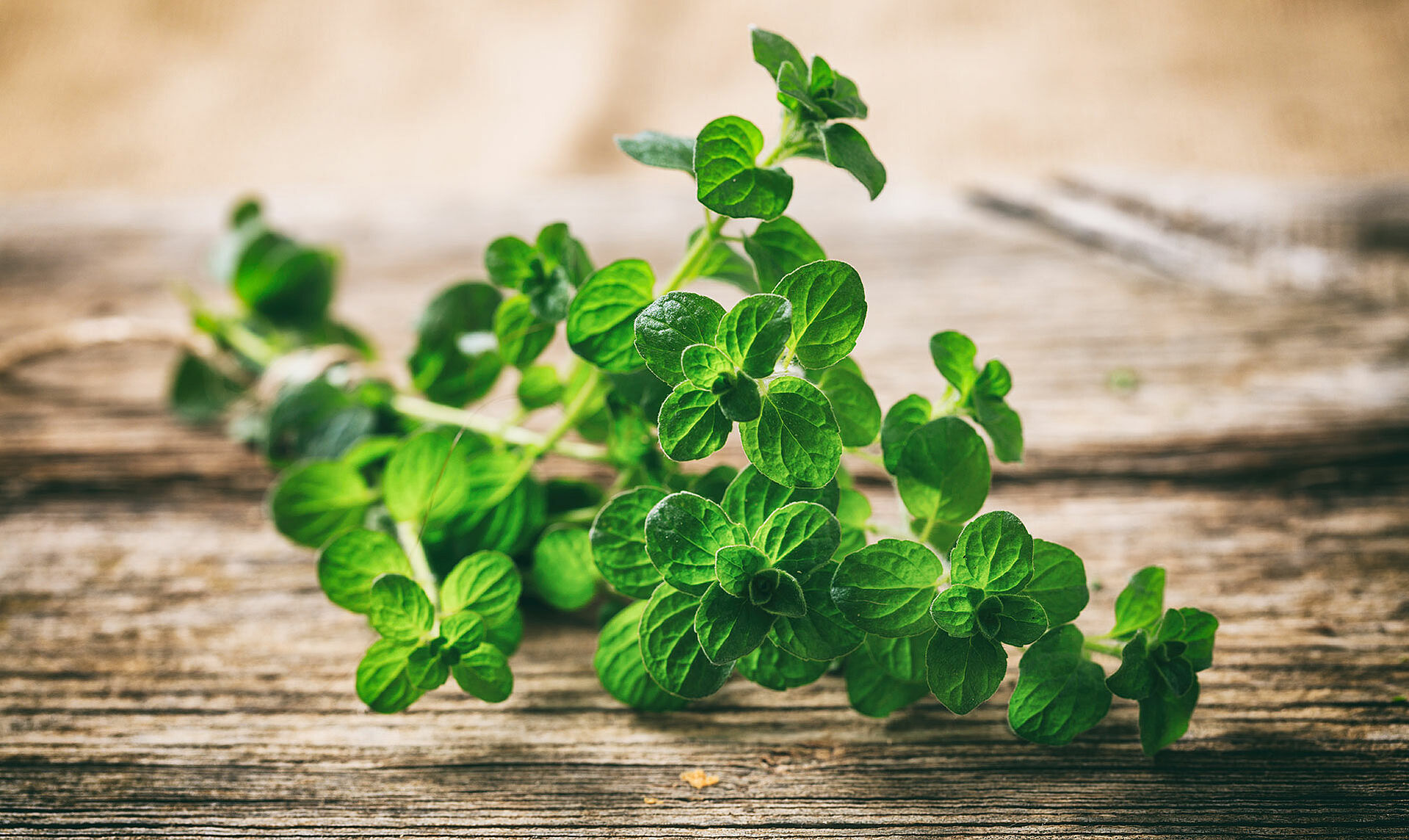
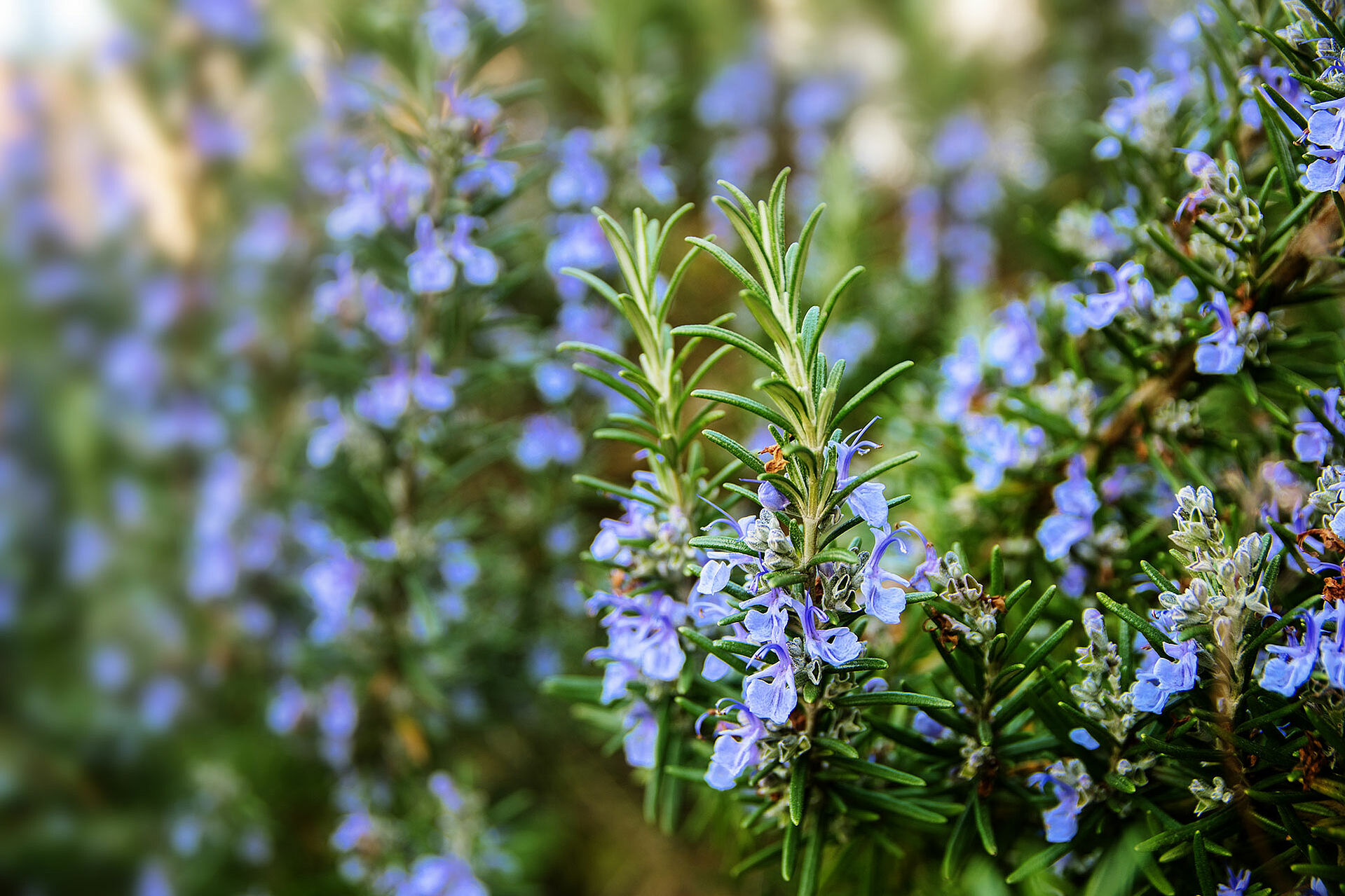

The Herbs
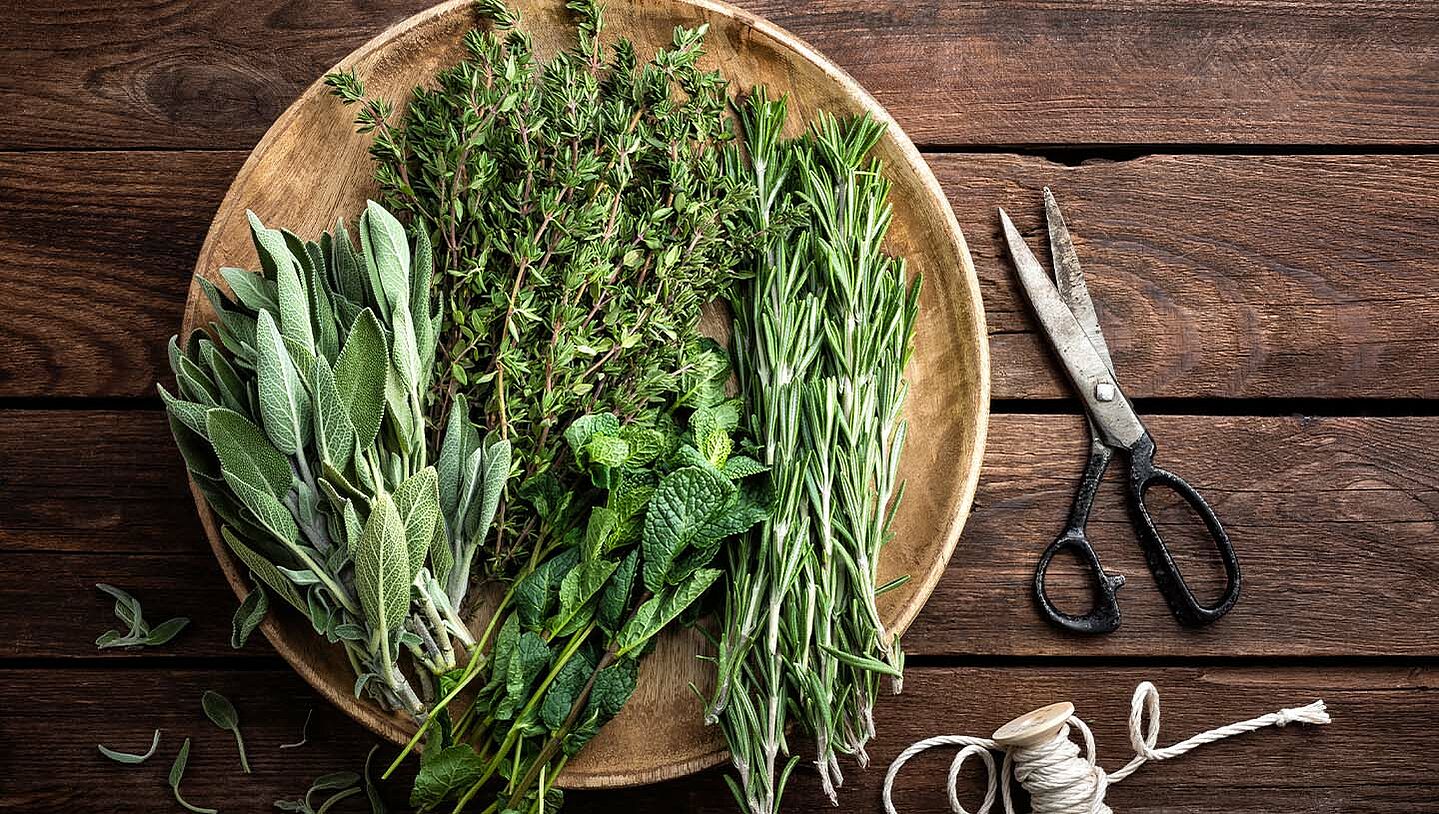
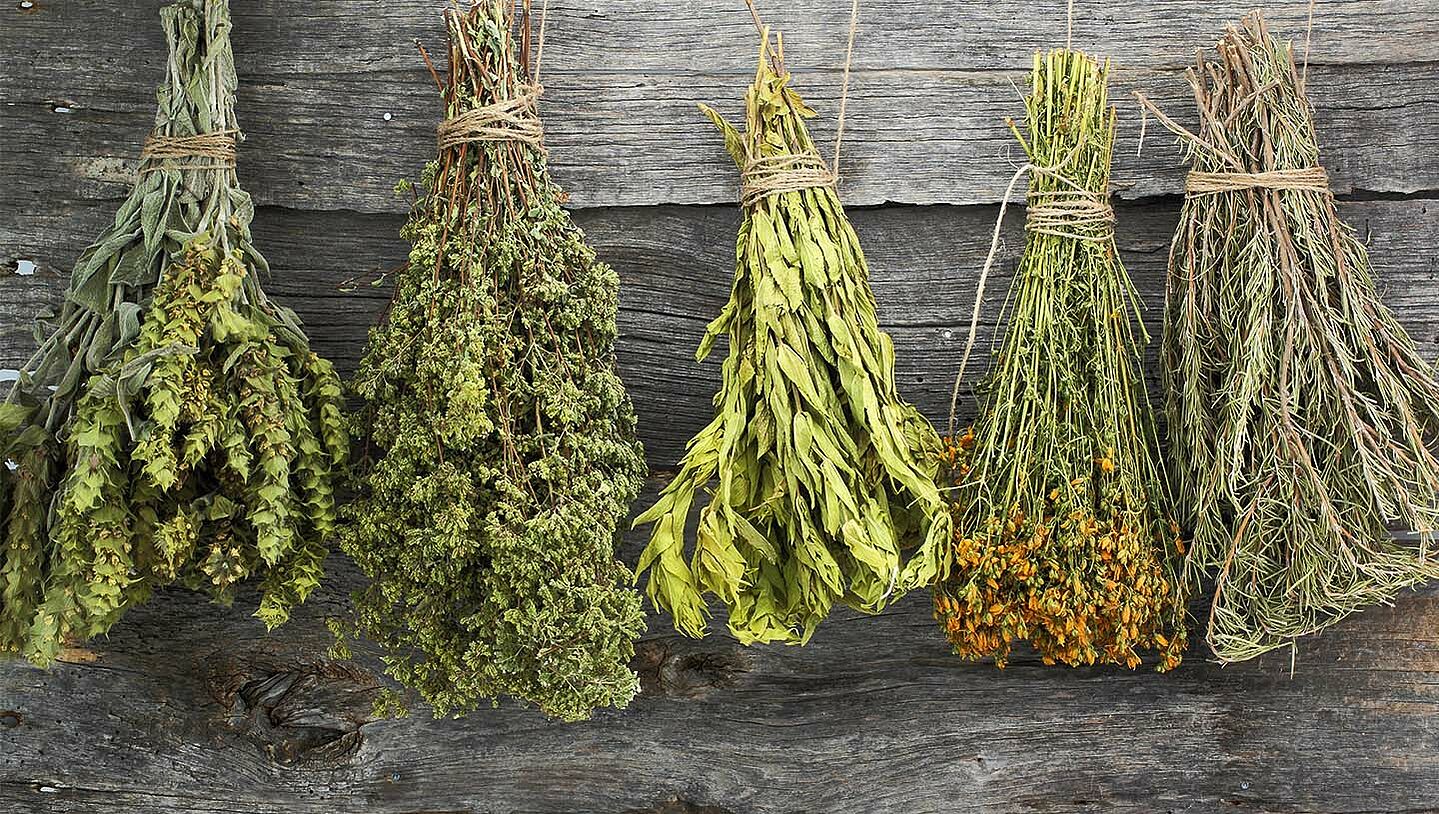
For your herb oil, you can use either fresh or dried herbs—it’s a matter of taste and, of course, depends a bit on the season.
Be sure to pat your fresh herbs dry, as too much moisture in the herbs can affect the quality of the oil. You can also simply let your fresh herbs dry for a few days before bottling them—we’ll show you the best way to do this in our Kitchen Secret. Most dried herbs crumble easily, but the aromatic compounds still dissolve well.
These herbs are suitable for making herbal oil
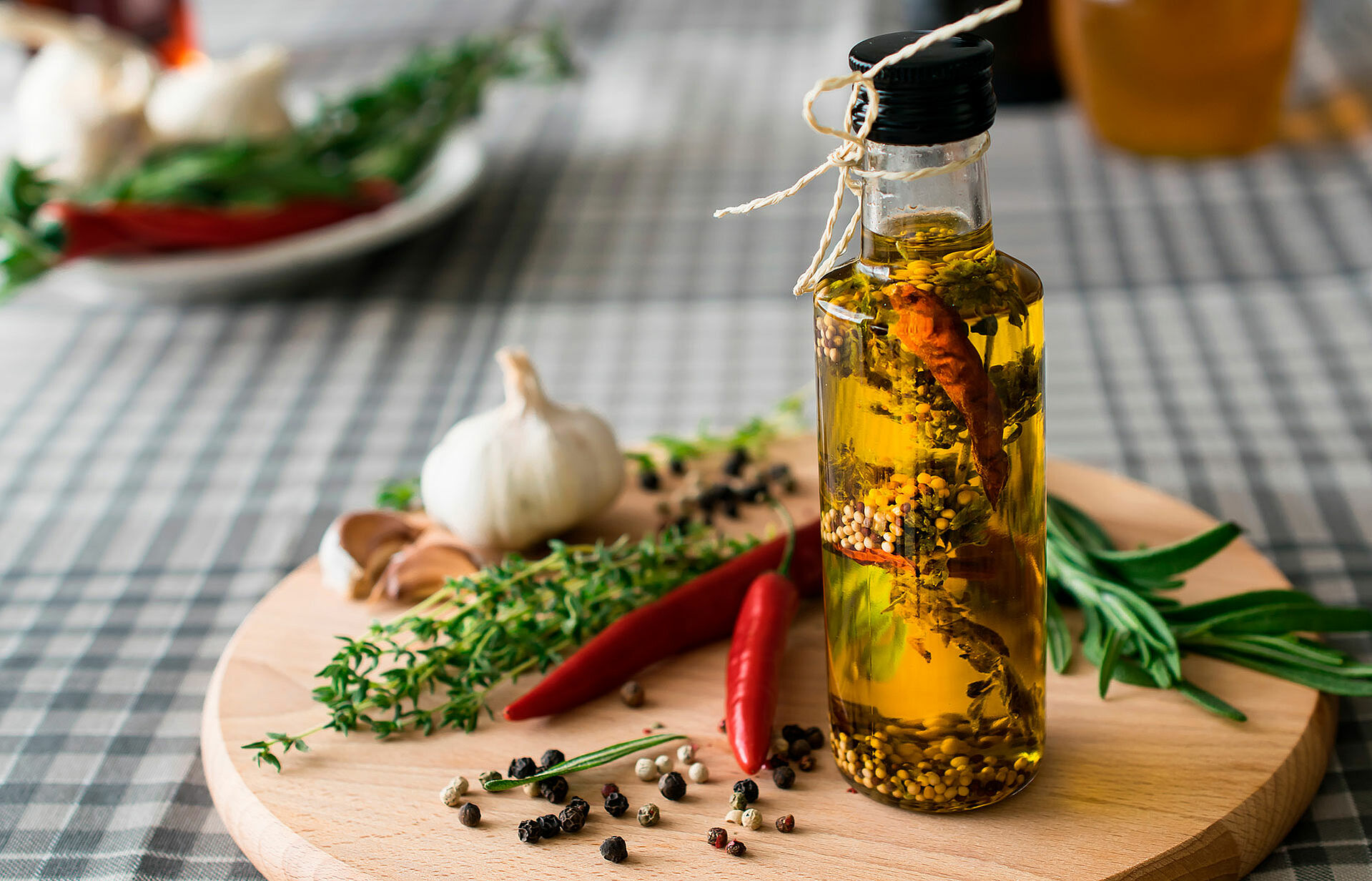
Rosemary, basil, thyme, sage, and oregano are particularly well-suited for making Italian herb oil. Of course, you can also use a mixture of your favorite herbs. Lavender is also an indispensable part of Mediterranean cuisine and makes for a wonderfully fragrant herb oil. You can also add spices like pepper, chili, garlic, grated ginger, or lemon zest to the oil—whatever suits your taste.
Here are three basic recipes for homemade herb oils that you can easily adapt to your own taste.
Step 1
Wash the rosemary sprigs and chili peppers thoroughly under very hot water, pat them dry, and let them dry in a well-ventilated place for about two days.
Step 2
Place the rosemary sprigs lengthwise into the bottle.
Cut the chili peppers into thin rings and add them to the bottle.
Fill the bottle with olive oil, seal it tightly, and store it in a cool, dark place.
Step 3
After about three weeks, the oil is ready to use, and you can strain it through a sieve. However, if you like the herbs and spices in the oil, just leave them in the bottle.
Tip
: This oil is certainly excellent for a salad with a spicy kick. But it also works well with pasta and for brushing on pizza crusts.
Step 1
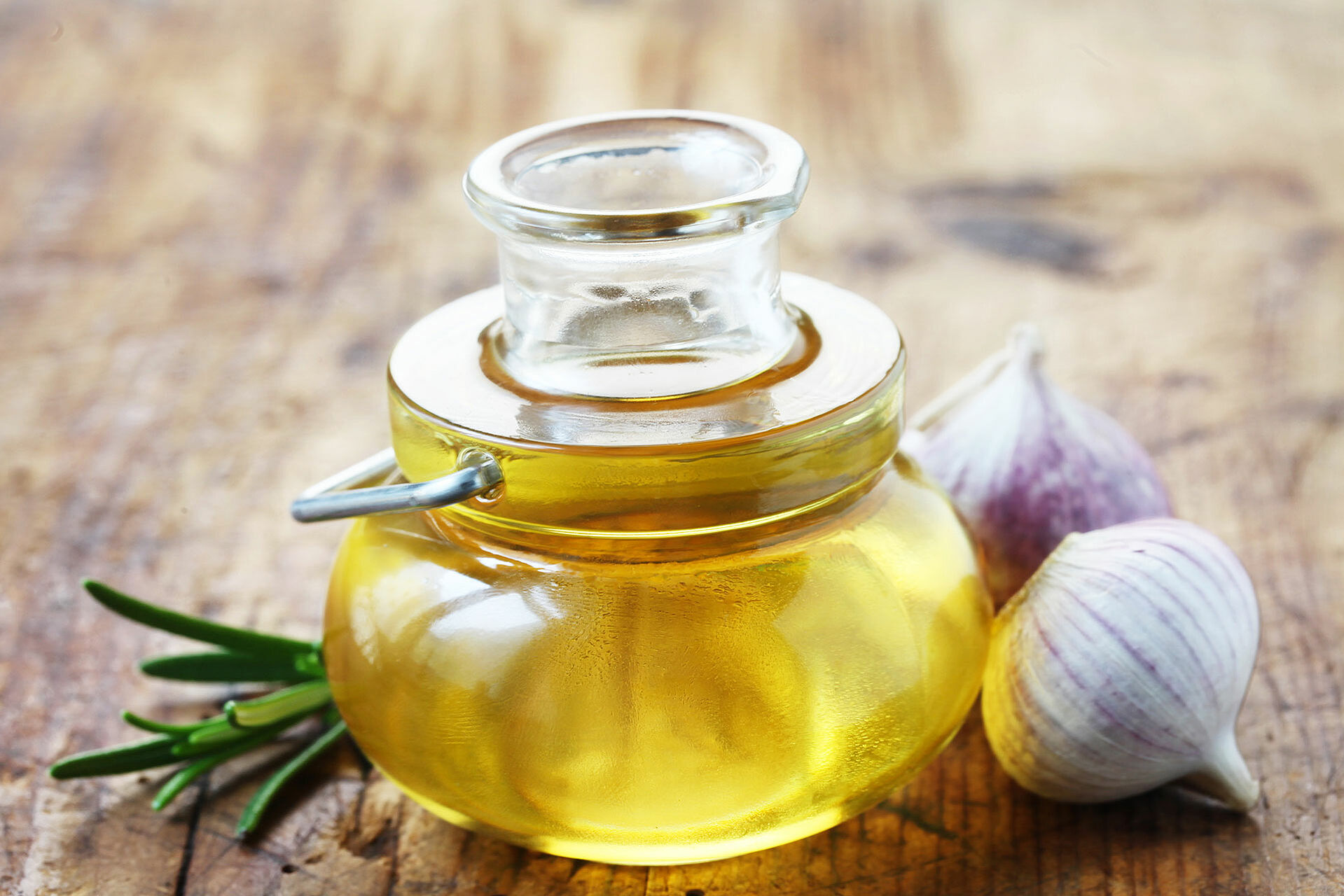
Place the peeled garlic cloves in a glass bottle and pour olive oil over them.
Step 2
Carefully seal the bottle, and after one to two weeks, your garlic oil will be ready to use.
Tip
: The oil is perfect for rubbing on bread for bruschetta or brushing onto a pizza before adding toppings. It can also be incorporated into savory bread and pizza doughs.

How long does homemade herb oil last?
Homemade herb oil will keep for about two months.
Here’s another important pro tip, because cooking with natural, fresh ingredients comes with a few rules: Use the herb oil within the next six to eight weeks and store it in a cool, dark place—preferably in the refrigerator. Long-term storage is not recommended, as all organic foods naturally contain bacteria that can easily multiply even in the oxygen-free environment of the oil. So be sure to use up your fresh herb oil quickly—it’s a wonderful delicacy.
To prevent mold, make sure the herbs in your herb oil are always completely covered with olive oil.