Ravioli Stuffed with Pecorino
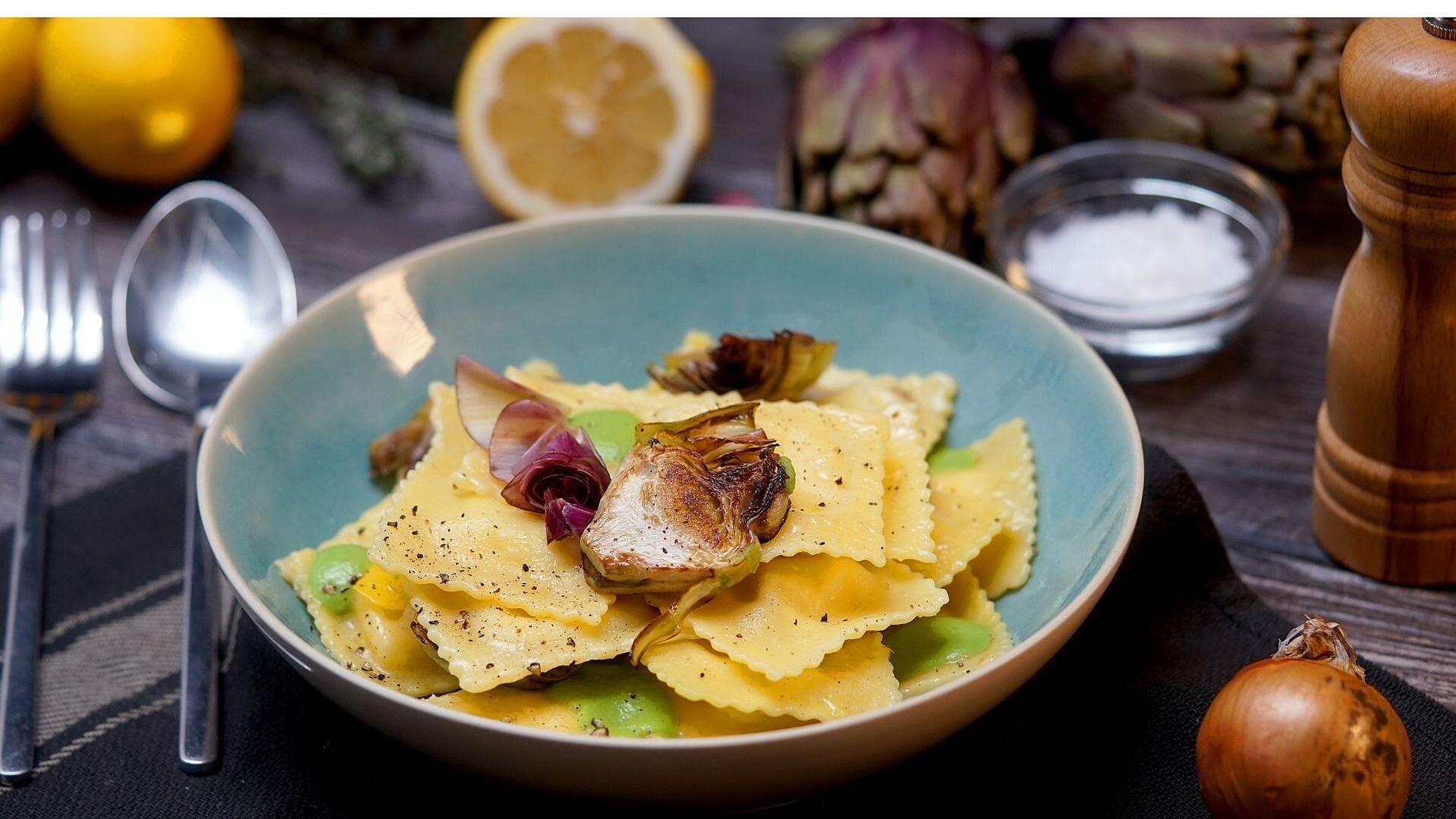
Ravioli with Sautéed Baby Artichokes and Lemon Butter
If you’re already a bit more experienced at making tortellini, why not try this special ravioli recipe? Ravioli are a close relative of tortellini. The appeal lies in the flavorful ingredients you can serve alongside the stuffed pasta. Creamed peas, sautéed baby artichokes, and lemon butter turn this ravioli dish into an explosion of flavors.
And if you’re short on time, you can, of course, buy the ravioli from your favorite Italian restaurant and use them in this recipe. Incredibilmente delizioso.
Ingredients
For the ravioli:
350 g durum wheat semolina
about 140 ml lukewarm water (up to 200 ml, depending on consistency)
1 tsp salt
1 tsp extra virgin olive oil
For the ravioli filling:
300 ml whole milk
3 sheets of gelatin
250 g grated Pecorino*
grated nutmeg
Sea salt and freshly ground pepper
For the pea purée:
100 g peas
40 g sour cream
Salt
grated nutmeg
For the lemon butter:
100 g butter
1 lemon
1 tbsp sugar
4 baby artichokes
Sea salt, freshly ground pepper, and grated nutmeg
For the roasted artichokes:
4 baby artichokes
-----
*Certain types of cheese (e.g., Pecorino) are made with animal rennet and are therefore not suitable for vegetarian dishes.
Step 1 : The Preparation
First, grate the Pecorino. If you’re using fresh peas, shell them first. If using frozen peas, let them thaw for about 20 minutes. Then, use a zester or a kitchen grater to zest the lemon.
Next, prepare the baby artichokes. Remove the bottom three layers of leaves and cut off 2 cm from the tip. Then, using a sharp knife, remove the stem and slice the baby artichokes into pieces about 1 cm thick.
Step 2 : The Ravioli Dough
To make the homemade pasta dough for your ravioli, combine the durum wheat semolina, water, salt, and olive oil in a mixing bowl. Then knead the dough thoroughly for about three minutes. Make sure no semolina sticks to the sides of the bowl. If the dough is too dry, add lukewarm water—but the finer the durum wheat semolina, the less water you’ll need. Now shape the dough into a ball and wrap it in plastic wrap. Let it rest in the refrigerator for at least one hour.
Step 3 : Prepare the ravioli filling
Soak the gelatin in cold water and bring the milk to a boil in a small saucepan. Then remove the saucepan from the heat and stir in the Pecorino cheese. You can now season the filling to taste with nutmeg, sea salt, and freshly ground pepper. Your final step: Squeeze out the excess water from the gelatin and dissolve it in the mixture, which should be slightly cooled but still warm. Now just let it cool completely so you can move on to filling the pastries right away.
Step 4 : Prepare the pasta for the ravioli
Once the pasta dough is well chilled, you can take it out of the refrigerator. Set aside a small portion of the dough and roll it through a pasta machine. Select the setting for lasagna sheets and start at setting 8. Pass the resulting sheet of dough through the pasta machine again, this time at setting 7. Continue this process until you reach setting 1—the dough is now nice and thin. As the dough is rolled out thinner step by step, it relaxes. This makes it easier to work with your pasta. Of course, you can also roll out the pasta dough with a rolling pin. Finally, place the sheets of dough on a floured surface.
Step 5 : Shaping the ravioli
Place walnut-sized dollops of the cheese filling on the dough at regular intervals. You can use a teaspoon or a piping bag with a large opening for this. Brush a little beaten egg yolk around the filling. Then place another sheet of pasta on top. Using a ravioli mold (or a suitable cookie cutter), you can now cut out the filled ravioli. Be sure to make sure the filling is exactly in the center so nothing can leak out through the edges. Gently press the edges together and place the ravioli on a plate or cutting board—be sure to arrange them side by side so they don’t stick together.
Step 6 : Prepare the pea purée
Put the fresh or thawed peas in a blender, or use an immersion blender. Add a small amount of sour cream, along with salt, a little water, and grated nutmeg. Now purée the peas for about a minute, and only then fold in the remaining sour cream.
Step 7 : The Lemon Butter
Now bring the sugar to a boil in 100 ml of water and wait until the liquid has reduced slightly. Add half of the lemon zest and let everything simmer until thickened.
Now melt the butter in a saucepan, add the remaining zest, and let the butter brown slightly. You can now season to taste with a little lemon juice. Delicious? Then pour the liquid mixture through a strainer into a small bowl—and your homemade lemon butter is ready.
Step 8 : Cook the ravioli
Almost done! Bring salted water to a boil in a large pot and add the ravioli. When they float to the surface, remove them and toss them in the lemon butter.
Step 9 : Sauté the artichokes
Heat some extra virgin olive oil in a skillet. Add the artichoke slices and season with a little sea salt and ground black pepper. Then sauté the artichokes for about 2 minutes on each side.
Step 10 : The Finale
To serve, place a portion of the wonderfully fragrant ravioli on a plate. Using two teaspoons, arrange a few dollops of the pea cream decoratively around it. Simply scatter the sautéed artichoke slices on top and enjoy. Buon appetito!